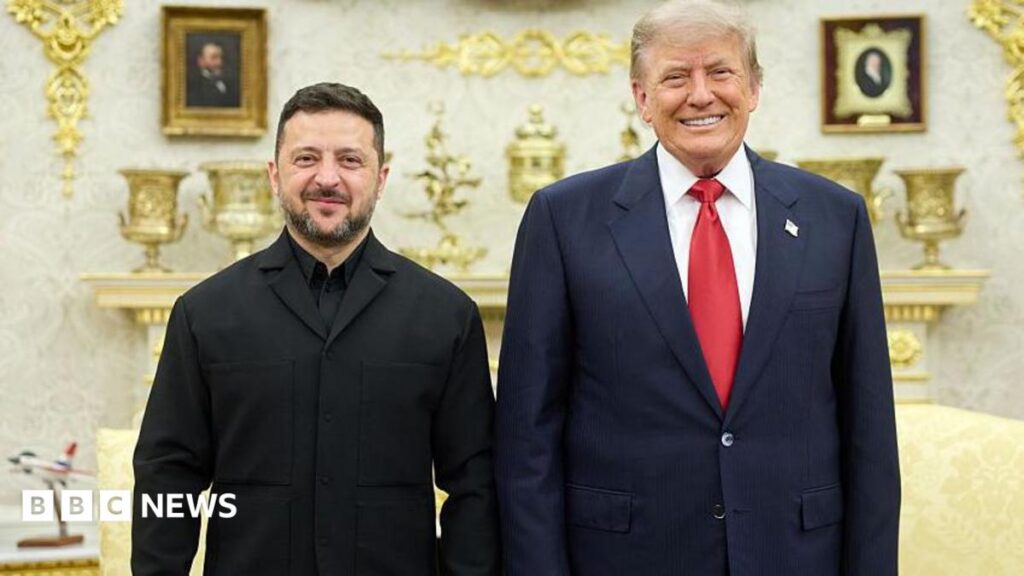
Zelensky and Netanyahu Meet Trump Amid Ongoing Conflicts in Ukraine and Iran
As conflicts in Ukraine and Iran continue to shape global security dynamics, President Donald Trump engaged in separate talks with two key leaders: Ukrainian President Volodymyr Zelensky and Israeli Prime Minister Benjamin Netanyahu. These meetings, held against the backdrop of Senator Lindsey Graham’s funeral—a notable supporter of both Ukraine and Israel—highlight the ongoing diplomatic efforts and strategic considerations influencing US foreign policy. While the discussions were described as positive and productive, they revealed the intricate balance of military aid, diplomatic initiatives, and geopolitical interests at play.
Zelensky and Netanyahu Meet Trump Amid Ongoing Conflicts in Ukraine and Iran
Zelensky’s Push for Enhanced Air Defence Support
Ukrainian President Volodymyr Zelensky’s visit to Washington was marked by a clear focus on strengthening Ukraine’s air defence capabilities. Kyiv has been seeking advanced American Patriot missile systems to counter increasing Russian aerial attacks, including drones and ballistic missiles targeting Ukrainian cities. The Patriot system is seen as a critical asset to protect civilian populations and infrastructure from these threats.
During his meeting with President Trump, Zelensky pressed for the US to honor a recent NATO summit commitment to grant Ukraine a licence to produce Patriot interceptor missiles domestically. This move would not only enhance Ukraine’s defensive autonomy but also signal a deeper level of military cooperation. However, despite the hopeful discussions, no formal announcement or commitment regarding the provision or co-production of Patriot missiles was made publicly following the closed-door talks.
Zelensky’s engagement extended beyond the Oval Office. He met with representatives from Lockheed Martin, the US defence contractor responsible for the Patriot system, to explore avenues for expanding cooperation. These talks aimed to identify practical steps towards co-production and the development of joint capabilities, reflecting Ukraine’s strategic intent to build sustainable defence infrastructure with American support.
In addition to military matters, Zelensky emphasized the importance of reinvigorating diplomatic efforts to resolve the conflict. He highlighted the need for a renewed diplomatic process, suggesting that a combination of military preparedness and diplomatic engagement remains central to Ukraine’s strategy.
Israeli Prime Minister Benjamin Netanyahu’s meeting with President Trump occurred shortly after Zelensky’s departure. The timing and context of this visit underscore the complexities surrounding US-Israel relations, particularly regarding Iran’s nuclear ambitions and regional conflicts.
Relations between Trump and Netanyahu have experienced tensions in recent months. Trump has publicly criticized Israel for its ongoing military actions in Lebanon, which he perceives as undermining ceasefire efforts. These disagreements reflect broader challenges in aligning US and Israeli policies in the Middle East.
Despite these strains, Netanyahu described his conversation with Trump as highly positive, calling it one of the best he has had with the US president. The two leaders reportedly reached a shared understanding on preventing Iran from acquiring nuclear weapons, a central concern for both nations. Netanyahu’s remarks to Israeli media emphasized common goals extending beyond nuclear non-proliferation, hinting at broader strategic cooperation.
A photograph shared by Netanyahu on social media showed the two leaders smiling in the Oval Office, symbolizing a moment of diplomatic warmth amid ongoing regional tensions. This image contrasts with recent public disagreements and suggests a willingness to engage constructively on critical security issues.
The Broader Context: Senator Lindsey Graham’s Legacy and US Foreign Policy
The meetings took place in Washington during the funeral of Senator Lindsey Graham, a prominent advocate for robust US support to both Ukraine and Israel. Graham’s death earlier this month marks the loss of a significant figure who championed bipartisan backing for military aid and sanctions against adversaries like Russia and Iran.
Graham’s legacy underscores the political environment in which these discussions are occurring. His advocacy helped shape US policies aimed at countering Russian aggression in Ukraine and curbing Iran’s regional influence. The continuation of these policies depends on navigating complex domestic and international pressures.
In the case of Ukraine, bipartisan efforts are underway in the US Senate to impose sanctions on countries purchasing Russian oil and gas, aiming to weaken Moscow’s war capabilities. Zelensky’s planned meetings with senators reflect ongoing attempts to solidify such legislative support.
Regarding Iran, the US is currently experiencing a lull in active conflict, with ongoing talks aimed at de-escalation. However, the situation remains fragile, and the Trump administration’s approach to Iran continues to be a pivotal aspect of regional stability.
What this means
The separate meetings between President Trump, Volodymyr Zelensky, and Benjamin Netanyahu illustrate the intricate and evolving nature of US foreign policy amid ongoing conflicts in Ukraine and the Middle East. While no definitive military commitments emerged from these talks, the discussions emphasized the importance of sustained diplomatic engagement and strategic cooperation. As Ukraine seeks to bolster its defences against Russian aggression and Israel navigates complex relations with Iran, the United States remains a pivotal actor balancing military support, diplomatic initiatives, and geopolitical interests. The legacy of advocates like Senator Lindsey Graham continues to influence these efforts, underscoring the enduring challenges of maintaining international security and stability.
Editor’s note: The following is AI-generated commentary and context on this topic, not original reporting.
Broader Context and Outlook
Humanitarian organisations operating in and around conflicts like this one frequently warn that access for aid workers is one of the first casualties of renewed fighting, complicating relief efforts precisely when they are needed most.
History suggests that de-escalation, when it eventually comes in cases like this, rarely arrives as a single decisive moment — it tends to follow sustained diplomatic engagement between multiple stakeholders over an extended period.
Energy and shipping markets often react quickly to escalation in conflict zones, with insurers and traders adjusting risk premiums for routes and infrastructure located near active hostilities.
International bodies monitoring situations like this one often face difficult questions about the balance between diplomatic pressure, sanctions, and direct intervention as tensions escalate.
Refugee and displacement figures tend to climb steadily the longer a conflict persists, placing sustained pressure on neighbouring countries and international aid organisations alike.
Analysts following developments of this kind tend to focus on troop movements, statements from allied governments, and any signs of backchannel negotiations as indicators of where a situation may head next.
Civilian populations typically bear the heaviest cost of sustained hostilities like these, with infrastructure damage disrupting access to electricity, clean water, and medical care long after any single incident makes headlines.
Diplomatic statements from allied governments in situations like this are often parsed closely by analysts for subtle shifts in language that may signal changing positions behind closed doors.
Conflicts of the kind referenced in “Zelensky and Netanyahu Meet Trump Amid Ongoing Conflicts in Ukraine and Iran” tend to reverberate well beyond the immediate parties involved, affecting energy markets, diplomatic alliances, and humanitarian corridors across an entire region.
Social media discussion around stories like “Zelensky and Netanyahu Meet Trump Amid Ongoing Conflicts in Ukraine and Iran” often amplifies certain details disproportionately, and readers are generally well advised to treat viral framing with some caution until it is corroborated by established reporting.
Originally reported by bbc.co.uk. Adapted for our readers with AI assistance.
Thousands of young protesters in Delhi continue to demand education reforms and the resignation of Education Minister Dharmendra Pradhan after a police crackdown. The…
Facing a looming financial collapse, Thames Water’s main lenders have offered the UK government a ‘golden share’ and increased local authority involvement to avoid…
Facing record-breaking temperatures and severe drought, Thames Water has introduced a hosepipe ban impacting over 10 million customers across parts of southern England to…