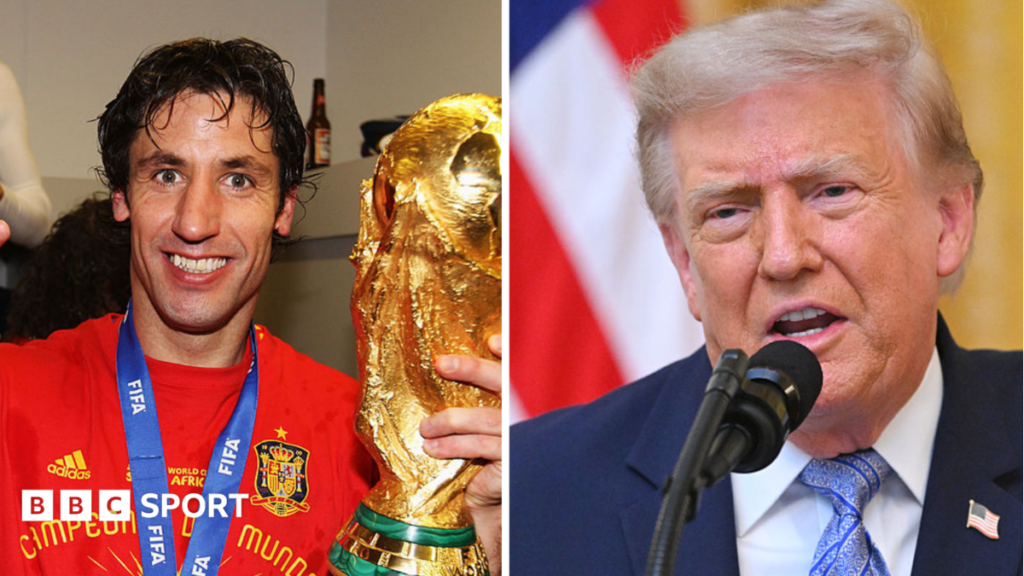
World Cup Winner Joan Capdevila Appeals to Trump After US Travel Permit Denial
Joan Capdevila, a celebrated former Spanish footballer and 2010 World Cup champion, has encountered unexpected travel difficulties ahead of the 2026 FIFA World Cup final in the United States. Despite his status and intentions to reunite with former teammates and support Spain’s national team, Capdevila was denied entry via the US Electronic System for Travel Authorization (ESTA). This incident highlights ongoing challenges faced by international visitors, even those with high profiles, in navigating US travel regulations amid heightened security measures.
World Cup Winner Joan Capdevila Appeals to Trump After US Travel Permit Denial
Capdevila’s Denied Entry and Public Appeal
Joan Capdevila, aged 48 and a key member of Spain’s 2010 World Cup-winning squad, revealed on social media that his application for the US travel permit, ESTA, was refused just days before the World Cup final scheduled at MetLife Stadium. His denial prevents him from attending the match alongside his children, who share his passion for football.
Capdevila’s public plea on the platform X (formerly Twitter) directly addressed then-US President Donald Trump, expressing his disappointment and asking for assistance. He also reached out to US Secretary of State Marco Rubio and the Spanish Ministry of Sport, seeking diplomatic support to resolve the issue.
His message underscored the emotional significance of the event, emphasizing how much he looked forward to cheering on Spain with his family and former teammates.
Background: Capdevila’s Football Legacy and the 2026 World Cup Context
Joan Capdevila’s football career is distinguished by his role as a defender for Spain’s national team during their historic 2010 World Cup victory against the Netherlands. He also contributed to Spain’s success in the 2008 European Championship and played for notable clubs including Villarreal and Deportivo La Coruña.
The 2026 World Cup final represents a significant occasion, pitting reigning European champions Spain against Argentina, the Copa America winners and defending World Cup champions. This match marks Spain’s second-ever appearance in a World Cup final, following their 2010 triumph.
Capdevila intended to witness this landmark event in person, underscoring the personal and symbolic importance of the match for him and his family.
Possible Reasons for ESTA Denial
In an interview with Spanish radio station COPE, Capdevila suggested that his denied entry might be linked to a 2016 football match he played in Tehran, Iran. He was part of a team of La Liga legends that faced an all-star Iranian side during that event.
US travel regulations and security protocols often scrutinize travel histories and associations, especially involving countries deemed sensitive or high-risk. Although Capdevila’s connection to the Iran match was purely sporting, it may have triggered additional security concerns leading to the ESTA refusal.
The US government has not publicly commented on Capdevila’s case, and the White House declined to provide an official statement when approached by media.
Broader Implications and Similar Cases
Capdevila is not alone in facing travel restrictions tied to the World Cup. Earlier in June, Somali referee Omar Artan was denied entry to the United States after arriving at Miami International Airport. US officials cited his alleged associations with suspected terror organizations as the reason for refusal, leading to his removal from officiating duties at the tournament.
These incidents illustrate the complexities and challenges of balancing international sporting events with national security priorities. They also highlight how travel restrictions can impact high-profile figures and professionals involved in global sports.
For fans, players, and officials, such travel denials can disrupt participation and attendance, potentially affecting the atmosphere and inclusivity of major tournaments.
The 2026 World Cup Final: Spain vs. Argentina
The final match at MetLife Stadium will be a historic clash between two football powerhouses. Spain earned their place by defeating France 2-0 in Dallas, marking only their second World Cup final appearance. Argentina, three-time World Cup winners and the reigning champions, secured their spot with a dramatic late comeback against England, winning 2-1.
This final is notable for bringing together the European champions and the South American champions, promising a highly competitive and eagerly anticipated showdown.
Capdevila’s desire to attend reflects the significance of the event not only for current players but also for former legends who shaped their national teams’ histories.
Editor’s note: The following is AI-generated commentary and context on this topic, not original reporting.
How Travel Restrictions Can Affect Former Athletes
Visa and travel permit decisions involving prominent former athletes occasionally draw public attention when the individual has a well-documented sporting legacy, particularly if the denial appears to conflict with an expectation of goodwill extended to celebrated figures from international sport. Immigration authorities generally do not comment publicly on individual visa determinations, citing privacy considerations, which often leaves affected individuals and the public without a clear official explanation for a specific denial.
Appeals of this nature, whether made through formal legal channels or public statements aimed at drawing attention to a case, reflect the limited options available to individuals facing an adverse travel determination. Legal experts generally note that publicity alone rarely changes the outcome of an immigration case, though it can sometimes prompt a review or reconsideration depending on the circumstances and the discretion afforded to the reviewing authority.
What this means
Joan Capdevila’s travel permit denial underscores the intersection of international sports, security policies, and diplomatic challenges. While the United States maintains strict entry protocols to safeguard national security, these measures can inadvertently affect prominent sports figures and fans eager to partake in landmark events like the World Cup final. Capdevila’s public appeal highlights the emotional and symbolic importance of such tournaments beyond the pitch, emphasizing the need for clear, fair, and efficient travel procedures for global sporting communities. As the 2026 World Cup final approaches, the hope remains that all eligible participants and supporters can experience the event firsthand, celebrating football’s unifying spirit.
Thousands of young protesters in Delhi continue to demand education reforms and the resignation of Education Minister Dharmendra Pradhan after a police crackdown. The…
Facing a looming financial collapse, Thames Water’s main lenders have offered the UK government a ‘golden share’ and increased local authority involvement to avoid…
Facing record-breaking temperatures and severe drought, Thames Water has introduced a hosepipe ban impacting over 10 million customers across parts of southern England to…