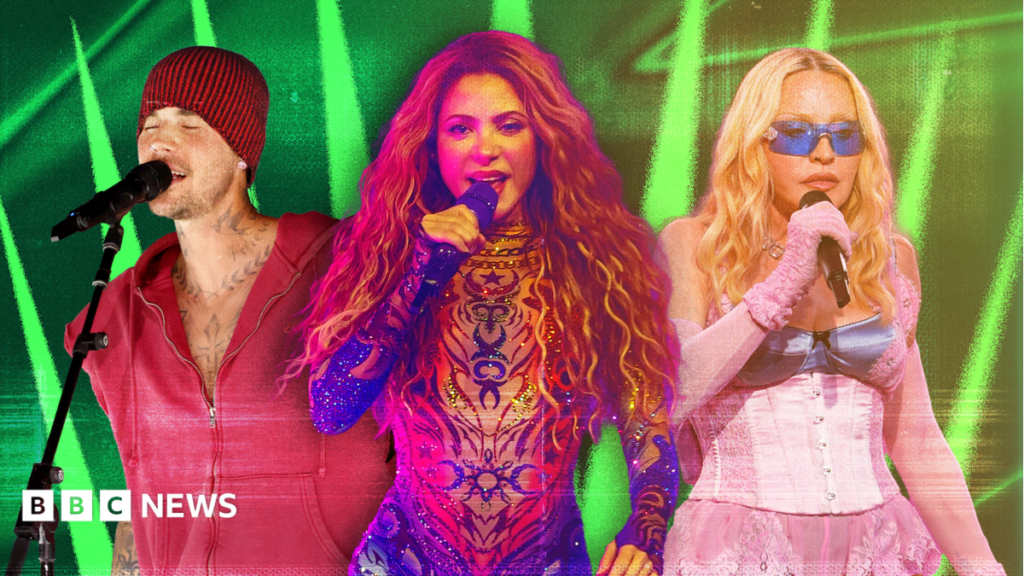
World Cup Half-Time Show: A New Era for Football Entertainment?
Half-time during football matches has traditionally been a brief pause for players and fans alike—a moment to refresh, discuss the game, or simply catch a breath before the second half. However, the upcoming 2026 FIFA World Cup final between Spain and Argentina is set to redefine this interval by introducing a star-studded half-time show featuring Madonna, Shakira, BTS, Justin Bieber, and Burna Boy. This unprecedented move, extending the break to 25 minutes, raises questions about the evolving nature of sports entertainment, the balance between spectacle and sport, and whether such shows will become a fixture in football worldwide.
World Cup Half-Time Show: A New Era for Football Entertainment?
A Landmark Celebration at the Intersection of Sport and Music
FIFA describes the 2026 World Cup final half-time show as a "landmark celebration" that merges the worlds of sport, music, and global culture. The event will take place at MetLife Stadium in New Jersey, marking the first time the World Cup has featured a musical performance during the half-time interval. The show is curated by Coldplay’s Chris Martin and includes Nigerian artist Burna Boy alongside international icons like Madonna and BTS.
This initiative follows a precedent set at the 2025 Club World Cup final, also held at MetLife Stadium, which featured a 24-minute half-time performance by artists such as Coldplay, J Balvin, Doja Cat, and Tems. The growing integration of music into football events reflects a broader trend to enhance the live experience and attract diverse audiences.
Balancing Tradition and Innovation: The Sporting Debate
The introduction of a half-time show in football has not been without controversy. According to the International Football Association Board (Ifab), players are entitled to a maximum 15-minute break at half-time to ensure adequate rest and maintain player welfare. Extending this to 25 minutes, as planned for the World Cup final, challenges these guidelines and raises concerns about the potential impact on player performance and injury risk.
British football content creator Ellis Platten expressed skepticism about the necessity of such entertainment during the World Cup, emphasizing that the event already commands massive global attention without additional spectacles. He highlighted that prolonged inactivity might require tactical adjustments such as substitutions to safeguard player health. Platten also noted that fans in stadiums often become restless during extended breaks, suggesting that longer intervals might detract from the live match experience.
Sports broadcaster Betty Glover echoed these sentiments, questioning whether football truly needs a half-time show. She observed that the 2026 World Cup coverage in the United States has been heavily commercialized, with frequent advertisements and limited analytical commentary, which contrasts with traditional football broadcasting approaches.
The Drive to Innovate: Competing with Diverse Live Experiences
James Massing of Live Nation, responsible for organizing the World Cup final half-time show, argues that modern sports events must innovate to remain competitive with other live entertainment options such as theatre, museums, and cinema. He suggests that heightened fan expectations for big sporting events now include immersive and memorable experiences beyond the game itself.
Massing believes that integrating music into football finals enhances the event’s atmosphere, making it feel more momentous. He referenced the energy surge during The Killers’ performance at the UEFA Champions League final earlier in 2026 as an example of how music can elevate the stadium experience.
Moreover, Massing stresses that player welfare remains a top priority in planning such performances, assuring that the integrity of the sport is uncompromised by entertainment elements.
Globalization of Sports and the American Influence
The concept of half-time shows is well-established in American sports, notably the Super Bowl, which has featured musical performances since 1967. This model is increasingly influencing international sports events. For example, the UEFA Champions League introduced musical acts during finals a decade ago, and the British Grand Prix began incorporating music into its Formula 1 events three years ago.
American football’s NFL has also expanded half-time shows to international games held in European cities since 2025, reflecting the sport’s global ambitions. James Massing notes that as sports become more global, there is a natural shift toward creating events that are not just games but memorable occasions that blend sport with entertainment.
The 2026 World Cup, hosted across North America, has seen a notable presence of celebrities and entertainment, from match ball deliveries to fan engagement activities, underscoring this trend.
Fan Perspectives and the Future of Half-Time Entertainment
Reactions among fans and commentators remain mixed. While some appreciate the spectacle and potential to attract new audiences, others worry about the dilution of football’s core appeal. Ellis Platten fears that half-time shows could become a standard feature in domestic football leagues, which he considers unnecessary and potentially disruptive.
Conversely, Betty Glover is uncertain whether the concept will gain traction globally, suggesting that cultural differences may limit its adoption in countries like Spain, Portugal, and Morocco, which will host the next World Cup. She believes that entertainment should only be embraced if it draws new fans without compromising the sport itself.
The financial aspect of the 2026 half-time show is also notable. Performers are not being paid, with proceeds directed toward an education fund, indicating a philanthropic dimension to this entertainment innovation.
What this means
The introduction of a half-time show at the 2026 FIFA World Cup final marks a significant evolution in how football intersects with global entertainment culture. While it offers an opportunity to enhance the spectator experience and broaden the event’s appeal, it also raises important questions about maintaining the sport’s integrity and respecting player welfare. As football continues to globalize and compete with diverse entertainment options, balancing tradition with innovation will be crucial. Whether this new format becomes a standard feature or remains a unique spectacle for marquee events will depend on fan reception, cultural acceptance, and the sport’s ability to safeguard its core values.
Originally reported by bbc.co.uk. Adapted for our readers with AI assistance.
Thousands of young protesters in Delhi continue to demand education reforms and the resignation of Education Minister Dharmendra Pradhan after a police crackdown. The…
Facing a looming financial collapse, Thames Water’s main lenders have offered the UK government a ‘golden share’ and increased local authority involvement to avoid…
Facing record-breaking temperatures and severe drought, Thames Water has introduced a hosepipe ban impacting over 10 million customers across parts of southern England to…