News
RUSSIA versus NATO and BRICS vs. NATO Military SWOT
Recall that Poland’s Minister Sikorski’s core claim is partially supported by the numbers, but the framing “quite quickly” and “without the U.S.” does not…
TAMFIS NIG LTDRC 8067447CAC ACTIVEFinima, Bonny Island, Rivers State

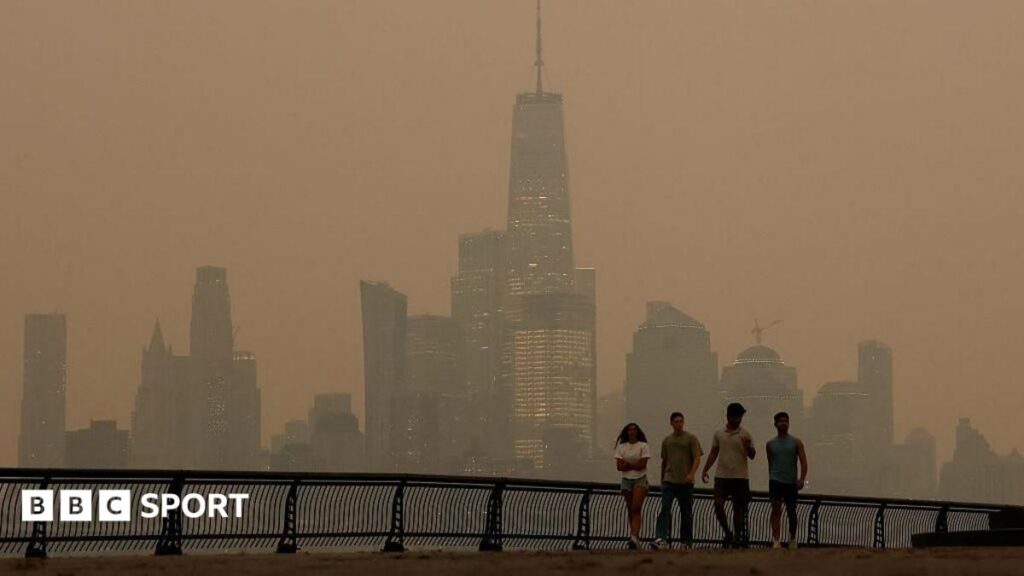
The 2026 FIFA World Cup Final, set to be held in the bustling metropolitan area of New York-New Jersey, is one of the most anticipated sporting events of the decade. However, in the weeks leading up to the final, the region has been grappling with deteriorating air quality caused by wildfire smoke drifting from distant blazes. This unexpected environmental challenge has prompted authorities to issue air quality alerts, urging residents and visitors to take precautions. Understanding the causes and implications of this smoke intrusion is crucial for ensuring public health and the smooth execution of the World Cup Final.
Wildfires have become increasingly frequent and severe across various parts of North America due to prolonged droughts and rising temperatures linked to climate change. While many wildfires occur in the western United States and Canada, prevailing wind patterns can transport smoke thousands of miles to the east coast. This transcontinental journey brings fine particulate matter and other pollutants to urban centers like New York-New Jersey, significantly impacting air quality.
In recent weeks, large-scale wildfires in Canada and the western U.S. have produced massive smoke plumes. These plumes have been carried eastward by upper atmospheric winds, enveloping major metropolitan areas along the way. The smoke contains a mixture of gases and microscopic particles capable of penetrating deep into the lungs, posing health risks especially to vulnerable populations.
Meteorologists and environmental agencies have been closely monitoring the smoke’s trajectory using satellite imagery and air quality sensors. Their data indicate that the smoke concentrations in the New York-New Jersey area have reached levels that meet or exceed thresholds for issuing public health advisories. This has necessitated proactive measures to mitigate exposure.
Air quality alerts are official warnings issued by environmental and public health agencies when pollution levels reach thresholds that could harm human health. These alerts often correspond to elevated concentrations of particulate matter (PM2.5), ozone, or other pollutants. In the context of wildfire smoke, PM2.5 is the primary concern due to its ability to bypass respiratory defenses and enter the bloodstream.
The New York-New Jersey region’s air quality alert serves to inform the public about the increased health risks associated with outdoor exposure. Sensitive groups such as children, the elderly, and individuals with respiratory or cardiovascular conditions are especially advised to limit outdoor activities during these periods. The alert also encourages the general public to stay indoors and use air purifiers if available.
Implementing air quality alerts ahead of a major event like the World Cup Final is critical. It allows organizers, local authorities, and attendees to prepare accordingly, minimizing health risks and ensuring that the event can proceed without significant disruption. These alerts also heighten public awareness about environmental issues impacting urban centers.
Exposure to wildfire smoke can have a range of adverse health effects, particularly due to the fine particulate matter (PM2.5) it contains. These particles can penetrate deep into the respiratory tract, leading to irritation, inflammation, and exacerbation of conditions such as asthma, bronchitis, and chronic obstructive pulmonary disease (COPD). Even healthy individuals may experience symptoms like coughing, throat irritation, and shortness of breath.
Beyond respiratory issues, wildfire smoke exposure has been linked to cardiovascular problems. Studies have shown that increased PM2.5 levels can elevate the risk of heart attacks, strokes, and arrhythmias, particularly in vulnerable populations. This underscores the importance of minimizing exposure during air quality alerts, especially for those with pre-existing heart conditions.
Long-term exposure to wildfire smoke, although less common during short-term events, can contribute to chronic health problems. Given the global attention and physical exertion associated with the World Cup Final, ensuring optimal air quality is essential to protect athletes, staff, and spectators from these health risks.
The air quality alert poses logistical and operational challenges for the 2026 World Cup Final, which is expected to attract hundreds of thousands of attendees from around the world. Event organizers must coordinate closely with public health officials to monitor air quality in real-time and implement contingency plans if pollution levels worsen.
Measures may include adjusting event schedules to minimize outdoor exposure during peak smoke periods, enhancing indoor air filtration systems at venues, and providing real-time air quality updates to attendees. Organizers are also likely to increase medical staffing and prepare for potential health incidents related to smoke inhalation.
Communication strategies are being prioritized to ensure fans are well-informed about air quality conditions and recommended precautions. This includes multilingual advisories, signage at venues, and digital alerts through official event apps. Ensuring the health and safety of participants and spectators is paramount to the event’s success.
Local governments in New York and New Jersey have mobilized resources to address the air quality concerns. This includes increasing public messaging about protective measures such as staying indoors, using N95 masks, and avoiding strenuous outdoor activities. Public facilities like libraries and community centers may be designated as clean air shelters.
Environmental agencies are intensifying air quality monitoring and deploying additional sensors to provide granular data across the metropolitan area. This data supports decision-making and helps identify neighborhoods most affected by smoke pollution, enabling targeted interventions.
Community organizations and healthcare providers are also playing a role by offering guidance and support to vulnerable populations. Clinics are preparing for potential increases in respiratory-related visits, and outreach programs are focusing on educating residents about minimizing smoke exposure.
Individuals in the New York-New Jersey area are advised to take proactive steps to reduce exposure to wildfire smoke. Staying indoors with windows and doors closed during periods of poor air quality is one of the most effective measures. Using air purifiers with HEPA filters can further improve indoor air quality by removing fine particulates.
When outdoor activity is unavoidable, wearing properly fitted N95 or equivalent masks can significantly reduce inhalation of harmful particles. It is important to avoid using cloth masks or surgical masks alone, as they do not offer adequate protection against fine particulate matter found in wildfire smoke.
Maintaining good respiratory health by staying hydrated, avoiding tobacco smoke, and following any medical advice for pre-existing conditions is also crucial. Monitoring local air quality reports and following public health advisories will help residents and visitors make informed decisions during the alert period.
Addressing the root causes of increasing wildfire frequency and intensity requires broad environmental and policy initiatives. Efforts to combat climate change through emissions reductions, sustainable land management, and investment in fire prevention infrastructure are essential to reduce future wildfire smoke events.
Urban planning can also play a role by incorporating green spaces and vegetation that help filter air pollutants and provide cooling effects. Enhancing building codes to improve indoor air quality and resilience against smoke infiltration is another important approach, particularly for public venues hosting large events.
Public education about wildfire risks and preparedness must be ongoing, ensuring communities are better equipped to respond to air quality emergencies. Collaboration between federal, state, and local agencies will be key to developing comprehensive wildfire management and air quality protection strategies in the years ahead.
The wildfire smoke-induced air quality alert in the New York-New Jersey area presents a complex challenge as the 2026 World Cup Final approaches. While the event promises to be a global celebration of sport, the health and safety of athletes, fans, and residents remain paramount. Through coordinated efforts between public health officials, event organizers, and the community, it is possible to navigate this environmental hurdle effectively. Moreover, the situation underscores the broader urgency of addressing climate change and enhancing urban resilience to protect public health from the growing threat of wildfire smoke.
Originally reported by bbc.co.uk. Adapted for our readers with AI assistance.
Keep reading
News
Recall that Poland’s Minister Sikorski’s core claim is partially supported by the numbers, but the framing “quite quickly” and “without the U.S.” does not…
News
Thousands of young protesters in Delhi continue to demand education reforms and the resignation of Education Minister Dharmendra Pradhan after a police crackdown. The…
News
Facing a looming financial collapse, Thames Water’s main lenders have offered the UK government a ‘golden share’ and increased local authority involvement to avoid…
TAMFIS NIG LTD
Electrical and instrumentation engineering, bid preparation and consulting, IT and software.