News
RUSSIA versus NATO and BRICS vs. NATO Military SWOT
Recall that Poland’s Minister Sikorski’s core claim is partially supported by the numbers, but the framing “quite quickly” and “without the U.S.” does not…
TAMFIS NIG LTDRC 8067447CAC ACTIVEFinima, Bonny Island, Rivers State

In July 2026, Ukraine witnessed significant public unrest following President Volodymyr Zelensky’s sudden decision to dismiss Defence Minister Mykhailo Fedorov. Fedorov, appointed only six months prior, had rapidly gained popularity for his innovative approach to military reform and anti-corruption efforts within the Ministry of Defence. His removal has exposed tensions at the highest levels of Ukraine’s military command and raised questions about the future direction of the country’s defence strategy amid an ongoing war with Russia. This article explores the circumstances surrounding Fedorov’s dismissal, public and military reactions, and what this means for Ukraine’s defence capabilities moving forward.
Mykhailo Fedorov, 35, was appointed Ukraine’s Defence Minister in January 2026, following a successful tenure as Minister of Digital Transformation. Known for his forward-thinking approach, Fedorov quickly set about modernizing the defence ministry, which many Ukrainians viewed as burdened by Soviet-era bureaucracy and inefficiency.
Fedorov’s initiatives included leveraging technology and data analytics to improve frontline performance and combat corruption. Notably, he established the “IT Army of Ukraine,” a volunteer cyber unit that launched targeted cyberattacks against Russian forces. He also spearheaded the “Army of Drones” fundraising campaign and introduced a gamification system that rewarded military units for successful operations against Russian targets.
His focus on high-tech warfare and innovation extended to diplomatic efforts, such as requesting SpaceX founder Elon Musk to restrict Russia’s use of Starlink satellites for drone attacks, which disrupted Russian operations. Under his leadership, Ukraine carried out significant drone strikes on Russian-occupied Crimea, signaling a shift toward asymmetric warfare strategies.
Fedorov’s dismissal came as a surprise to many and triggered immediate backlash. Rumors had circulated about tensions between Fedorov and Commander-in-Chief Oleksandr Syrskyi, which were later confirmed by both parties. Fedorov revealed that he had suggested to President Zelensky the replacement of Syrskyi and Chief of the General Staff Andrii Hnatov due to systemic conflicts within the military leadership.
President Zelensky acknowledged the existence of these tensions, describing them as “systemic” and occurring at multiple levels. He emphasized that Syrskyi and Fedorov could only collaborate effectively with his mediation. Despite this, Zelensky decided not to replace Syrskyi, prompting Fedorov to state that he would try to work with the commander-in-chief but found his initiatives consistently blocked.
Fedorov accused Syrskyi of causing division within Ukraine rather than focusing on defeating Russia through asymmetric warfare. Syrskyi responded publicly by expressing pride in the defence operations around Kyiv in 2022 and reaffirmed his commitment to the war effort, wishing Fedorov success.
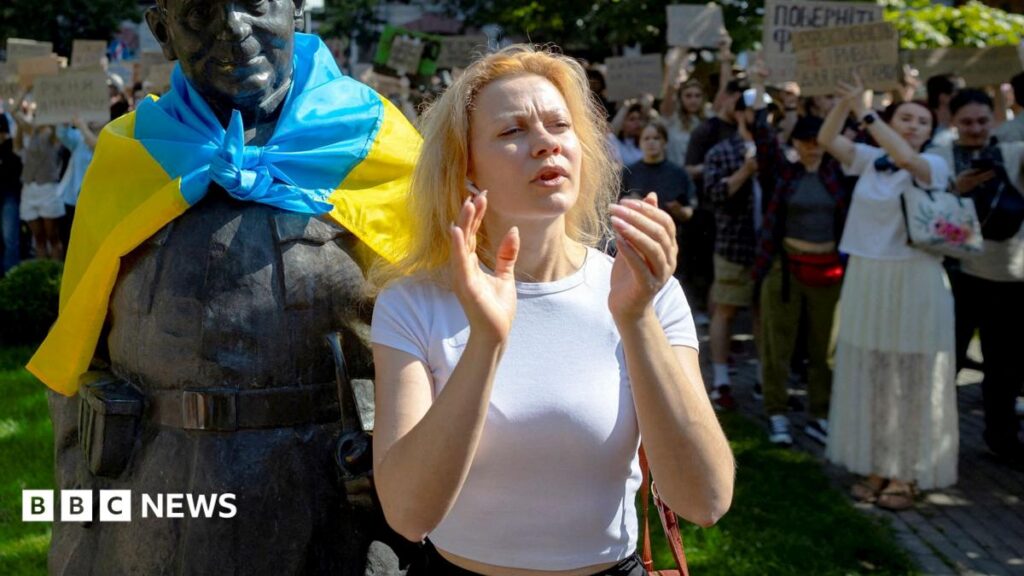
Fedorov’s removal sparked protests in several Ukrainian cities, with large crowds—predominantly young people—gathering in Kyiv holding signs such as “Hands off Fedorov” and chanting slogans like “Stop sabotaging victory!” and “Shame!”. Protesters expressed frustration and fear that the dismissal could undermine Ukraine’s defence efforts.
Among the protesters was Maria Lavrynets, who emphasized the importance of supporting soldiers and recognized Fedorov’s positive impact on military morale and effectiveness. Similarly, Ukrainian soldiers voiced strong disapproval of the decision, with one soldier describing it as “the worst mistake Zelensky has made during his entire presidency.”
The military community also saw notable resignations in protest. Pavlo Yelizarov, deputy commander of the Ukrainian Air Force and a respected drone unit leader, resigned, calling the dismissal “a great evil for the country’s defence capability.” Former advisers to Fedorov lamented the bureaucratic obstacles he faced and praised his contributions to Ukraine’s defence modernization.
The dismissal has raised concerns about internal divisions within Ukraine’s military and political leadership at a critical juncture in the ongoing conflict with Russia. Zelensky’s move to replace Fedorov with Ihor Klymenko, head of the interior ministry, has yet to be finalized, with Zelensky indicating other candidates are under consideration.
Additionally, the reshuffle included the appointment of Serhiy Koretsky as prime minister after the resignation of Yuliia Svyrydenko, signaling broader governmental changes. Zelensky has stated that he understands the public’s concerns and is responsive to societal feedback, though he has not reversed his decision on Fedorov.
Fedorov himself declined an offer to remain as a presidential adviser, emphasizing that he acted according to his conscience and expressing confidence that Zelensky will ultimately resolve the conflict between the defence ministry and military leadership. His departure leaves a gap in Ukraine’s defence innovation efforts, especially regarding the integration of technology and asymmetric warfare strategies.
The removal of Defence Minister Mykhailo Fedorov marks a pivotal moment in Ukraine’s ongoing struggle against Russian aggression. While his tenure was brief, Fedorov’s efforts to modernize the military and introduce innovative tactics earned him widespread support among soldiers and civilians alike. The internal conflicts that led to his dismissal underscore the complexities of managing military leadership during wartime, especially when balancing traditional command structures with new approaches to warfare. As protests continue and key military figures resign in protest, Ukraine faces the challenge of maintaining unity and momentum in its defence efforts. How President Zelensky navigates these tensions will be critical to sustaining the country’s resilience and advancing its strategic objectives in the conflict.
Originally reported by bbc.co.uk. Adapted for our readers with AI assistance.
Keep reading
News
Recall that Poland’s Minister Sikorski’s core claim is partially supported by the numbers, but the framing “quite quickly” and “without the U.S.” does not…
News
Thousands of young protesters in Delhi continue to demand education reforms and the resignation of Education Minister Dharmendra Pradhan after a police crackdown. The…
News
Facing a looming financial collapse, Thames Water’s main lenders have offered the UK government a ‘golden share’ and increased local authority involvement to avoid…
TAMFIS NIG LTD
Electrical and instrumentation engineering, bid preparation and consulting, IT and software.