News
RUSSIA versus NATO and BRICS vs. NATO Military SWOT
Recall that Poland’s Minister Sikorski’s core claim is partially supported by the numbers, but the framing “quite quickly” and “without the U.S.” does not…
TAMFIS NIG LTDRC 8067447CAC ACTIVEFinima, Bonny Island, Rivers State

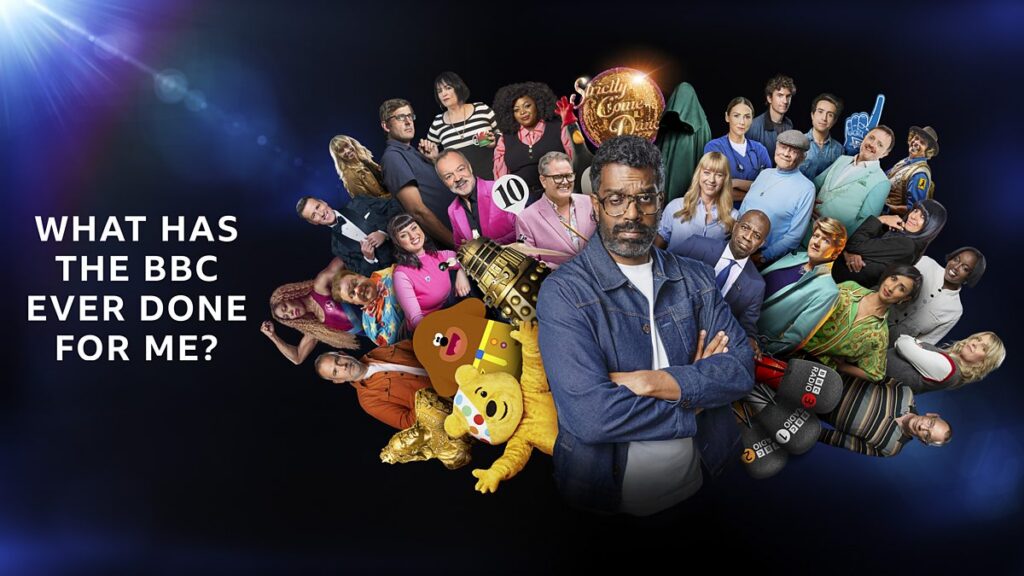
Romesh Ranganathan fronts a new BBC documentary special asking a deceptively simple question: what has the BBC actually done for the people who watch, listen to and rely on it every day? The programme takes the comedian and broadcaster on a journey around the UK, meeting a range of famous faces and members of the public to explore the corporation’s reach across news, entertainment, education and public service broadcasting.
Editor’s note: The following is AI-generated commentary and context on this programme, drawing on the description above rather than a full viewing of the episode.
Documentaries built around a single, broad question posed by a well-known host have become a reliable staple of British factual television, offering a flexible structure that can accommodate everything from lighthearted celebrity cameos to more serious, reflective interviews within a single episode. The format works particularly well for a comedian-led exploration, since a host known primarily for comedy can move fluidly between humour and genuine curiosity, disarming interview subjects in a way a more traditional current-affairs presenter might not.
Romesh Ranganathan has built a broadcasting career that spans stand-up comedy, panel shows and increasingly ambitious travel and documentary projects, giving him a broad frame of reference to draw on when exploring an institution as wide-ranging as the BBC. His presenting style typically blends self-deprecating humour with a willingness to ask straightforward, sometimes pointed questions, a combination that tends to keep documentary subjects like this accessible to a broad audience rather than feeling like a dry institutional retrospective.
The BBC operates under a royal charter that sets out specific public service obligations, including impartial news coverage, support for UK creative industries, and programming intended to inform, educate and entertain audiences across the whole of the country. Funded primarily through the licence fee, the corporation has faced recurring public and political debate in recent years over its funding model, its perceived value for money, and its role in an increasingly crowded media landscape dominated by global streaming platforms.
Programmes that examine the BBC’s own impact, whether through archive footage, statistics or personal testimony from members of the public, tend to serve a dual purpose: entertaining audiences with a nostalgic and often humorous look back at British broadcasting history, while also implicitly making a case for the institution’s continued relevance and funding at a moment when its future model remains a subject of ongoing debate. Such programming typically features a mix of well-known personalities reflecting on their own career beginnings at the corporation alongside members of the public discussing how BBC services, from local radio to children’s programming, shaped their daily lives.
Enlisting a well-known comedian or presenter to explore a national institution has proven to be an effective way of making potentially dry subject matter accessible to a broad television audience, translating statistics and policy debates into personal stories and memorable on-screen moments. This approach has been used successfully across British television to examine everything from the National Health Service to national infrastructure projects, typically pairing a recognisable host with a mix of expert contributors and members of the public.
For a subject as broad as the BBC itself, a single host’s journey around the country also allows the programme to showcase the sheer geographic and thematic range of the corporation’s output, from national news operations based in major cities to smaller-scale local and regional services that rarely receive the same level of public attention. Structuring the documentary as a physical journey, rather than a static studio discussion, gives producers scope to visit production facilities, local radio stations and other BBC operations that viewers might not otherwise see behind the scenes.
Documentaries of this kind arrive at a moment when public service broadcasters across Europe are increasingly having to make an explicit case for their value to audiences who have a growing number of entertainment alternatives available at the touch of a button. By using a well-loved comedic voice to walk viewers through decades of programming and public service delivery, a documentary like this aims to reconnect audiences, particularly younger viewers who may consume less traditional broadcast television, with the breadth of what a public broadcaster like the BBC actually provides beyond its most famous entertainment exports.
Whatever specific stories and interviews the finished programme includes, its underlying premise reflects a broader, ongoing conversation in British media about how legacy broadcasters communicate their value to the public in an era of fragmented, on-demand viewing habits. Programming that blends comedy, nostalgia and genuine public-interest questions about institutional value is likely to remain a recurring format as broadcasters continue looking for engaging ways to make their case directly to the audiences who ultimately fund them.
Bringing in “a host of famous faces,” as this programme promises, is a well-established technique for keeping a broad, thematic documentary engaging across its runtime, using recognisable personalities to anchor abstract or institutional themes in personal, relatable anecdotes. Guests in this kind of format typically reflect on formative moments tied to the broadcaster in question, whether a first television appearance, a beloved childhood programme, or a specific piece of coverage that resonated with them personally.
The variety of contributors featured in a documentary built around a single presenter’s journey often spans generations and professions, deliberately avoiding a narrow focus on entertainment figures alone in favour of a broader cross-section of public voices. This approach tends to reinforce the central premise of such programming: that a national broadcaster’s impact is best understood not through abstract statistics alone, but through the accumulated, varied experiences of the millions of people who have grown up with its programming as part of everyday life.
Originally reported by bbc.co.uk. Adapted for our readers with AI assistance.
Keep reading
News
Recall that Poland’s Minister Sikorski’s core claim is partially supported by the numbers, but the framing “quite quickly” and “without the U.S.” does not…
News
Thousands of young protesters in Delhi continue to demand education reforms and the resignation of Education Minister Dharmendra Pradhan after a police crackdown. The…
News
Facing a looming financial collapse, Thames Water’s main lenders have offered the UK government a ‘golden share’ and increased local authority involvement to avoid…
TAMFIS NIG LTD
Electrical and instrumentation engineering, bid preparation and consulting, IT and software.