
News
RUSSIA versus NATO and BRICS vs. NATO Military SWOT
Recall that Poland’s Minister Sikorski’s core claim is partially supported by the numbers, but the framing “quite quickly” and “without the U.S.” does not…
TAMFIS NIG LTDRC 8067447CAC ACTIVEFinima, Bonny Island, Rivers State

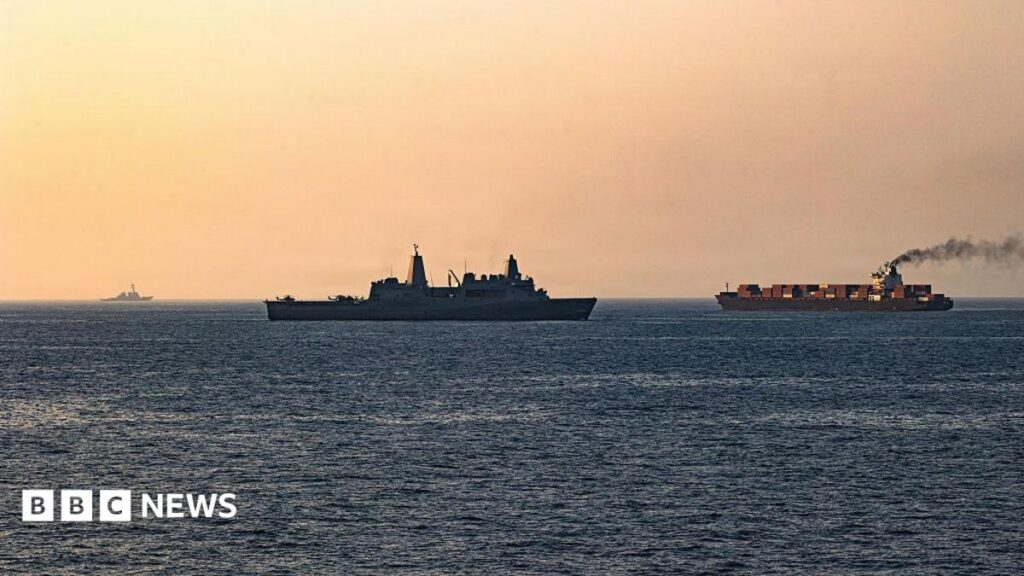
The United States has launched a series of significant military strikes against Iran following an attempted surprise attack targeting American troops stationed in the Middle East. This escalation comes amid a protracted conflict that began earlier in the year and has involved multiple regional actors, including Saudi Arabia and Iran-backed militias. As tensions rise, diplomatic efforts appear fragile, with both sides exchanging accusations and military responses. Understanding the latest developments is crucial for grasping the broader implications for regional stability and international relations.
The current hostilities between the United States and Iran trace back to early 2026 when the US and Israel launched military strikes targeting Iranian assets. At the time, then-President Donald Trump predicted a brief conflict lasting only a few weeks. However, five months later, the confrontation shows no signs of abating.
The conflict has involved a series of military engagements, including airstrikes, drone attacks, and naval confrontations, primarily in Iraq, Jordan, and the strategic Strait of Hormuz. The US has focused on targeting Iranian proxies and military infrastructure, while Iran has responded with attacks on US bases and shipping routes.
Recent weeks saw a temporary lull in violence, with both sides reportedly engaging in talks aimed at de-escalation. However, these discussions remain unconfirmed by Iranian officials, and the fragile calm was shattered by renewed attacks.
On Tuesday, Iran fired upon US military bases in Jordan and targeted vessels in the Strait of Hormuz, a critical maritime passage for global oil shipments. The Islamic Revolutionary Guard Corps (IRGC) claimed responsibility, describing their actions as retaliation against what they termed American aggression.
In response, the US Central Command (Centcom) announced it had launched 'powerful strikes' against Iranian targets. These strikes were described as a direct and forceful response to the attacks on American forces and assets.
Additionally, the US and Saudi Arabia conducted joint strikes targeting Iranian proxy groups in eastern Iraq. These operations aimed to dismantle terrorist logistics and weapons sites linked to the IRGC, following a series of drone attacks on US interests in the region.
The strikes reportedly resulted in significant casualties among Iran-backed militias, including the Popular Mobilisation Forces (PMF), which is a major paramilitary coalition in Iraq. The Iraqi government condemned the attacks as violations of its sovereignty, although the US maintains that the operations were coordinated with Iraqi authorities.
The conflict between the US and Iran is deeply intertwined with the longstanding rivalry between Saudi Arabia and Iran. Saudi Arabia, a leading Sunni Muslim power, views Iran, the largest Shia Muslim country, as a regional adversary vying for dominance.
Saudi Arabia’s involvement in the recent joint strikes with the US underscores its strategic alignment with American efforts to counter Iranian influence. The kingdom’s defense minister reportedly expressed a desire to de-escalate tensions during recent discussions with President Trump, signaling a complex balance between confrontation and diplomacy.
Iran’s use of proxy militias across Iraq and other parts of the Middle East complicates the security landscape. These groups often operate with considerable autonomy but are believed to receive direction and support from Tehran, making them key instruments in Iran’s regional strategy.
Despite the surge in military actions, there have been intermittent attempts at diplomacy. President Trump described recent talks as 'very friendly negotiations,' although Iranian officials have denied any formal discussions.
The contradictory statements highlight the challenges in achieving a diplomatic resolution. Both sides appear to be leveraging military actions to strengthen their negotiating positions, contributing to a cycle of escalation and retaliation.
The international community remains concerned about the potential for broader conflict, especially given the strategic importance of the Strait of Hormuz and the involvement of multiple regional actors. Efforts to revive dialogue and reduce hostilities will require careful coordination and mutual concessions.
The ongoing conflict between the US and Iran threatens to destabilize an already volatile region. The risk of miscalculation or unintended escalation remains high, particularly with the involvement of proxy forces and the proximity of critical infrastructure and shipping lanes.
The Strait of Hormuz, through which a significant portion of the world’s oil supply passes, is a focal point of tension. Attacks on vessels in this area could disrupt global energy markets and have far-reaching economic consequences.
Moreover, the conflict complicates relations with Iraq, where US strikes have targeted Iran-backed militias but drawn condemnation from the Iraqi government. Maintaining Iraqi sovereignty while countering militant threats poses a delicate challenge for all parties involved.
The broader Sunni-Shia rivalry, exemplified by Saudi Arabia and Iran, continues to fuel proxy conflicts and sectarian divisions, making comprehensive peace efforts more difficult.
The recent US strikes against Iran mark a significant escalation in a conflict that has persisted for months without resolution. While military actions have dominated headlines, the underlying regional rivalries and proxy dynamics continue to fuel instability. Diplomatic efforts, though currently fragile, remain essential to preventing further escalation and fostering a sustainable peace. As the situation evolves, close attention to developments in the Middle East will be critical for policymakers and global observers alike.
Originally reported by bbc.co.uk. Adapted for our readers with AI assistance.
Keep reading
News
Recall that Poland’s Minister Sikorski’s core claim is partially supported by the numbers, but the framing “quite quickly” and “without the U.S.” does not…
News
Thousands of young protesters in Delhi continue to demand education reforms and the resignation of Education Minister Dharmendra Pradhan after a police crackdown. The…
News
Facing a looming financial collapse, Thames Water’s main lenders have offered the UK government a ‘golden share’ and increased local authority involvement to avoid…
TAMFIS NIG LTD
Electrical and instrumentation engineering, bid preparation and consulting, IT and software.