US-Brokered Agreement Aims for Hamas Disarmament and Gaza Stabilization Amid Ongoing Tensions
The Israeli-Palestinian conflict remains one of the most enduring and complex geopolitical challenges of our time. Recent developments have introduced a new dimension to peace efforts in Gaza, with US President Donald Trump declaring that the Board of Peace has reached an agreement for the complete disarmament of Hamas and other armed factions. This announcement, part of a broader US-brokered ceasefire and reconstruction plan, promises a phased withdrawal of Israeli forces and the establishment of a new Palestinian governance structure. However, the absence of clear endorsements from Hamas and Israel underscores the fragile nature of this progress. This article examines the details of the agreement, the roles of mediating countries, the responses from involved parties, and the broader implications for Gaza’s future.
US-Brokered Agreement Aims for Hamas Disarmament and Gaza Stabilization Amid Ongoing Tensions
Overview of the Disarmament Agreement
On 31 July 2026, US President Donald Trump announced that the Board of Peace had reached an agreement aimed at the complete disarmament of Hamas and other armed groups operating in Gaza. This development is positioned as a critical milestone within the Trump 20-Point Plan, a comprehensive framework designed to stabilize Gaza and facilitate peace between Israel and Palestinian factions.
According to Trump’s statement on Truth Social, the agreement will be implemented through carefully structured phases. The initial focus is on disarmament, which will be followed by the withdrawal of Israeli forces from Gaza. Subsequently, an International Stabilization Force, working alongside a newly formed Palestinian police force, will assume responsibility for maintaining security and governance in the territory.
The plan envisions Gaza transitioning to governance by a new Palestinian authority, marking a significant shift from Hamas’s current control. Reconstruction efforts are also a key component of the second phase, aiming to rebuild infrastructure and restore normalcy for Gaza’s residents.
Role of Mediators and International Involvement
The announcement highlighted the crucial roles played by Egypt, Qatar, and Turkey as mediators in the peace process. These countries have been instrumental in facilitating dialogue between Hamas, Israel, and other stakeholders. Egyptian state media confirmed that Cairo would host a mediator meeting focused on advancing the second phase of the ceasefire plan, emphasizing the ongoing diplomatic engagement.
The involvement of an International Stabilization Force represents an effort to introduce neutral peacekeeping and security oversight in Gaza. This force is expected to collaborate with the new Palestinian police, helping to ensure safety for both Gaza residents and neighboring regions. The international community’s engagement reflects a broader recognition of the need for multilateral support to achieve lasting peace.
Uncertainty Surrounding Hamas and Israeli Endorsement
Despite the announcement of the agreement, it remains unclear whether Hamas and Israel have formally agreed to the terms. Neither party has issued official statements confirming their participation or endorsement. Reports from Israeli media and officials indicate skepticism and opposition to the current proposals, with concerns that the terms do not meet Israel’s security demands.
The Times of Israel cited unnamed sources suggesting that Hamas negotiators and mediators had signed the agreement with the Board of Peace. However, an Israeli office reportedly rejected the disarmament proposal, underscoring the ongoing challenges in securing consensus.
Historically, Hamas has been resistant to disarmament efforts. Earlier in 2026, a senior Palestinian official revealed that Hamas had rejected a similar plan proposed by a key figure in Trump’s peace efforts. The recent change in Hamas leadership, with Khalil al-Hayya replacing Yahya Sinwar as the chief negotiator, adds another layer of complexity to the negotiation dynamics.
Context: The Israeli-Hamas Conflict and Its Human Toll
The backdrop to these negotiations is the devastating conflict that erupted following Hamas’s attack on Israel on 7 October 2023. This assault resulted in the deaths of approximately 1,200 people and the taking of 251 hostages. In response, Israel launched a large-scale military campaign in Gaza, which has led to significant casualties and destruction.
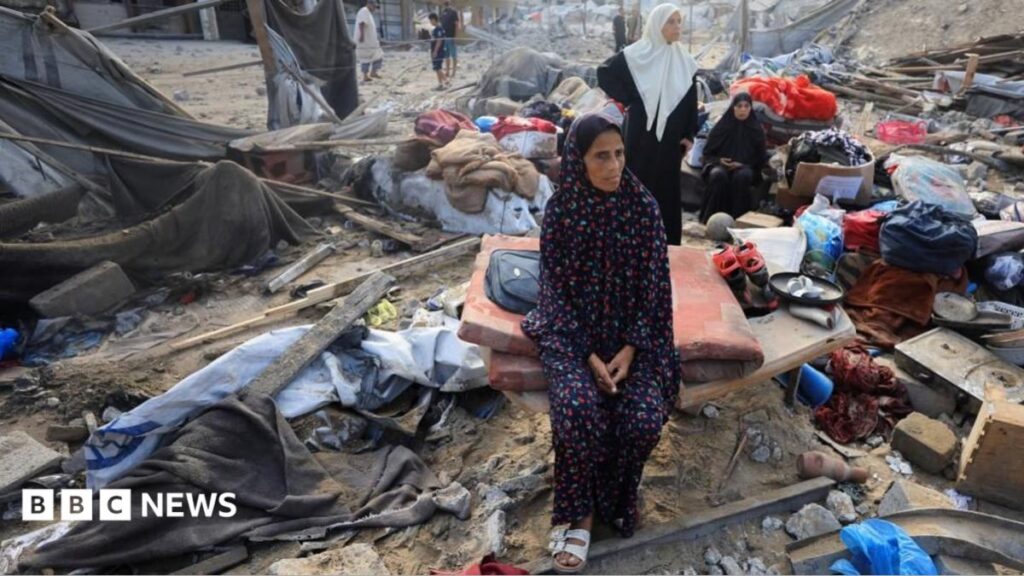
According to Gaza’s Hamas-run health ministry, over 73,290 people have been killed since the conflict began, including more than 21,000 children. The humanitarian crisis has drawn international concern and intensified calls for a ceasefire and reconstruction efforts.
The Board of Peace was initially conceived to help end the war and oversee Gaza’s reconstruction. However, its proposed charter notably omits direct references to Palestinian territories, suggesting an intention to replace some functions traditionally held by the United Nations.
Challenges Ahead for Peace and Reconstruction
While the disarmament agreement represents a hopeful step, significant obstacles remain. The lack of explicit commitment from Hamas and Israel raises questions about the feasibility of implementing the plan. Israel’s insistence on stringent security guarantees and Hamas’s historical reluctance to disarm complicate the path forward.
Moreover, the political landscape within Gaza and the broader Palestinian territories is fluid. The recent change in Hamas leadership and the evolving roles of mediators contribute to an unpredictable negotiation environment.
Reconstruction efforts will require substantial resources and coordination. The involvement of international actors is critical, yet the absence of UN endorsement for the Board of Peace’s charter could limit the scope of support and legitimacy.
Maintaining ceasefire conditions during the phased implementation of disarmament and withdrawal will be essential to prevent renewed violence. The success of the International Stabilization Force and the new Palestinian police force in establishing security will be closely watched.
What this means
The announcement of a disarmament agreement for Hamas and other armed groups in Gaza marks a significant diplomatic development in the protracted Israeli-Palestinian conflict. While the phased plan offers a structured approach to ceasefire, withdrawal, and reconstruction, the absence of clear endorsements from Hamas and Israel highlights the tenuous nature of peace efforts. The involvement of regional mediators and international forces underscores the importance of multilateral cooperation. However, the path to lasting peace will require overcoming deep-seated mistrust, addressing security concerns, and securing broad-based political support. As negotiations continue, the international community must remain engaged to support both humanitarian needs and the complex political processes essential for Gaza’s future stability.
Originally reported by bbc.co.uk. Adapted for our readers with AI assistance.
Thousands of young protesters in Delhi continue to demand education reforms and the resignation of Education Minister Dharmendra Pradhan after a police crackdown. The…
Facing a looming financial collapse, Thames Water’s main lenders have offered the UK government a ‘golden share’ and increased local authority involvement to avoid…
Facing record-breaking temperatures and severe drought, Thames Water has introduced a hosepipe ban impacting over 10 million customers across parts of southern England to…