Unprecedented Wildfires Threaten Bordeaux and Surrounding Regions Amid Intense Heatwave
In late July 2026, southwestern France confronts an extraordinary wildfire emergency as flames edge within nine miles of Bordeaux, one of the country’s major cities. The fire, described by government officials as 'unprecedented' and the toughest since World War Two, has already forced tens of thousands to evacuate and destroyed hundreds of homes. Alongside France, Spain is battling extensive wildfires near Madrid, both countries grappling with the challenges posed by extreme heat and dry conditions intensified by climate change. This article examines the current wildfire situation, the response efforts, and the broader implications for Europe’s fire management amid a warming climate.
Unprecedented Wildfires Threaten Bordeaux and Surrounding Regions Amid Intense Heatwave
Wildfire Near Bordeaux: An Escalating Emergency
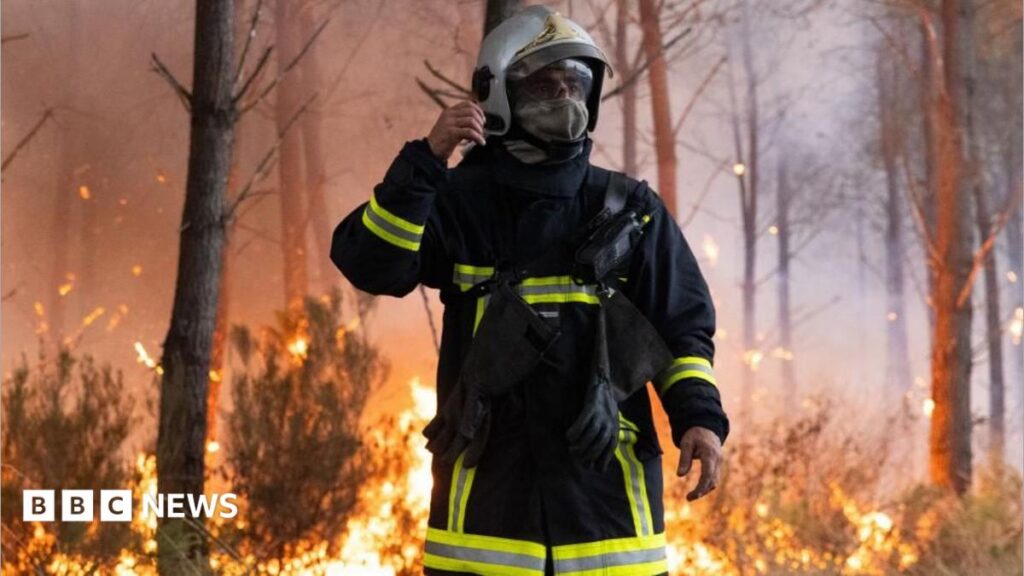
The wildfire in the Gironde region of France has grown alarmingly close to Bordeaux, now just 15 kilometers (nine miles) from the city’s outskirts. Thomas Cazenave, the mayor of Bordeaux, has expressed readiness for all possible scenarios, including large-scale evacuations. Authorities are preparing to accommodate displaced residents should the fire’s advance necessitate further movement.
The fire has consumed approximately 42,000 hectares (103,000 acres) of land and destroyed around 240 houses in the region. The mayor of Cestas, a town south of Bordeaux, described the situation as 'catastrophic,' noting that 17,000 residents were evacuated overnight as the fire intensified two days prior. Although the fire’s rapid advance has slowed, officials caution that risks remain high due to potential wind shifts and flying embers that can ignite new blazes.
Firefighters are engaged in a strenuous battle to contain the blaze, employing strategies such as creating firebreaks to protect vulnerable areas. Interior Minister Laurent Nuñez characterized the fire as having 'a life of its own,' highlighting the unpredictable and volatile nature of the situation.
National Response and Government Perspective
French President Emmanuel Macron visited the affected Gironde region, describing the wildfire crisis as 'completely unprecedented' and the toughest the country has faced since World War Two. While a smaller fire in the Landes region has been contained, the Gironde blaze continues to pose a significant threat.
Prime Minister Sébastien Lecornu emphasized the scale of the crisis, noting that since January, over 116,000 hectares (286,852 acres) have burned across France, with more than 13,500 fire starts recorded. He pointed out that nine out of ten fires are human-caused, often due to negligence such as discarded cigarette butts, unattended barbecues, or unsafe work practices. Additionally, some fires have been deliberately set, with 162 arrests made since early July.
The government’s messaging underscores the importance of public vigilance and responsible behavior to prevent further fire outbreaks during this critical period.
Wildfires Across France and Spain: A Regional Crisis
The Gironde fire is one among several wildfires currently burning in France, with other active blazes in regions such as Var, Landes, and Haute-Corse on the island of Corsica. The widespread nature of these fires reflects the severity of the current fire season.
Spain is simultaneously grappling with severe wildfires west of Madrid, which have led to a national emergency declaration for the fifth consecutive day. Satellite imagery reveals the rapid expansion of the fire, which has merged multiple smaller blazes into one large, uncontrolled inferno affecting over 27,000 hectares. Local officials have described this as the worst wildfire event in the region’s history.
The scale and intensity of fires in both countries highlight a shared vulnerability to extreme weather conditions and underscore the need for coordinated cross-border responses and resource sharing.
Climate Change and Its Role in Intensifying Wildfires
Experts attribute the increasing frequency and intensity of wildfires in Europe to climate change. The continent is warming at twice the global average, according to the Copernicus Climate Change Service. This accelerated warming leads to more frequent and severe heatwaves, prolonged droughts, and reduced water availability—all factors that create ideal conditions for wildfires to ignite and spread rapidly.
The current heatwave, which is expected to intensify further, complicates firefighting efforts by increasing fire behavior unpredictability and exhausting resources. High temperatures and dry winds can cause fires to jump natural barriers and generate fire-generated thunderstorms, which can exacerbate the situation.
This pattern of extreme weather and wildfire activity is likely to continue unless significant mitigation and adaptation strategies are implemented at national and European levels.
Challenges in Firefighting and Community Protection
Firefighting teams face an uphill battle against these large-scale wildfires. The unpredictable nature of the fires, driven by shifting winds and dry conditions, requires constant vigilance and rapid response capabilities. Firebreaks and controlled burns are essential tools but may not be sufficient when fires exhibit such aggressive behavior.
Community preparedness and evacuation planning are critical components of the response. Authorities in Bordeaux and surrounding towns have mobilized resources to shelter evacuees and maintain public safety. However, the psychological toll on residents, many of whom have lost homes and livelihoods, is profound.
Long-term strategies must also consider land management practices, urban planning, and public education to reduce vulnerability to future wildfires.
What this means
The wildfires threatening Bordeaux and spreading across France and Spain represent a stark reminder of the growing risks posed by climate change and human factors. As emergency services continue to battle these unprecedented blazes, the situation underscores the urgent need for comprehensive fire prevention, improved land management, and climate action. Protecting communities and ecosystems from future wildfire disasters will require coordinated efforts at local, national, and international levels, alongside public awareness and responsible behavior. The current crisis serves as a call to adapt to a changing environment where wildfires may become an increasingly common and severe threat.
Originally reported by bbc.co.uk. Adapted for our readers with AI assistance.
Thousands of young protesters in Delhi continue to demand education reforms and the resignation of Education Minister Dharmendra Pradhan after a police crackdown. The…
Facing a looming financial collapse, Thames Water’s main lenders have offered the UK government a ‘golden share’ and increased local authority involvement to avoid…
Facing record-breaking temperatures and severe drought, Thames Water has introduced a hosepipe ban impacting over 10 million customers across parts of southern England to…