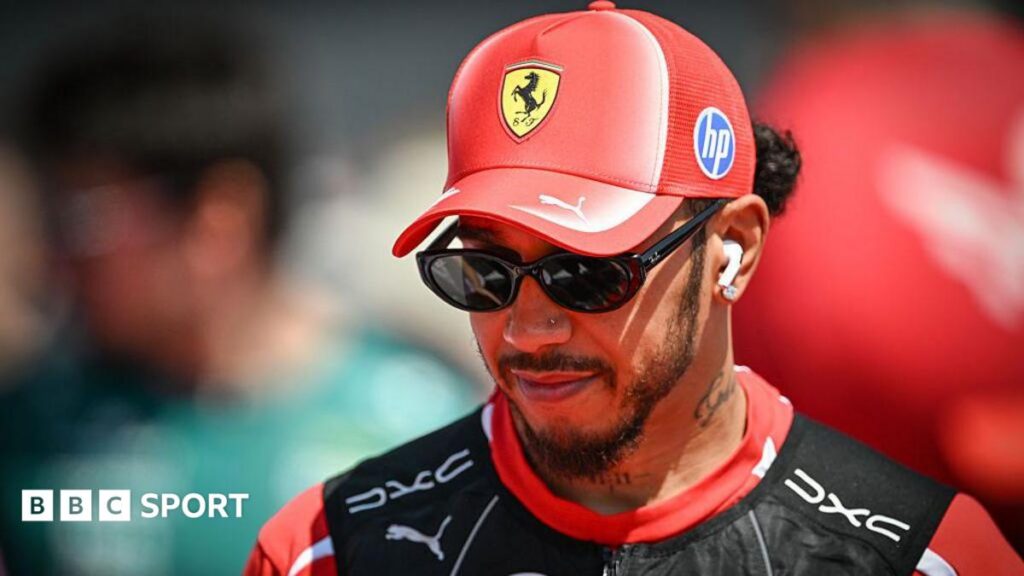
Understanding Lewis Hamilton’s Recent Penalties and Key Developments in Formula 1
Lewis Hamilton, a seven-time Formula 1 world champion, has recently encountered a series of penalties that have surprised many fans and analysts alike. These incidents, occurring over the last three Grands Prix, have sparked discussions about whether they indicate a shift in Hamilton's performance or are merely coincidental. Meanwhile, other significant developments in the F1 landscape, including Aston Martin's mid-season upgrades and Williams' unexpected decline, are shaping the competitive environment as the sport pauses for its summer break. This article delves into the reasons behind Hamilton's penalties, examines Aston Martin driver Fernando Alonso's future considerations, explores Williams' challenges, and reviews the race management issues that affected the Hungarian Grand Prix.
Understanding Lewis Hamilton's Recent Penalties and Key Developments in Formula 1
Why Has Lewis Hamilton Received Multiple Penalties Recently?
Over the past three Formula 1 races, Lewis Hamilton has been handed four penalties, an unusually high number for a driver of his experience and stature. These penalties have varied in nature, ranging from procedural infractions to on-track incidents.
At the British Grand Prix in Silverstone, Hamilton was penalised for moving before the start signal, a decision that was contentious given discussions among drivers about inconsistent enforcement of this rule. Hamilton's car briefly jumped forward and then stopped before the lights went out, leading to a penalty despite prior agreement that movement before the final red light should not be penalised if the driver remains within their starting box.
In the Belgian Grand Prix at Spa-Francorchamps, Hamilton received a five-second penalty for causing a collision with teammate George Russell at Les Combes on the first lap. This incident was described by Hamilton as a racing incident by Russell himself, yet the penalty stood and cost Hamilton valuable points.
During the Hungarian Grand Prix, Hamilton faced two penalties: a three-place grid drop for impeding Oscar Piastri during qualifying, and a five-second penalty in the race for exceeding the pit lane speed limit by 0.1 km/h while exiting the pits under a late virtual safety car. The latter penalty was particularly frustrating as it occurred during a close battle with Mercedes' Kimi Antonelli and was attributed to a communication error regarding track position and timing.
Hamilton himself acknowledged the cluster of penalties, describing the last three races as “pretty bad” from his side and expressing a commitment to avoid giving officials reasons to penalise him in the future. The diversity of the penalties and Hamilton’s reflections suggest that these incidents are more coincidental than indicative of a decline in skill or discipline.
Fernando Alonso and Aston Martin: Upgrades and Future Prospects
Fernando Alonso, a two-time world champion and one of Formula 1's most experienced drivers, faces a critical decision about his future in the sport as his contract with Aston Martin approaches its end. At 45 years old, Alonso is contemplating whether to continue racing in F1 or retire, with his choice influenced by the competitiveness of his current team.
The recent introduction of a significant aerodynamic upgrade and weight-saving improvements to the Aston Martin car at the Hungarian Grand Prix marked a positive step. These changes reportedly delivered an improvement of approximately two seconds per lap, an exceptional gain for a mid-season upgrade. This progress was crucial not only for performance but also as a demonstration of the factory's renewed capability to develop effective car enhancements after several challenging years.
Looking ahead, Aston Martin plans to debut a new Honda power unit at the Dutch Grand Prix following the summer break. Although this engine is still estimated to be around 1.5 seconds per lap slower than the leading power units, it is expected to close about a third of that gap. Alonso, who has prior experience with Honda during his McLaren years, remains cautiously optimistic but awaits tangible results before finalising his decision to continue.
Team principal Adrian Newey expressed confidence in Alonso's satisfaction with the team and his value as a driver, highlighting the importance of Alonso's feedback and skill. Ultimately, Alonso's choice will hinge on whether Aston Martin can maintain and build upon these recent performance gains.
Williams' Unexpected Decline and Driver Market Challenges
Williams, a team that had shown promising development in recent seasons, has experienced a surprising downturn in performance this year. The team principal, James Vowles, acknowledged that the current regulations exposed previously unknown weaknesses in the factory's capabilities, resulting in a significant setback.
Vowles described the situation as a 'good crisis,' suggesting that the difficulties have prompted necessary changes that position the team better for future success, particularly with the upcoming 2026 regulations. Despite this optimistic framing, the current reality is challenging, with Williams struggling at the back of the grid.
Drivers Carlos Sainz and Alex Albon have expressed frustration with the team's performance, but the driver market remains relatively static. Potential moves hinge on decisions by top drivers like Max Verstappen, whose future plans could trigger a cascade of changes across teams.
Options for Williams drivers are limited. While Aston Martin could be a possibility, a seat there would likely only open if Fernando Alonso departs. Other teams either do not align with their ambitions or have stable line-ups. This situation underscores the complexities drivers face in navigating career moves amid the sport's shifting dynamics.
Race Management and Blue-Flag Issues at the Hungarian Grand Prix
The Hungarian Grand Prix was marked by several blue-flag infringements that influenced race outcomes. Blue flags signal to slower cars that they must allow faster, lapping cars to pass safely, a critical aspect of race management.
A technical issue with the link between the F1 timing system and FIA race control caused erratic blue-flag signals. The system mistakenly identified some cars as lapped due to irregular timing data, leading to unnecessary blue flags being shown. Once detected, the automated system was disabled, and race officials reverted to manual flagging and trackside blue-light panels.
Despite these measures, incidents occurred, including a collision between Carlos Sainz and Oscar Piastri as Piastri attempted to lap Sainz. This collision potentially cost Piastri the race lead, as Lando Norris was closely contesting the position. Both Sainz and Haas driver Oliver Bearman received five-second penalties for failing to respect blue flags.
To prevent such issues in the future, the FIA is developing an update that will estimate expected car positions even when timing system data is irregular. This improvement aims to enhance the reliability of blue-flag signaling and reduce race incidents related to lapped traffic.
What this means
The recent cluster of penalties for Lewis Hamilton highlights the unpredictable nature of Formula 1 racing, where even the most experienced drivers can face setbacks due to a combination of strict regulations, race incidents, and communication errors. Meanwhile, Aston Martin's technical progress and Williams' struggles illustrate the ongoing challenges and opportunities teams face in a highly competitive environment. As the sport enters its summer break, attention will turn to how these developments influence driver decisions, team strategies, and race management improvements. Fans can expect a dynamic second half of the season as these factors play out on the track.
Originally reported by bbc.co.uk. Adapted for our readers with AI assistance.
Thousands of young protesters in Delhi continue to demand education reforms and the resignation of Education Minister Dharmendra Pradhan after a police crackdown. The…
Facing a looming financial collapse, Thames Water’s main lenders have offered the UK government a ‘golden share’ and increased local authority involvement to avoid…
Facing record-breaking temperatures and severe drought, Thames Water has introduced a hosepipe ban impacting over 10 million customers across parts of southern England to…