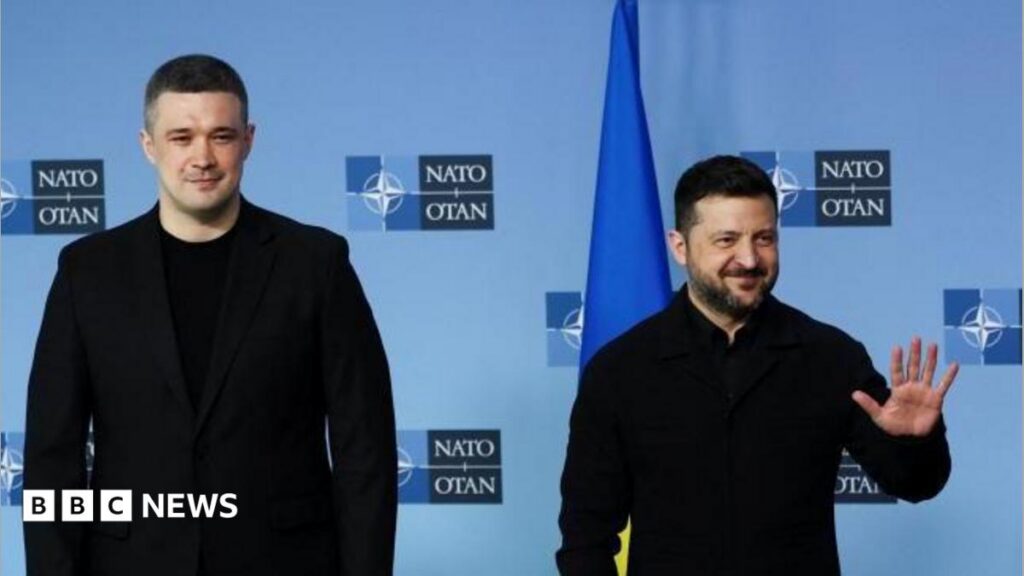
Ukraine’s Defence Minister Standoff: Mykhailo Fedorov Insists on Reinstatement Amid Government Turmoil
Ukraine’s defence leadership has become a focal point of political and public contention following the dismissal of Mykhailo Fedorov as defence minister. Known for his transformative approach to military innovation and anti-corruption efforts, Fedorov’s ousting has ignited mass protests and a complex power struggle within President Volodymyr Zelensky’s government. This article explores the background of the dispute, the key figures involved, and the implications for Ukraine’s military strategy amid its ongoing conflict with Russia.
Ukraine’s Defence Minister Standoff: Mykhailo Fedorov Insists on Reinstatement Amid Government Turmoil
The Rise and Role of Mykhailo Fedorov in Ukraine’s Defence
Mykhailo Fedorov, appointed defence minister in January, quickly gained recognition for his data-driven reforms and innovative strategies that significantly enhanced the Ukrainian armed forces’ effectiveness. At just 35 years old, Fedorov spearheaded initiatives such as the Army of Drones, which leveraged technology to improve battlefield intelligence and strike capabilities.
Beyond technological innovation, Fedorov also prioritized anti-corruption measures within the military, aiming to increase transparency and efficiency. His leadership style marked a departure from traditional military command approaches, focusing on modernization and adaptability in the face of Russia’s full-scale invasion that began in February 2022.
Fedorov’s tenure coincided with a period of notable progress for Ukraine’s military, including gaining battlefield initiative and implementing a comprehensive plan to protect airspace, stabilize the front lines, and target Russia’s economic infrastructure.
Conflict with Military Leadership and Political Fallout
Fedorov’s reformist approach clashed with established military figures, most notably Commander-in-Chief Oleksandr Syrskyi, a veteran general credited with defending Kyiv during the initial Russian assault. Syrskyi’s traditional Soviet-era military mindset contrasted sharply with Fedorov’s push for radical modernization, leading to tensions within the defence establishment.
The friction culminated in Fedorov’s removal last week, a decision that triggered widespread protests across Ukraine. Demonstrators expressed strong support for Fedorov, viewing him as essential to Ukraine’s military successes and future victory. The protests intensified pressure on President Zelensky, who subsequently dismissed Syrskyi as well, attempting to quell unrest and recalibrate military leadership.
Despite these moves, Fedorov has refused to accept alternative government positions offered by Zelensky, including deputy prime minister for military innovation. He insists that only the roles of president, defence minister, and commander-in-chief hold the authority to shape the war’s outcome, underscoring his determination to regain his former post.
Zelensky’s Response and the Ongoing Leadership Battle
President Volodymyr Zelensky has sought to manage the crisis by reshuffling key military roles and offering Fedorov influential but subordinate positions. Zelensky emphasized the importance of coordination among military innovation, defence leadership, and presidential oversight, proposing the deputy prime minister role as a critical nexus for these efforts.
However, Fedorov’s rejection of these offers signals a persistent impasse. Presidential adviser Dmytro Lytvyn acknowledged ongoing discussions but refrained from disclosing details, indicating that the leadership dispute remains unresolved.
The appointment of Yevhenii Khmara, a former Security Service official, as Fedorov’s replacement, and the installation of Mykhailo Drapatyi as the new commander-in-chief, reflect Zelensky’s efforts to balance experience with reform-minded leadership. Drapatyi’s youth and reputation have garnered public approval, yet many Ukrainians continue to view Fedorov as indispensable to the war effort.
Public Sentiment and the Broader Implications for Ukraine’s War Strategy
The public reaction to Fedorov’s dismissal reveals a deep-rooted belief in his role as a key architect of Ukraine’s recent military achievements. Protesters argue that removing him undermines the momentum Ukraine has gained in countering Russian advances and leveraging new technologies like long-range drone strikes.
Some analysts caution that Ukraine’s successes are the result of collective efforts, including foundational strategies developed under Syrskyi’s command. Nonetheless, the controversy highlights the challenges of military reform during wartime, where balancing innovation with established command structures is complex.
The ongoing leadership struggle also raises questions about the stability and coherence of Ukraine’s defence policy. Maintaining unity among top military and political figures is crucial as Ukraine seeks to capitalize on its current battlefield gains and negotiate from a position of strength.
What this means
The standoff over Ukraine’s defence minister position encapsulates the broader struggle between innovation and tradition within the country’s military leadership amid an existential conflict. Mykhailo Fedorov’s insistence on reinstatement reflects his conviction that only through his leadership can Ukraine fully realize its military potential and secure victory. President Zelensky faces the delicate task of balancing competing demands for reform, stability, and public confidence. As the war continues, resolving this leadership impasse will be vital for maintaining momentum on the battlefield and ensuring Ukraine’s long-term security and sovereignty.
Editor’s note: The following is AI-generated commentary and context on this topic, not original reporting.
Wartime Governance Under Strain
Leadership disputes within a government conducting an active war effort carry particular weight, since abrupt changes in key ministerial roles can affect coordination with international partners, defence procurement timelines, and domestic morale. Officials associated with modernising a country’s military capabilities, particularly in areas like drone warfare and digital defence systems, often build institutional knowledge and international relationships that are difficult to replace quickly during an ongoing conflict.
Public protests over a ministerial dismissal reflect broader anxieties about stability and transparency within wartime governance, and how such disputes are resolved can signal to allied nations providing military and financial support whether a government’s internal processes remain functional under pressure. Resolution typically comes through either reinstatement, a negotiated compromise role, or a formal transition to new leadership, with international observers watching closely for any disruption to the broader war effort.
Thousands of young protesters in Delhi continue to demand education reforms and the resignation of Education Minister Dharmendra Pradhan after a police crackdown. The…
Facing a looming financial collapse, Thames Water’s main lenders have offered the UK government a ‘golden share’ and increased local authority involvement to avoid…
Facing record-breaking temperatures and severe drought, Thames Water has introduced a hosepipe ban impacting over 10 million customers across parts of southern England to…