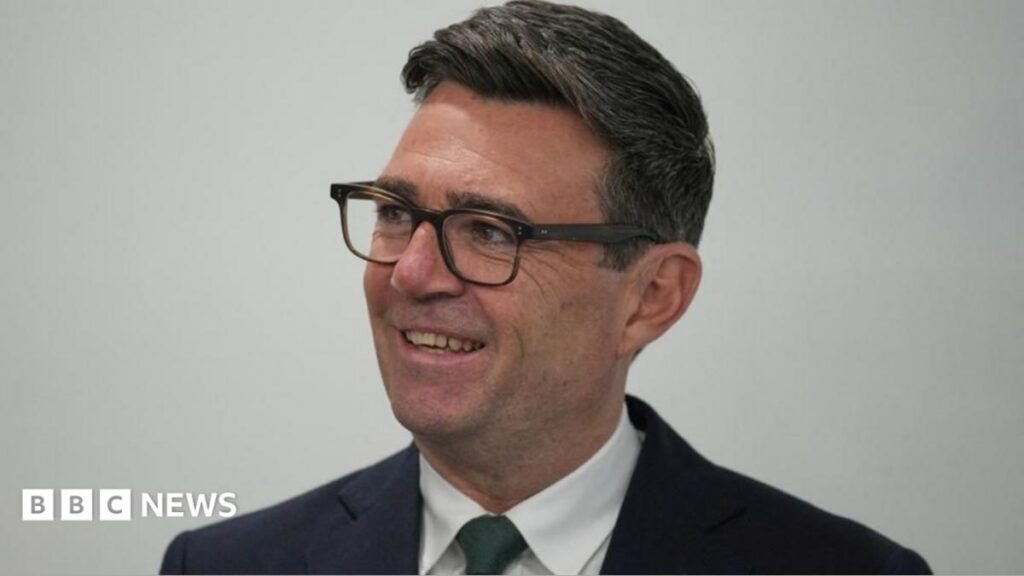
UK Prime Minister Andy Burnham Begins Tenure at No 10 North, Signaling a Shift in Power to Northern England
In a significant departure from tradition, UK Prime Minister Andy Burnham has chosen to start his premiership by working from No 10 North, a northern branch of Downing Street located in Manchester. This decision reflects a broader government strategy to redistribute power and resources away from London and Westminster, aiming to address regional disparities and empower local authorities. The establishment of No 10 North is poised to become a central hub for strategic decisions on devolution and economic growth, involving ministers, civil servants, and regional leaders. This article explores the implications of this move, the operational details of No 10 North, and the political responses it has elicited.
UK Prime Minister Andy Burnham Begins Tenure at No 10 North, Signaling a Shift in Power to Northern England
No 10 North: A New Hub for Regional Governance
No 10 North, situated initially at Heron House in central Manchester, represents a tangible commitment to shifting governmental focus to the regions. The office shares its building with the intelligence service GCHQ and is under tight security, reflecting its importance. This northern branch is expected to house up to 300 civil servants by the end of next year, including key ministers such as Lucy Powell and Louise Haigh.
The longer-term plan is to relocate No 10 North to a new government site currently under construction in Manchester's Ancoats area, scheduled for completion in 2032. This development aligns with ongoing efforts to decentralize the civil service, which has seen a gradual reduction in London-based roles over recent years. Currently, about 19.6% of civil servants are based in London, with a target to reduce this number by 12,000 roles as part of a broader government strategy.
A Strategic Shift Towards Devolution and Local Economic Growth
Prime Minister Burnham's decision to operate from Manchester is more than symbolic; it is intended to facilitate a strategic shift in decision-making related to devolution and economic development. Responsibility for these areas is moving away from central departments such as the Treasury and the Ministry of Housing, Communities and Local Government, towards a more localized governance model.
Burnham's first day at No 10 North included chairing a meeting of the National Economic Council, a cabinet committee established in 2008 to address economic challenges across the UK. He engaged with business leaders from organizations like the Federation of Small Business, the Confederation of British Industry, and the British Chambers of Commerce to discuss strategies for stimulating growth and investment in the regions.
The Prime Minister emphasized that for decades, power and resources have been concentrated in London, leaving many communities feeling neglected. He declared that the era of Whitehall resisting devolution is over, signaling a new commitment to empowering local authorities and fostering economic opportunities outside the capital.
Political Reactions and Critiques
While the move to No 10 North has been welcomed by many as a progressive step towards regional empowerment, it has also faced criticism. Conservative leader Kemi Badenoch challenged Burnham's approach, suggesting that his focus remains too localized and insufficient for the national role of Prime Minister.
Badenoch pointed out the distinction between managing a city as mayor and governing the entire country, emphasizing the need to address broader issues such as high energy costs for businesses and national defense funding. She implied that Burnham's current initiatives, including a 20% cut in business rates for pubs and live music venues, are too narrow in scope to meet the UK's wider challenges.
This critique highlights the ongoing political debate about the balance between regional focus and national leadership, underscoring the complexities Burnham faces in fulfilling his dual commitment to local empowerment and national governance.
Implications for Civil Service and Government Operations
The establishment of No 10 North is part of a broader government effort to decentralize civil service roles from London. Officials willing to relocate to Manchester are reportedly being offered relocation packages to facilitate this transition.
Despite progress, disparities remain in the distribution of senior civil service roles. Only 13.5% of senior positions are based outside London, compared to 34.7% within the capital. The move to No 10 North aims to address this imbalance by creating a significant government presence in the north, potentially encouraging more senior officials to operate from regional centers.
This decentralization could have lasting impacts on how policies are developed and implemented, fostering closer collaboration between central government, local authorities, and regional businesses.
Looking Ahead: The Future of No 10 North and Regional Devolution
The initial operation from Heron House is a stepping stone towards the more permanent establishment of No 10 North in the Ancoats area. This long-term investment indicates a sustained commitment to embedding government functions in the north of England.
As Burnham and his ministers continue to work from Manchester, the success of this initiative will likely depend on their ability to balance regional priorities with national responsibilities. The integration of devolution strategies with local growth policies aims to create a cohesive framework that empowers civil servants, mayors, councils, and businesses to collaborate effectively.
The coming years will reveal how this shift influences economic outcomes across the UK and whether it can address longstanding regional inequalities.
What this means
Prime Minister Andy Burnham's decision to operate from No 10 North in Manchester is a landmark development in the UK's approach to governance and regional empowerment. By relocating ministers and civil servants and focusing on devolution and economic growth outside London, the government aims to address long-standing regional inequalities and foster a more balanced distribution of power. While this strategy has garnered both support and criticism, it represents a clear commitment to reshaping the relationship between central government and the regions. The effectiveness of this approach will depend on Burnham's ability to navigate the complexities of national leadership while delivering tangible benefits to local communities. As No 10 North evolves into a permanent fixture, it may well become a model for future government decentralization efforts across the UK.
Originally reported by bbc.co.uk. Adapted for our readers with AI assistance.
Thousands of young protesters in Delhi continue to demand education reforms and the resignation of Education Minister Dharmendra Pradhan after a police crackdown. The…
Facing a looming financial collapse, Thames Water’s main lenders have offered the UK government a ‘golden share’ and increased local authority involvement to avoid…
Facing record-breaking temperatures and severe drought, Thames Water has introduced a hosepipe ban impacting over 10 million customers across parts of southern England to…