
News
KFF Health News’ ‘What the Health?’: LIVE From KFF: Health Care and the 2024 Election
Health News tamfitronics [Editor’snote:[Editor’snote: This transcript was generated using both transcription ...
TAMFIS NIG LTDRC 8067447CAC ACTIVEFinima, Bonny Island, Rivers State

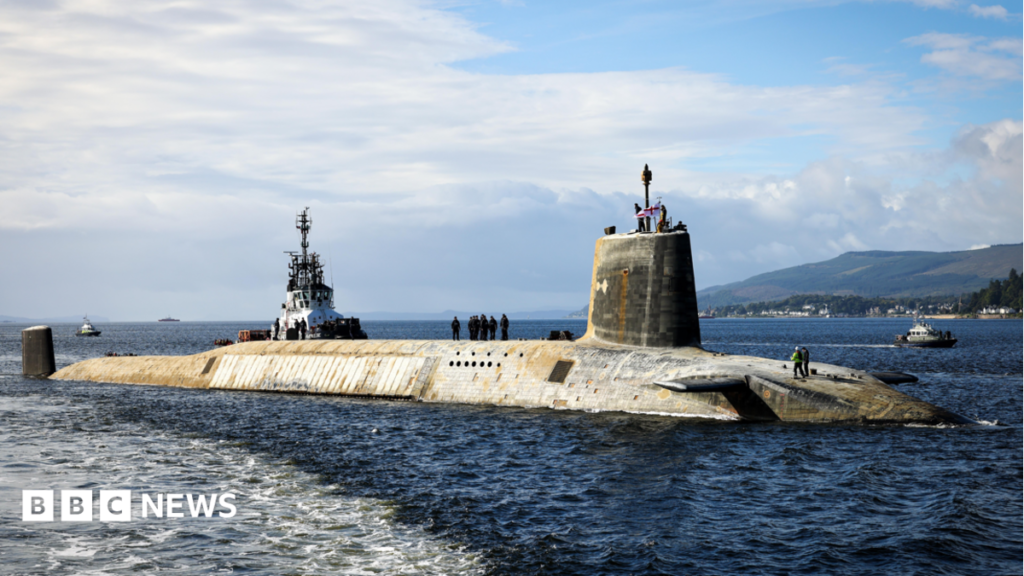
The United Kingdom is embarking on a significant phase of investment in its nuclear submarine fleet, with a recent announcement of £8.4 billion allocated to the Dreadnought-class submarine programme. This initiative is designed not only to maintain the country’s nuclear deterrent capabilities for decades ahead but also to stimulate economic growth and employment, particularly in regions historically reliant on defense manufacturing. As the government balances strategic defense commitments with economic and social objectives, this article explores the multifaceted implications of this investment.
The Dreadnought-class submarines are set to replace the UK’s current Vanguard-class fleet, which has been operational since 1992. These vessels carry Trident nuclear missiles, forming a critical component of the nation’s nuclear deterrent strategy. The Vanguard submarines are scheduled for retirement in the 2030s, with the Dreadnoughts expected to enter service around the same time, ensuring continuity in the country’s defense posture.
This programme represents a long-term strategic commitment, originally announced in 2006 and formally approved by Parliament in 2016. The Dreadnought project has been under development for two decades, reflecting the complexity and scale of nuclear submarine construction and the importance placed on maintaining a credible deterrent.
The recent £8.4 billion funding marks the beginning of the fourth phase of the project, emphasizing ongoing progress towards operational readiness. This phase is critical for advancing the construction and technological development necessary to meet future defense needs.
Beyond national security, the submarine programme is a significant driver of economic activity and employment. The government highlights that defense spending on the nuclear fleet currently supports approximately 47,000 jobs across the UK, including a substantial number of apprenticeships. This workforce is expected to grow to 65,000 by 2030, with 22,000 apprenticeships projected by 2035.
Barrow-in-Furness, where the Dreadnought submarines are being built, exemplifies the regional impact of this investment. Once considered a town in economic decline, Barrow is now a hub of skilled manufacturing and defense innovation. Prime Minister Andy Burnham emphasized that the project not only protects the nation but also revitalizes communities by creating high-quality jobs and training opportunities.
In addition to direct employment, the programme supports a broader supply chain of British firms and workers, reinforcing the government’s goal of ensuring that public spending delivers social and economic value. This approach aligns with efforts to reduce youth unemployment and expand apprenticeships, particularly in areas historically dependent on manufacturing and defense.
The announcement comes amid ongoing political debates about defense spending priorities and fiscal responsibility. While the government has committed to meeting NATO’s target of allocating 3.5% of national income to defense by 2035, critics argue that current funding levels remain insufficient to fully support all defense commitments.
Conservative shadow defense secretary James Cartlidge welcomed progress on the submarine programme but criticized the government for not committing to full funding across the defense sector. This highlights the broader tension between ambitious defense goals and the practical challenges of budget allocation.
Prime Minister Burnham and Chancellor John Healey face the complex task of balancing defense funding with other national priorities. They have emphasized the need to reduce waste and maximize value for money within defense spending, underscoring the importance of efficient resource management in delivering both security and economic benefits.
A notable aspect of the government’s approach is the integration of social value criteria into public procurement processes. Burnham has advocated for prioritizing companies that offer 45-day work placements as part of their contracts, aiming to enhance skills development and employment opportunities for young people.
This policy draws on Burnham’s experience as Greater Manchester mayor, where increased work placements helped reduce youth unemployment and improve workforce readiness. By embedding social value considerations into defense contracts, the government seeks to leverage public spending to achieve broader social objectives.
However, details on how these procurement changes will be implemented remain limited. The extent of the rollout and the number of firms expected to participate in offering placements have not been fully clarified, leaving some uncertainty about the practical impact of this initiative.
The £8.4 billion investment is part of a wider Defence Investment Plan that allocates £63.6 billion over the next four years to the Defence Nuclear Enterprise. The majority of this funding focuses on sustaining the nuclear submarine fleet, advancing the Dreadnought programme, and initiating early work on future replacements anticipated in the 2050s.
In addition to submarine construction, investment includes upgrading naval docks and manufacturing facilities, ensuring the UK maintains its industrial capability to support advanced defense technologies.
This long-term planning reflects the government’s recognition that nuclear deterrence remains a cornerstone of national security, requiring sustained investment and industrial capacity. The integration of economic and social objectives into defense spending further illustrates a comprehensive approach to policy-making.
The UK’s commitment to investing in its nuclear submarine fleet underscores the dual priorities of ensuring national security and fostering economic growth through job creation and skills development. While the strategic imperative of maintaining a credible nuclear deterrent is clear, the government’s approach also reflects an awareness of the social and regional impacts of defense spending. Balancing ambitious defense targets with fiscal realities and social objectives will remain a complex challenge for policymakers. Nevertheless, the Dreadnought programme exemplifies how defense investment can serve as a catalyst for broader economic and community benefits, securing both the nation’s safety and its industrial future.
Originally reported by bbc.co.uk. Adapted for our readers with AI assistance.
Keep reading
News
Health News tamfitronics [Editor’snote:[Editor’snote: This transcript was generated using both transcription ...
News
Amanda Knox, the American woman acquitted of murdering British student Meredith Kercher in Italy, has re...
News
Three-time Olympic champion Adam Peaty, the greatest breaststroker in history, struggles to find his top form at the 2023 Commonwealth Games, settling for bronze…
TAMFIS NIG LTD
Electrical and instrumentation engineering, bid preparation and consulting, IT and software.