
News
RUSSIA versus NATO and BRICS vs. NATO Military SWOT
Recall that Poland’s Minister Sikorski’s core claim is partially supported by the numbers, but the framing “quite quickly” and “without the U.S.” does not…
TAMFIS NIG LTDRC 8067447CAC ACTIVEFinima, Bonny Island, Rivers State

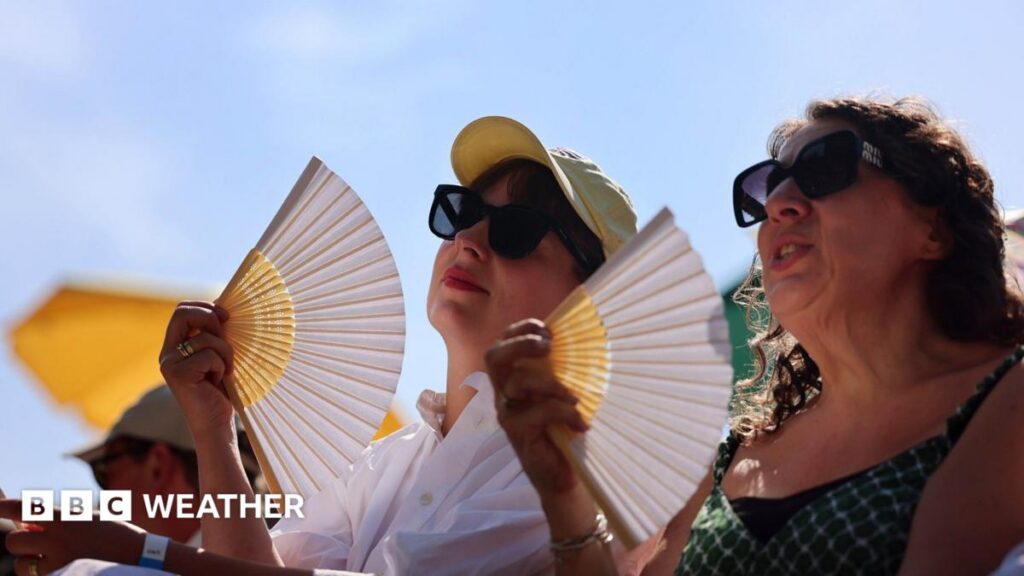
As the UK approaches a fortnight of sustained high temperatures, the ongoing heatwave is notable for both its length and intensity. Southern England has recorded continuous days surpassing heatwave criteria, with some areas experiencing temperatures above 30°C for 12 consecutive days—the longest such streak since 2006. This article explores the factors behind this extended heatwave, how it compares to past events, and what it signifies in the context of a warming climate.
Parts of southern England have now endured 13 consecutive days above their local heatwave thresholds, with Merryfield in Somerset reaching 30.6°C on Thursday. This marks 12 straight days of temperatures at or above 30°C across the UK, a phenomenon not seen since 2006.
In Bournemouth and Heathrow, temperatures have consistently remained above 26°C and 28°C respectively for nearly two weeks. While a slight cooling trend is expected with northerly winds bringing marginally cooler air this weekend, some locations may continue to experience heatwave conditions for a few more days.
Despite the prolonged heat, breaking the longstanding 1976 record of 16 consecutive days at or above 30°C appears unlikely. Nevertheless, the current spell stands out for its remarkable persistence and intensity.
Several factors have converged to produce this unusually long and intense heatwave. First, climate change has raised average UK temperatures by approximately 1.33°C since the 1960s, with extreme heat days warming even faster—by about 4.5°C in Greater London.
Secondly, the jet stream has shifted northward, allowing a high-pressure system to settle over the UK and western Europe. This high-pressure zone has created a 'heat dome,' where descending air compresses and warms, suppressing cloud formation and enabling strong sunshine to further heat the ground.
The slow-moving nature of this high-pressure system has trapped hot air over the region for an extended period, intensifying and prolonging the heatwave.
This summer is already exceptional, having broken monthly temperature records in May and June by over two degrees Celsius. It represents the third heatwave of 2026, matching the number seen by this point last year.
Unlike last July, when southern England experienced four consecutive days above 30°C, this year has seen 12 such days and 13 days meeting heatwave criteria across parts of England and Wales.
While Scotland and Northern Ireland have also experienced heatwave conditions, the intensity and duration have been less pronounced. Notably, 2026 has seen more days exceeding 35°C—six in total—and has recorded temperatures above 35°C in three consecutive months for the first time.
The 1976 heatwave remains the longest on record, but this year's heatwave has surpassed it in terms of peak temperatures and the number of very hot days. Dryness has been a significant feature, with some southern England locations, such as Wisley in Surrey, recording no rainfall for 30 days. Despite this dryness, the UK is not currently experiencing drought conditions comparable to those in 1976.
The Met Office highlights a clear trend: UK heatwaves are becoming more frequent, longer-lasting, and more intense. The number of days exceeding 30°C has quadrupled in areas like Greater London over recent decades.
Heatwaves are also occurring outside traditional summer months. For instance, September 2023 saw an autumn heatwave with seven consecutive days over 30°C. Earlier this year, in late May, the UK experienced its first tropical night of 2026, with overnight temperatures not dropping below 21.4°C—a record for that time of year.
These shifts reflect broader changes in climate patterns and suggest that extreme heat events may become more common and less seasonally confined in the future.
Looking ahead, winds are expected to shift to a more northerly direction this weekend, bringing a slight cooling effect. Scotland, Northern Ireland, and northeast England will likely see more cloud cover and temperatures in the low 20s Celsius.
Meanwhile, much of England and Wales should remain sunny, dry, and warm, with temperatures ranging from 24°C to 27°C, and some southern areas possibly reaching 28°C or 29°C. Some locations may remain within heatwave criteria through the weekend.
The longer-term forecast for July indicates a continuation of high-pressure conditions, maintaining dry and warm weather, though temperatures are expected to be somewhat lower than recent peaks. Showers may develop late in the month, particularly in northern regions.
Into August, models suggest a return to more variable weather, but temperatures will likely remain above average overall.
Editor’s note: The following is AI-generated commentary and context on this topic, not original reporting.
Extended periods of high pressure that stall over a region, often described as “heat domes,” are a key mechanism behind prolonged heatwaves, trapping warm air in place and suppressing the cloud cover and rainfall that would otherwise provide relief. Climate scientists have generally noted that while individual heat events cannot be attributed to climate change in isolation, the increasing frequency and duration of such events is broadly consistent with long-term warming trends observed across multiple decades of data.
Public health guidance during extended heat events typically centres on hydration, limiting outdoor exertion during peak afternoon hours, and checking on vulnerable neighbours, particularly older residents living alone. Local authorities often open cooling centres and adjust service hours for outdoor work during prolonged heat warnings, treating sustained high temperatures as a public health matter rather than simply a weather inconvenience.
The current UK heatwave underscores the growing impact of climate change on regional weather patterns, manifesting in longer, hotter, and more frequent heat events. While this spell may not eclipse historical records entirely, its intensity and persistence highlight the need for continued adaptation and preparedness. As the UK moves into late summer, monitoring evolving weather patterns remains crucial to managing health, infrastructure, and environmental challenges posed by extreme heat.
Originally reported by bbc.co.uk. Adapted for our readers with AI assistance.
Keep reading
News
Recall that Poland’s Minister Sikorski’s core claim is partially supported by the numbers, but the framing “quite quickly” and “without the U.S.” does not…
News
Thousands of young protesters in Delhi continue to demand education reforms and the resignation of Education Minister Dharmendra Pradhan after a police crackdown. The…
News
Facing a looming financial collapse, Thames Water’s main lenders have offered the UK government a ‘golden share’ and increased local authority involvement to avoid…
TAMFIS NIG LTD
Electrical and instrumentation engineering, bid preparation and consulting, IT and software.