
News
RUSSIA versus NATO and BRICS vs. NATO Military SWOT
Recall that Poland’s Minister Sikorski’s core claim is partially supported by the numbers, but the framing “quite quickly” and “without the U.S.” does not…
TAMFIS NIG LTDRC 8067447CAC ACTIVEFinima, Bonny Island, Rivers State

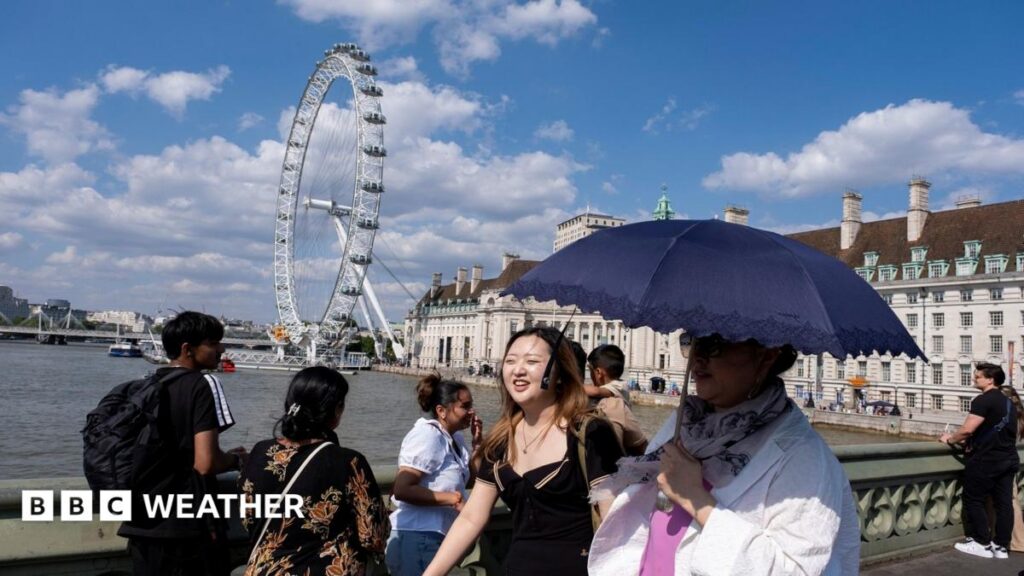
The UK has endured an extended period of warm, sunny, and dry weather, with some regions experiencing heatwave conditions for over two weeks and central areas facing the longest dry spell since 1997. While a shift in wind patterns is bringing cooler air to parts of the country, the relief may be short-lived, especially in southern England and south Wales. This article explores the evolving weather conditions, regional variations in temperature and rainfall, and the broader implications of climate change on the UK's summer weather patterns.
Following a sustained period of high temperatures, the UK is now witnessing a moderation in heat as northerly winds introduce cooler air. This shift is primarily due to a slow-moving high-pressure system situated over the Atlantic, west of the UK. The clockwise rotation of winds around this high pressure is ushering in a northerly airflow, which is expected to bring the most significant temperature drops to northern and eastern Scotland and eastern England.
In these regions, temperatures could fall by approximately 5°C compared to the highs recorded last week. This cooling effect will be most pronounced near the east coast, providing some relief from the intense heatwave conditions. However, this respite is not uniform across the country. Areas further south and west, such as Bournemouth, have already experienced prolonged heatwave conditions, with temperatures exceeding 26°C for 15 consecutive days. For these locations, the heatwave may persist, potentially extending the streak of hot days into a third week.
Despite the anticipated drop in temperatures, significant rainfall remains unlikely for much of the UK. The summer has been marked by exceptionally dry conditions, particularly in eastern and north-eastern England, where rainfall has been roughly half of the expected average for this time of year. Central England has also seen an extended dry spell, the longest in three decades, with places like Wisley in Surrey experiencing 31 consecutive dry days.
The dominance of high pressure over the coming week will continue to suppress widespread rainfall. While north-west Scotland may see some frontal systems bringing up to 30mm of rain, most other areas are expected to receive less than 5mm. Coastal regions might experience occasional showers, but many inland locations could face at least five more days without any rain. This persistent dryness raises concerns about water availability and the potential for drought conditions if the pattern continues.
The UK’s weather during this period illustrates significant regional disparities. Northern and eastern Scotland, along with eastern England, stand to benefit most from the cooler northerly winds, with temperatures dropping noticeably. Conversely, southern England and south Wales may see little change, maintaining heatwave conditions for longer.
Rainfall distribution also varies, with north-west Scotland receiving the bulk of the limited precipitation forecasted. In contrast, eastern and central England remain exceptionally dry, intensifying the challenges posed by the prolonged heat and lack of moisture. These regional differences highlight the complexity of UK weather patterns, influenced by local geography and atmospheric conditions.
Scientists attribute the increasing frequency and intensity of heatwaves in the UK to human-induced climate change. The Met Office’s latest State of the UK Climate report emphasizes that weather events once considered extreme are becoming more commonplace, signaling a shift in the baseline climate conditions.
Since the 1980s, the UK has warmed by approximately 0.25°C per decade, altering the nature of seasonal weather patterns. This warming trend means that summers characterized by prolonged heat and dryness are no longer anomalies but part of a new normal. These changes carry significant implications for public health, agriculture, water resources, and infrastructure planning.
Understanding this evolving climate context is crucial for preparing for future summers that may bring even more frequent and severe heatwaves, alongside variable rainfall patterns.
Editor’s note: The following is AI-generated commentary and context on this topic, not original reporting.
The tail end of a major heatwave often brings its own set of challenges even as peak temperatures ease, with prolonged dry conditions increasing wildfire risk, straining water supplies and affecting agricultural yields well after the most intense heat has passed. Meteorologists typically monitor soil moisture levels and reservoir capacity closely during these transitional periods, since the cumulative effect of an extended dry spell can outlast the headline-grabbing temperature records that initially draw public attention.
Water companies and local authorities in affected regions often introduce usage guidance or restrictions during extended dry spells, balancing public water supply needs against agricultural and environmental demands. Climate researchers generally note that the sequencing of heat followed by prolonged dryness is broadly consistent with patterns observed in a warming climate, even though attributing any single weather event definitively to long-term climate trends requires careful statistical analysis.
While the UK is set to see a temporary easing of the recent heatwave in some regions, the overall pattern of prolonged warmth and dryness is likely to persist. This combination of factors underscores the challenges posed by a changing climate, which is reshaping the country’s summer weather in fundamental ways. As heatwaves become more frequent and dry spells extend, it is essential for communities, policymakers, and individuals to adapt and prepare for these evolving conditions. Monitoring regional variations and understanding the broader climate context will be key to managing the impacts on health, agriculture, and water resources in the years ahead.
Originally reported by bbc.co.uk. Adapted for our readers with AI assistance.
Keep reading
News
Recall that Poland’s Minister Sikorski’s core claim is partially supported by the numbers, but the framing “quite quickly” and “without the U.S.” does not…
News
Thousands of young protesters in Delhi continue to demand education reforms and the resignation of Education Minister Dharmendra Pradhan after a police crackdown. The…
News
Facing a looming financial collapse, Thames Water’s main lenders have offered the UK government a ‘golden share’ and increased local authority involvement to avoid…
TAMFIS NIG LTD
Electrical and instrumentation engineering, bid preparation and consulting, IT and software.