
Business
Nigeria’s Economic Performance: Domestic Debt Rise and Agriculture Trade Shift in Q2 2026
Nigeria's economic landscape in the second quarter of 2026 presents a mixed picture of fiscal press...
TAMFIS NIG LTDRC 8067447CAC ACTIVEFinima, Bonny Island, Rivers State

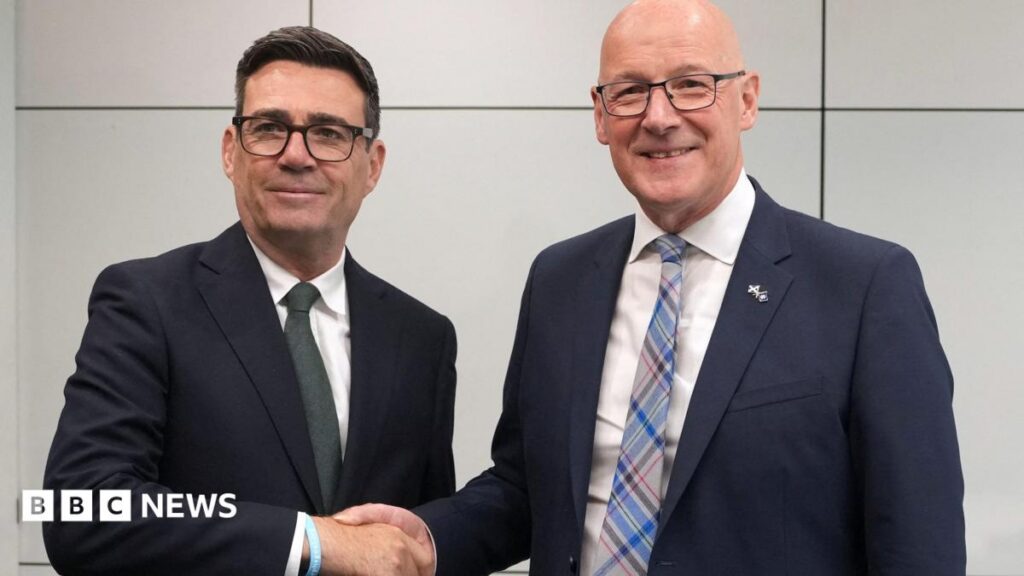
With the 2026 Commonwealth Games on the horizon, Glasgow has become a focal point not only for sporting preparations but also for significant political dialogue. UK Prime Minister Andy Burnham met separately with Scotland’s First Minister John Swinney and Wales’ First Minister Rhun ap Iorwerth to address the future of devolution and strengthen ties between London, Edinburgh and Cardiff. The discussions, held against the backdrop of the upcoming Games, centred on economic revitalisation, improved governance and the evolving relationship between the UK government and its devolved administrations. While shared goals of growth and cooperation were emphasised, Burnham made clear that a second Scottish independence referendum remains off the table, signalling a commitment to unity and economic priorities over constitutional change.
Prime Minister Andy Burnham used the Glasgow meetings to outline his vision for a 'rewired' Britain where devolution plays a central role in driving economic regeneration. He highlighted the potential for devolved powers to stimulate job creation, revitalise local high streets and breathe new life into communities across the United Kingdom. Burnham expressed optimism about working closely with the Scottish and Welsh governments to build a collaborative model of governance aimed at improving everyday lives. Downing Street underscored his commitment to maintaining a constructive relationship with the devolved administrations, promising regular engagement in the months ahead. However, Burnham was unequivocal in ruling out another Scottish independence referendum, stating that such a move would distract from pressing priorities like economic growth and addressing the ongoing cost-of-living crisis.
Following his meeting with the Prime Minister, John Swinney described the discussions as 'very constructive,' noting that they focused on shared challenges such as economic strengthening and the cost-of-living crisis. Swinney acknowledged that Burnham was the first UK prime minister to openly admit Westminster’s shortcomings in serving all parts of the UK, including Scotland. He welcomed the Prime Minister’s openness to advancing talks on devolving further powers within the UK framework. Importantly, Burnham assured that any future discussions about devolving powers to local authorities or communities in Scotland would involve direct dialogue with the Scottish government, rather than decisions being imposed from Westminster. This commitment was seen as a positive step toward respecting Scotland’s devolved institutions while exploring new governance models that could benefit local communities.
Welsh First Minister Rhun ap Iorwerth also met with Burnham and expressed his desire for Wales to achieve parity of powers with Scotland. Ap Iorwerth advocated for a new Wales Bill that would devolve policing and justice powers to Wales and introduce a fairer funding model to replace the current Barnett formula, which many in Wales consider outdated and insufficient. He stressed the importance of mutual respect and collaboration between the UK government and devolved administrations. Ap Iorwerth highlighted the need for a more cooperative political approach to tackle shared challenges, including the cost-of-living crisis, and expressed optimism about future discussions to advance fairness and equality for Welsh communities. His call for parity reflects a broader ambition to ensure Wales is recognised equally within the UK’s devolved structure.
These meetings come at a time of heightened political sensitivity around the future of the United Kingdom’s constitutional arrangements. Scotland’s independence movement remains a significant political force, but Burnham’s clear stance against a new referendum signals a desire to maintain the current union status quo for the foreseeable future. The emphasis on economic collaboration and devolution reflects a pragmatic approach to managing regional demands within the UK framework. By focusing on devolving powers and fostering local economic growth, Burnham aims to address regional disparities without reopening constitutional debates that could destabilise the union. Meanwhile, Wales continues to push for greater autonomy and financial fairness, seeking recognition equal to Scotland’s devolved status. The discussions with Burnham suggest a willingness on both sides to explore reforms that could strengthen the UK by empowering its constituent nations, provided these changes respect existing devolved governments.
The timing of these high-level meetings during the Glasgow Commonwealth Games underscores the event’s role as a platform for political dialogue as well as sporting excellence. The Games offer an opportunity to showcase unity and cooperation across the UK’s nations, even as debates over devolution and independence continue. Looking ahead, the commitment to regular engagement between Burnham and the devolved first ministers suggests that the coming months will see ongoing negotiations about governance and power-sharing. These discussions will be critical in shaping the UK’s political landscape, balancing regional aspirations with national cohesion. For citizens across Scotland, Wales and England, the outcomes of these talks could influence everything from local governance and public services to economic development and political representation. As the 2026 Commonwealth Games bring the UK’s nations together on the world stage, the political conversations initiated in Glasgow may well shape the future of governance and cooperation across the union for years to come.
The devolution talks in Glasgow represent a significant moment in the ongoing evolution of UK governance. By prioritising economic collaboration and ruling out a new Scottish independence referendum, Prime Minister Burnham aims to foster unity and address pressing social challenges. Meanwhile, the devolved governments continue to advocate for greater powers and fairer funding, underscoring the need for a balanced, respectful dialogue. As the 2026 Commonwealth Games approach, the political conversations initiated in Glasgow may well shape the future of governance and cooperation across the union for years to come.
Originally reported by bbc.co.uk. Adapted for our readers with AI assistance.
Keep reading
Business
Nigeria's economic landscape in the second quarter of 2026 presents a mixed picture of fiscal press...
Business
Liverpool manager Andoni Iraola is confronting a significant selection headache as two key forwards, Cod...
News
Health News tamfitronics [Editor’snote:[Editor’snote: This transcript was generated using both transcription ...
TAMFIS NIG LTD
Electrical and instrumentation engineering, bid preparation and consulting, IT and software.

