
Business
Nigeria’s Economic Performance: Domestic Debt Rise and Agriculture Trade Shift in Q2 2026
Nigeria's economic landscape in the second quarter of 2026 presents a mixed picture of fiscal press...
TAMFIS NIG LTDRC 8067447CAC ACTIVEFinima, Bonny Island, Rivers State

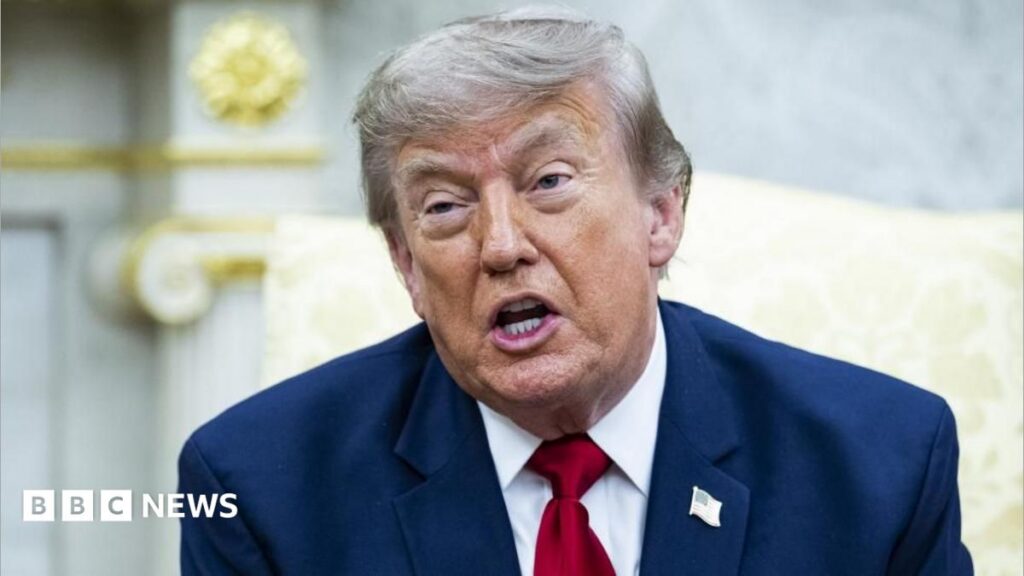
A fourth consecutive day of military exchanges between the United States and Iran has pushed crude prices higher and effectively stalled tanker traffic through the Strait of Hormuz, the world's most critical oil chokepoint. President Donald Trump's threat to strike Iranian bridges and power plants unless Tehran returns to negotiations, delivered during a Fox News interview aired 14 July 2026, marks a significant escalation in rhetoric that follows the reversal of a proposed 20 per cent transit fee on Hormuz shipping in favour of what the White House described as "massive" trade and investment agreements with Gulf states. For businesses exposed to energy costs or maritime logistics, the situation introduces immediate pricing volatility and route-planning uncertainty.
US Central Command (Centcom) confirmed a seven-hour wave of strikes against "dozens" of Iranian military targets near the Strait of Hormuz, stating the objective was to "further degrade Iran's ability to threaten commercial shipping and civilian crews". Iran's army acknowledged at least seven military personnel killed at a base in Bampur, southeastern Iran. In retaliation, Iranian state media reported missile and drone launches against US targets in Jordan, Kuwait and Bahrain. Kuwaiti and Bahraini forces said they intercepted incoming aerial attacks. Centcom separately accused the Islamic Revolutionary Guard Corps (IRGC) of intentionally targeting civilians by attacking seven commercial vessels, resulting in "nearly a dozen civilian crew members killed, missing, or injured". The United Arab Emirates confirmed Iranian cruise missiles struck two national tankers, killing one Indian crew member and wounding eight others, four seriously. The IRGC stated the tankers had ignored warnings, disabled navigation systems and attempted transit through a mined corridor. Separately, an Indian sailor missing since an attack on the Cypriot-flagged GFS Galaxy off Oman last week was confirmed dead; the remaining 23 crew were rescued Sunday.
Shipping data shows traffic through the Strait has slowed dramatically, with industry trackers describing flows as "virtually stalled". Approximately 20-21 million barrels per day of crude and condensates transit the waterway, representing roughly one-fifth of global oil consumption. Any sustained disruption forces rerouting around the Cape of Good Hope, adding 10-14 days' voyage time and significantly increasing freight costs. The UAE, Saudi Arabia and Iraq have limited pipeline bypass capacity (estimated at 6-7 million barrels per day combined), insufficient to offset a full Hormuz closure. For procurement teams managing energy-intensive supply chains — petrochemicals, plastics, fertilisers, aviation and shipping fuels — the price signal is already feeding through to spot markets. Brent crude rose over 4 per cent in the two sessions following the Centcom strikes, while freight rates for Very Large Crude Carriers (VLCCs) on the Middle East Gulf-to-Asia route jumped 15-20 per cent.
UN Human Rights Chief Volker Türk reiterated in April 2026 — after earlier Trump threats against Iranian civilian infrastructure — that "deliberately attacking civilians and civilian infrastructure is a war crime" under the 1949 Geneva Conventions. The Conventions prohibit attacks on objects indispensable to civilian survival, including power plants and bridges. Trump's latest remarks, stating "I'll save the energy targets for last, but ultimately we'll hit energy targets", have drawn renewed scrutiny from international legal observers. Diplomatically, the US reversal on the 20 per cent Hormuz transit fee — initially proposed as a cost-recovery mechanism for naval protection — suggests a shift toward leveraging Gulf investment packages as an alternative pressure tool. Gulf Cooperation Council (GCC) states have not publicly detailed the "massive" deals referenced, though Saudi Arabia and the UAE have previously committed to multi-billion-dollar US defence and energy investments. Iran, meanwhile, accuses the US of interfering in its sovereign management of the Strait, a position rooted in the 1982 UN Convention on the Law of the Sea (UNCLOS), which Iran signed but did not ratify; the US is not a party to UNCLOS.
Companies with direct exposure include: tanker owners and charterers facing higher war-risk insurance premiums (already up 30-50 per cent since April); refiners dependent on Middle East crude grades (Basrah Light, Arab Light, Murban) evaluating alternative sourcing from West Africa, the US Gulf or the North Sea; petrochemical producers in Asia and Europe monitoring naphtha and LPG crack spreads; and logistics firms renegotiating force majeure clauses in charter parties and supply contracts. Procurement leaders should stress-test hedging programmes against a $10-15 per barrel sustained price shock and model Cape routing scenarios for critical feedstocks. Insurance markets are already restricting cover for vessels transiting the Strait without prior notification to protection and indemnity (P&I) clubs. Financial institutions with trade finance exposure to Iranian-linked counterparties face enhanced sanctions compliance burdens, particularly following the US designation of additional IRGC entities in June 2026.
Gulf equity markets reacted negatively, with the Tadawul All Share Index (Saudi Arabia) and Dubai Financial Market General Index each down 1.8-2.3 per cent in early trading Wednesday. Sovereign credit default swap spreads for Bahrain and Oman widened 15-25 basis points, reflecting fiscal sensitivity to oil price volatility and potential disruption to non-oil revenues (tourism, logistics, financial services). The UAE's confirmation of casualties aboard its flagged tankers may accelerate Abu Dhabi's push for enhanced maritime domain awareness capabilities, including unmanned surface vessel patrols and satellite-based AIS monitoring — procurement opportunities for defence and surveillance technology providers. Meanwhile, Indian and Filipino seafarer unions have urged flag states to mandate rerouting away from the Gulf until de-escalation, potentially tightening crew availability for vessels maintaining Hormuz schedules.
The US-Iran confrontation has moved from rhetorical brinkmanship to sustained kinetic exchange with measurable commercial consequences. For businesses, the immediate priority is quantifying exposure across three vectors: energy input costs, maritime logistics reliability, and sanctions compliance. The strategic wildcard remains whether Gulf investment packages — still undefined — can substitute for the abandoned transit-fee mechanism as a stabilising force. Absent de-escalation, the market will price in a higher probability of prolonged Hormuz disruption, embedding a risk premium that flows through petrochemicals, fertilisers, plastics and ultimately consumer goods. Procurement leaders who model Cape routing scenarios now, rather than reactively, will preserve optionality when the next escalation cycle arrives.
Originally reported by bbc.co.uk. Adapted for our readers with AI assistance.
Keep reading
Business
Nigeria's economic landscape in the second quarter of 2026 presents a mixed picture of fiscal press...
Business
Liverpool manager Andoni Iraola is confronting a significant selection headache as two key forwards, Cod...
News
Health News tamfitronics [Editor’snote:[Editor’snote: This transcript was generated using both transcription ...
TAMFIS NIG LTD
Electrical and instrumentation engineering, bid preparation and consulting, IT and software.