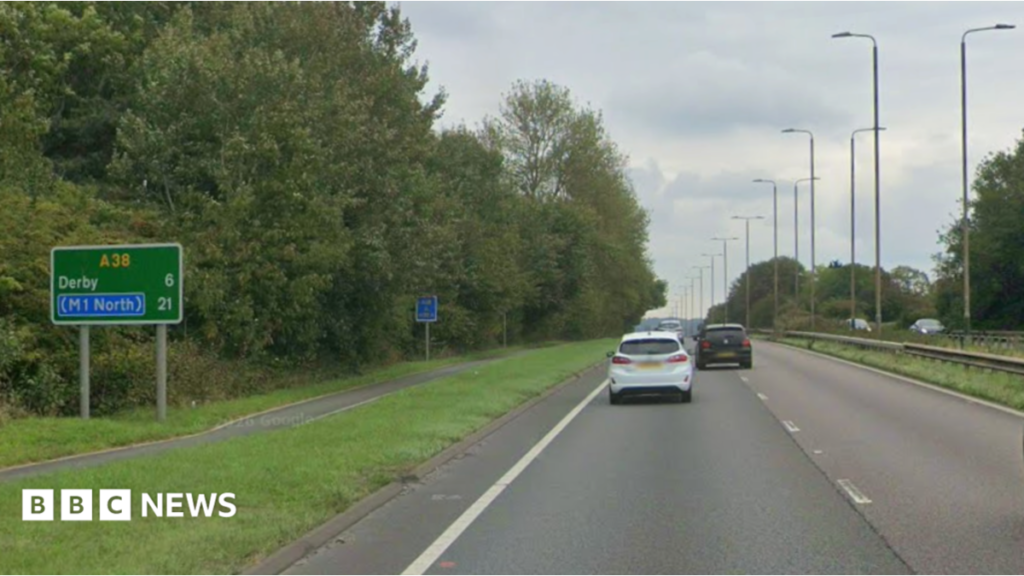
Tragic Car Crash on A38 in Derby Claims Four Lives Including Infant
Tragic Car Crash on A38 in Derby Claims Four Lives Including Infant
Editor’s note: The following is AI-generated commentary and context on this topic, not original reporting.
When a story like “Tragic Car Crash on A38 in Derby Claims Four Lives Including Infant” breaks, the initial facts are often only part of what makes it significant — the surrounding context matters just as much.
According to what has been reported: Tragic Car Crash on A38 in Derby Claims Four Lives Including Infant
On Tamfitronics, coverage of stories such as “Tragic Car Crash on A38 in Derby Claims Four Lives Including Infant” aims to give readers useful context alongside the headline, rather than simply repeating a single short news alert.
Understanding the Wider Context
Statistics on this type of incident are often cited in wider public debate, though it is worth treating any single case as one data point within a much larger and more complex picture.
Media coverage of ongoing investigations is generally expected to be measured, avoiding speculation about guilt or motive until matters have been properly tested through the appropriate legal process.
Why It Matters
As with most cases that reach the courts, the full circumstances tend to become clearer only as formal proceedings unfold, and any conclusions drawn before that point should be treated as provisional.
Local residents and community leaders often respond to incidents like this by calling for greater visibility of policing and reassurance patrols, particularly in areas where similar concerns have been raised before.
Different Perspectives
It is standard practice for authorities to withhold certain details while an investigation is ongoing, both to protect the integrity of any future legal proceedings and out of consideration for those affected.
Support services for those affected by serious incidents — victim support charities, counselling services and community liaison officers — often play an important, if less publicised, role in the aftermath.
Practical Implications
Incidents like this understandably raise concern in the local community, and it typically takes time for a full picture to emerge as investigators gather evidence, interview witnesses and establish a timeline of events.
Cases such as this often prompt renewed conversation about community safety, policing resources and the support available to victims and their families in the aftermath of a serious incident.
What Happens Next
Police investigations of this kind generally proceed through several stages — initial response, gathering of forensic and witness evidence, and any subsequent charging decisions — each of which can take days or weeks to complete properly.
The judicial process in cases like this can take many months to conclude, from initial charging decisions through to any trial, verdict and sentencing.
Key considerations
Statistics on this type of incident are often cited in wider public debate, though it is worth treating any single case as one data point within a much larger and more complex picture.
Media coverage of ongoing investigations is generally expected to be measured, avoiding speculation about guilt or motive until matters have been properly tested through the appropriate legal process.
As with most cases that reach the courts, the full circumstances tend to become clearer only as formal proceedings unfold, and any conclusions drawn before that point should be treated as provisional.
Local residents and community leaders often respond to incidents like this by calling for greater visibility of policing and reassurance patrols, particularly in areas where similar concerns have been raised before.
Frequently Asked Questions
Why do police withhold some details?
Investigators often limit what is released publicly to protect the integrity of the investigation and any future court proceedings.
Where can readers get verified updates?
Official police statements and established news outlets remain the most reliable sources as an investigation progresses.
How long do investigations like this usually take?
Timelines vary considerably, but establishing a full evidential picture before any charging decision often takes weeks rather than days.
A Note on How This Story Is Being Covered
Long-running stories often reward readers who check back periodically, since the significance of an early development sometimes only becomes clear once later chapters play out.
Headlines are, by design, compressed — a single line rarely captures the full nuance of a story, which is one reason background and analysis pieces exist alongside straight news reporting.
The way a story travels across platforms, from wire services to broadcast to social media, often changes its framing slightly at each stage, even when the core facts stay the same.
Corrections and updates are a normal, healthy part of news reporting, reflecting an ongoing effort to refine an account as better information becomes available rather than a failure of the original report.
Public reaction to news stories, particularly on social media, can sometimes move faster than the verified facts themselves, which is part of why measured analysis is valuable.
Stories with a clear human element tend to generate more engagement than purely procedural ones, even when the procedural details are, in the end, more consequential.
Understanding the broader institutional or industry context behind a story often does more to illuminate its significance than any single additional fact about the event itself.
The interplay between official statements, independent reporting and public reaction is part of what makes modern news stories feel layered, even when the initiating event itself is relatively simple.
It’s a useful habit to ask what is actually confirmed versus what is being inferred or assumed when reading coverage of a fast-developing story.
The role of official spokespeople and press offices is to provide an authoritative account of events, though their statements are usually just one part of a fuller picture that includes independent verification.
The speed of the current news cycle means that follow-up coverage sometimes receives less attention than the original breaking story, even when it contains meaningfully updated information.
It is not unusual for a story’s significance to be reassessed weeks or months later, once its consequences have had time to play out more fully.
Readers are generally well served by treating breaking news with a degree of patience, since early details are sometimes revised, corrected or expanded as a story develops.
Editorial standards around sourcing, attribution and verification vary between outlets, which is part of why comparing several accounts of the same story can be worthwhile.
It is generally good practice for readers to check the publication date and any updates attached to a story, since older details can sometimes continue to circulate well after they’ve been superseded.
As with any developing story, readers are encouraged to follow updates from established news sources for the latest confirmed details.
Originally reported by bbc.co.uk. Adapted for our readers with AI assistance.
Thousands of young protesters in Delhi continue to demand education reforms and the resignation of Education Minister Dharmendra Pradhan after a police crackdown. The…
Facing a looming financial collapse, Thames Water’s main lenders have offered the UK government a ‘golden share’ and increased local authority involvement to avoid…
Facing record-breaking temperatures and severe drought, Thames Water has introduced a hosepipe ban impacting over 10 million customers across parts of southern England to…