Top Stories
KFF Health News’ ‘What the Health?’: The Supreme Court and the Abortion Pill
Since the Supreme Court overturned Roe v. Wade in 2022, the landscape of abortion rights in the United S...
TAMFIS NIG LTDRC 8067447CAC ACTIVEFinima, Bonny Island, Rivers State

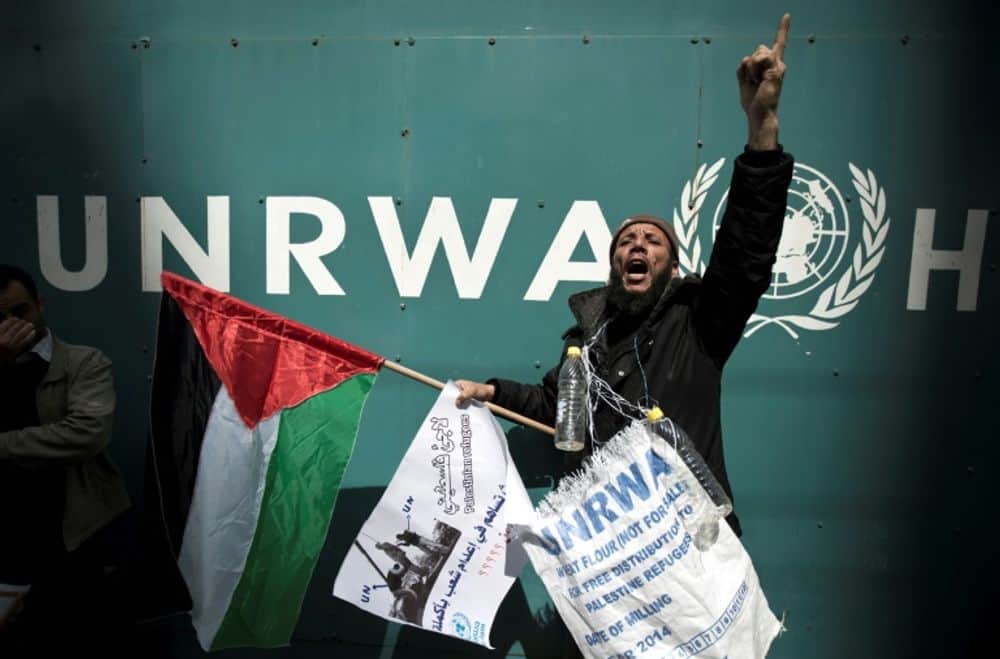
The United Nations Relief and Works Agency for Palestine Refugees in the Near East (UNRWA) has long been a pivotal organization providing humanitarian aid, education, and social services to millions of Palestinian refugees. However, in recent years, UNRWA has encountered persistent allegations accusing some of its workers of promoting terrorism and incitement. These claims have sparked intense debates and controversies within the international community, media, and among donor states. This article delves into the complex narrative surrounding these accusations, examines UNRWA's responses, and considers the broader geopolitical and humanitarian implications.
Established in 1949, UNRWA was created to provide relief and support to Palestinian refugees displaced by the 1948 Arab-Israeli conflict. Its mandate includes delivering education, healthcare, social services, and emergency assistance to over five million registered refugees across Jordan, Lebanon, Syria, the West Bank, and Gaza.
UNRWA operates in some of the most challenging and politically sensitive environments in the world. Despite its humanitarian focus, the agency often finds itself at the crossroads of political tensions, which complicates its operations and public perception.
The agency’s workforce comprises thousands of employees, many of whom are refugees themselves. This close connection to the refugee community is both a strength and, at times, a source of scrutiny amid allegations that some personnel might be involved in activities contrary to UNRWA’s principles.
Over the years, several organizations and watchdog groups have accused UNRWA staff of promoting violence, incitement, or even direct ties to terrorist activities. Notably, UN Watch, a Geneva-based NGO, has published reports alleging that multiple UNRWA employees have used social media platforms to endorse violence or extremist rhetoric.
Specific allegations include claims that some UNRWA workers have posted content supporting militant groups or have been involved in incitement against Israel. These claims have been met with skepticism and strong denial from UNRWA, which insists that such accusations are politically motivated and based on incomplete or misinterpreted evidence.
These allegations have intensified particularly after high-profile incidents of violence in the region, with critics arguing that UNRWA’s educational and social programs might harbor extremist influences. However, these assertions remain highly contested and lack conclusive proof.
UNRWA has consistently rejected all claims linking its personnel to terrorism or incitement. Agency officials, including Commissioner-General Philippe Lazzarini and Deputy Commissioner Leni Stenseth, have labeled these allegations as unfounded, politically motivated attacks aimed at undermining the agency’s legitimacy.
UNRWA spokespersons have emphasized that the organization maintains strict codes of conduct for its staff and conducts internal investigations when concerns arise. They argue that the agency’s work is transparent and that it is committed to promoting peace, stability, and human rights in the refugee communities it serves.
The agency also highlights its accountability to donor states and the international community, asserting that donor governments continue to fund UNRWA because of its vital humanitarian role and the absence of credible evidence supporting the terrorism claims.
The controversy surrounding UNRWA cannot be divorced from the broader geopolitical landscape of the Israeli-Palestinian conflict. Various states and political groups use allegations against UNRWA to advance their narratives and influence international opinion.
Donor countries, including the United States, the European Union, and Gulf states, have repeatedly voiced support for UNRWA despite political pressures. They recognize the agency’s essential role in maintaining stability and providing critical services to vulnerable populations.
Conversely, some political actors and advocacy groups seek to delegitimize UNRWA as part of a strategy to reshape the discourse on Palestinian refugees and the peace process. These efforts often utilize unverified claims to erode trust in the agency and question its neutrality.
The persistent allegations have created operational challenges for UNRWA, including increased scrutiny, funding uncertainties, and reputational risks. These pressures complicate the agency’s efforts to deliver essential services in already fragile environments.
For Palestinian refugees, UNRWA’s programs are often lifelines, providing education, healthcare, and social support. Undermining the agency’s credibility can jeopardize these services and exacerbate humanitarian conditions.
Moreover, the allegations contribute to a polarized environment that affects community relations and trust. UNRWA’s ability to maintain neutrality and foster peaceful coexistence is tested as it navigates accusations and political battles.
Media outlets have played a significant role in shaping public perception of the allegations against UNRWA. Some coverage has been critical and focused on the claims of worker misconduct, while others have underscored the agency’s humanitarian achievements and refuted the accusations.
UNRWA officials have frequently accused certain media and advocacy groups of sensationalism and biased reporting aimed at undermining the agency’s mission. They argue that such narratives often lack context and fail to consider the complex realities on the ground.
Public opinion remains divided, with supporters emphasizing UNRWA’s critical role in refugee welfare and detractors questioning its impartiality. This division reflects broader societal and political fault lines regarding the Israeli-Palestinian conflict.
Moving forward, UNRWA faces the challenge of restoring and maintaining trust among stakeholders while continuing its humanitarian mission. Strengthening transparency, accountability, and communication strategies will be essential to counteract misinformation.
International donors and partners should support independent, thorough investigations into any credible allegations while safeguarding UNRWA’s operational capacity. Constructive engagement rather than politicized attacks can help ensure the agency’s sustainability.
Enhancing dialogue between UNRWA, host countries, and refugee communities can also foster mutual understanding and cooperation, reducing vulnerabilities that could be exploited by extremist elements or political adversaries.
The allegations of terrorism links among UNRWA personnel present a complex and politically charged issue that challenges the agency’s credibility and operational effectiveness. While these claims have garnered significant attention, they lack conclusive evidence and are consistently refuted by UNRWA leadership. As the agency continues to provide indispensable services to millions of Palestinian refugees, it must balance transparency and accountability with resilience against politicized attacks. Upholding UNRWA’s humanitarian mandate is crucial not only for the welfare of refugees but also for regional stability and prospects for peace. The international community’s support and a commitment to objective scrutiny will be key factors shaping UNRWA’s future effectiveness and reputation.
Originally reported by miragenews.com. Adapted for our readers.
Keep reading
Top Stories
Since the Supreme Court overturned Roe v. Wade in 2022, the landscape of abortion rights in the United S...
Top Stories
Top Stories Tamfitronics One evening in May, nursing assistant Debra Ragoonanan’s vision blurred during her shift at a state-run Massachusetts vet...
Top Stories
2:54 PM Saudi Arabia shouldn’t be part of Iran-U.S. war, Turkish foreign minister says Turkish Foreign Minister Hakan Fidan spoke out Saturday about…
TAMFIS NIG LTD
Electrical and instrumentation engineering, bid preparation and consulting, IT and software.