
Top Stories
KFF Health News’ ‘What the Health?’: The Supreme Court and the Abortion Pill
Since the Supreme Court overturned Roe v. Wade in 2022, the landscape of abortion rights in the United S...
TAMFIS NIG LTDRC 8067447CAC ACTIVEFinima, Bonny Island, Rivers State

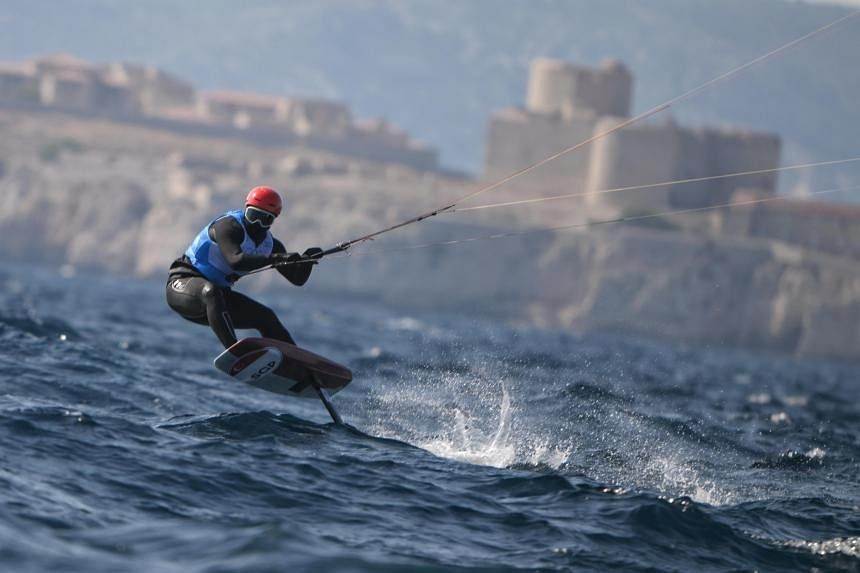
At just 17 years old, Singaporean kitefoiler Maximilian Maeder has already made waves in the sailing world as a two-time world champion. His journey at the Paris Olympics, however, has been marked by patience, perseverance, and the unpredictable whims of nature. The Formula Kite event at the Marseille Marina has tested not only his physical prowess but also his mental fortitude, as light winds and race postponements have delayed his chance to secure an Olympic medal. This article explores Maeder’s Olympic campaign, the challenges he has faced, and the current standings as the competition approaches its climax.
Maximilian Maeder burst onto the international kitefoiling scene as a prodigious talent, earning two world championship titles before turning 18. His rapid ascent has made him one of Singapore’s most promising athletes in sailing disciplines. His qualification for the Paris Olympics was a milestone, signaling his readiness to compete among the world’s elite.
Despite his youth, Maeder has demonstrated maturity beyond his years, balancing aggressive tactics with disciplined race strategy. His performances leading up to the Olympics showed a blend of raw speed and tactical awareness, positioning him as a strong contender for a medal in the Formula Kite event.
The Paris Olympics represented Maeder’s first appearance on this grandest stage, where the pressure and expectations were immense. For Singapore, a nation eager for Olympic sailing success, Maeder’s participation carried the hopes of a breakthrough in a sport where medals have historically been elusive.
Kitefoiling is a sport heavily influenced by weather conditions, particularly wind strength and consistency. At the Marseille Marina, where the Olympic kitefoiling events are held, light and variable winds have caused significant scheduling disruptions. These delays have tested athletes’ patience and adaptability, requiring mental resilience as much as physical skill.
On August 8, only one race out of a potential six was completed due to insufficient wind, forcing the postponement of the Formula Kite final to the following day. Such interruptions are common in kitefoiling but can disrupt momentum and strategic planning, adding an unpredictable element to the competition.
Maeder himself acknowledged the challenges posed by the weather, noting that waiting is a familiar part of kitefoiling. He emphasized the importance of staying composed during these pauses, treating them as opportunities to regroup rather than setbacks. This mindset is critical for maintaining focus in a sport where timing and rhythm can dictate outcomes.
The semi-finals of the Formula Kite event featured intense competition among the top four athletes, including Maeder, Austria’s Valentin Bontus, Italy’s Riccardo Pianosi, and Slovenia’s Toni Vodisek. After a two-hour delay due to wind conditions, racing resumed under the blazing Marseille sun, testing the athletes’ endurance.
Maeder, who qualified directly from the opening series, maintained a calm demeanor throughout the semi-finals. His focus and composure were evident as he prepared for the final showdown against his rivals. The semi-finals set the stage for a gripping first-to-three match points final, where every race win was crucial.
Vodisek entered the final with a slight advantage, holding two match points, while Maeder and Bontus each had one. Pianosi trailed with no match points, making the competition fiercely tactical. The structure meant that each race could dramatically alter medal prospects, heightening the tension for all competitors.
The final began with high drama as Valentin Bontus won the first race, edging out Maeder who finished second. This result leveled the match points between the two, intensifying the battle for the podium. However, a drop in wind and the wake from spectator boats caused Vodisek and Bontus to fall into the water, further complicating the race schedule.
Bontus struggled to relaunch his kite in the poor wind conditions, prompting the race officials to postpone the second final race to the next day. This decision, made close to the local cut-off time, underscored the unpredictable nature of kitefoiling and the importance of adaptability for the athletes.
Maeder described a dramatic moment before the first race start where he nearly crashed but managed a quick recovery. This incident demonstrated his skill and composure under pressure, qualities that will be essential as he seeks to overcome the current standings and fight for an Olympic medal.
As of the latest races, Toni Vodisek leads the final with two match points, requiring just one more race win to secure the gold medal. Maeder and Bontus both need to win two races on the final day to claim the top spot, while Pianosi faces the steep challenge of needing three wins.
The regatta rules stipulate that the competition ends once a kitefoiler reaches three match points, with remaining positions determined by race wins and final race results in case of ties. This format places immense pressure on Maeder to perform flawlessly in the concluding races.
If no further races occur due to weather, Vodisek will take gold, Bontus silver, and Maeder bronze, based on the current results. Nevertheless, Maeder remains optimistic and prepared to seize any opportunity to improve his standing and make history for Singapore.
Kitefoiling demands not only physical skill but also a sharp mental game. The frequent weather delays and race postponements require athletes to stay mentally engaged and strategically prepared despite uncertain conditions. Maeder’s experience and calm attitude have been vital assets throughout the competition.
Maintaining focus during long waits involves managing emotions and conserving energy for when races resume. Maeder’s approach, including listening to calming music and interacting with supporters, helps him stay grounded and ready to perform at peak levels.
Strategically, athletes must adapt their race plans based on evolving wind conditions and competitor tactics. Maeder’s ability to remain flexible and patient positions him well to capitalize on any shifts in momentum during the final stages of the event.
Back in Singapore, Maeder’s family and fans closely follow his Olympic journey with a mixture of pride and hope. His mother, Teng Hwee Keng, expressed familiarity with the delays common in kitefoiling and remains supportive of her son’s efforts despite the frustrations of waiting.
Singapore’s sailing community has rallied behind Maeder, recognizing his potential to elevate the nation’s presence in Olympic sailing. His performances have inspired younger athletes and generated increased interest in kitefoiling as a competitive sport in the region.
The anticipation surrounding Maeder’s chances reflects Singapore’s broader aspirations for Olympic success in less traditional sports. His resilience and determination embody the spirit of perseverance that resonates with many Singaporeans watching from afar.
Regardless of the final outcome at the Paris Olympics, Maeder’s career trajectory points to a bright future. His youth and already impressive achievements suggest that he will be a dominant force in kitefoiling for years to come, potentially bringing Singapore multiple international titles.
The experience gained from competing at the highest level, especially under challenging conditions, is invaluable. Maeder’s exposure to Olympic pressure and top-tier competition will enhance his skills and mental toughness for future events.
For Singapore, Maeder’s presence on the world stage underscores the growth of kitefoiling and sailing sports nationally. Continued investment in training and development could yield more talents like Maeder, strengthening Singapore’s position in international waters.
Maximilian Maeder’s Olympic journey in Paris highlights the unique challenges and thrills of kitefoiling at the highest level. While unpredictable weather and fierce rivals have extended the wait for an Olympic medal, Maeder’s skill, composure, and determination keep Singapore’s hopes alive. His resilience in the face of adversity exemplifies the spirit of competitive sailing and promises a bright future both for him and for Singapore’s burgeoning kitefoiling scene. As the final races approach, all eyes remain on Maeder, whose pursuit of Olympic glory continues to inspire and captivate.
Originally reported by asiaone.com. Adapted for our readers.
Keep reading
Top Stories
Since the Supreme Court overturned Roe v. Wade in 2022, the landscape of abortion rights in the United S...
Top Stories
Top Stories Tamfitronics One evening in May, nursing assistant Debra Ragoonanan’s vision blurred during her shift at a state-run Massachusetts vet...
TAMFIS NIG LTD
Electrical and instrumentation engineering, bid preparation and consulting, IT and software.