
Top Stories
KFF Health News’ ‘What the Health?’: The Supreme Court and the Abortion Pill
Since the Supreme Court overturned Roe v. Wade in 2022, the landscape of abortion rights in the United S...
TAMFIS NIG LTDRC 8067447CAC ACTIVEFinima, Bonny Island, Rivers State

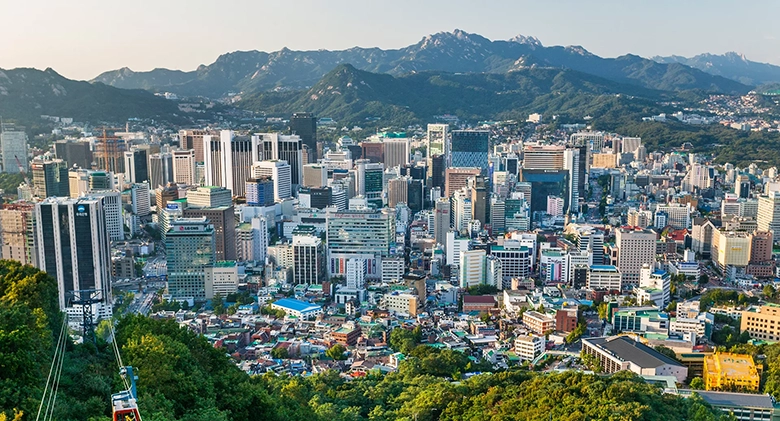
The Asian real estate landscape is witnessing significant shifts as 2024 draws to a close. Notably, Seoul’s apartment prices have stabilized after an unprecedented 40-week consecutive climb, signaling potential changes in market sentiment. Alongside, Hong Kong’s property transactions have surged to a three-year high, driven by improving economic factors and policy support. However, South Korea faces a looming housing shortage that could reshape supply-demand dynamics. Other markets, such as India and Singapore, are experiencing their own unique challenges and transformations. This comprehensive article delves into these key real estate developments across Asia, providing insights into market trends, expert forecasts, and the broader economic implications.
Seoul’s apartment prices, which had experienced a continuous 40-week increase, finally stabilized in the last week of 2024. This pause marks a significant turning point after a prolonged period of growth that had reflected strong demand and limited supply in the city’s housing market. According to data from the Korea Real Estate Board, prices were flat, effectively ending the longest upward streak in recent years.
While the capital city saw stabilization, the nationwide apartment market in South Korea continued its gradual decline for the seventh consecutive week. The national average apartment price decreased slightly by 0.03 percent in the final week of December compared to the previous week, indicating a nuanced real estate environment where regional disparities are becoming more pronounced.
Market analysts suggest that the stabilization in Seoul’s apartment prices could be a response to government cooling measures and shifting buyer sentiment amid rising interest rates. The pause may also reflect a natural market correction after months of rapid price appreciation, offering a potential breather for prospective buyers and investors.
Hong Kong’s property market is experiencing a notable recovery, with home sales reaching a three-year peak by the end of 2024. A total of 67,662 transactions across new and existing homes, offices, and commercial spaces were completed by December 30, marking a 16 percent increase from 2023. This surge is the highest since 96,133 deals were recorded in 2021.
Several factors have contributed to this uptick in activity, including improved buyer sentiment driven by recent interest rate cuts and higher loan-to-value ratios offered by financial institutions. Additionally, the government's investment migration scheme has attracted demand from international buyers looking to capitalize on Hong Kong’s strategic position as a global financial hub.
Real estate experts anticipate that these positive trends will continue into 2025, with transaction volumes expected to gather further momentum. The combination of easing financial conditions and renewed investor confidence is likely to sustain the market’s upward trajectory in the near term.
Experts in South Korea’s real estate sector have issued warnings about a significant shortage of new apartment supply expected in 2025. This shortage is poised to impact market prices negatively by constraining availability amid sustained demand, particularly in urban centers like Seoul and Busan.
A recent survey involving 20 real estate specialists revealed that 14 experts believe the supply shortage will drive up prices, while five others foresee insufficient supply without a major price impact. This consensus underscores the urgency for policy interventions aimed at expanding housing stock to avoid exacerbating affordability challenges.
To address the looming shortage, industry leaders recommend the relaxation of reconstruction and redevelopment regulations alongside continuous supply policies. These measures are critical to accelerating the delivery of new housing units and stabilizing the market for both buyers and renters.
A troubling trend has emerged in South Korea, where over 1,000 landlords have failed repeatedly to return tenant deposits, accumulating arrears totaling approximately KRW 1.9 trillion (around $1.3 billion). This issue has raised concerns over tenant protections and regulatory enforcement in the rental market.
Data from the Korea Housing and Urban Guarantee Corporation highlights that 1,128 individuals and 49 companies have defaulted on deposit returns at least twice in the past three years. This pattern of non-compliance undermines renter confidence and adds financial strain to households reliant on timely refunds.
Government agencies and industry stakeholders are calling for stronger oversight and legal reforms to safeguard tenant rights. Enhanced transparency and stricter penalties for delinquent landlords are considered vital to restoring trust and ensuring fairness within South Korea’s rental housing sector.
India’s housing market experienced its first sales decline since the pandemic in 2024, attributed to rising home prices and elevated borrowing costs that dampened buyer enthusiasm. After three years of robust growth, this slowdown signals a potential recalibration in demand dynamics amid changing economic conditions.
The contraction followed a high base effect from previous years and a reduction in new home supply, which together contributed to less favorable market conditions. Buyers became more cautious as affordability challenges increased, prompting developers to seek policy support to sustain momentum.
Looking ahead, the real estate industry is optimistic about the upcoming government budget, hoping for measures that could stimulate demand, such as tax incentives or eased lending norms. Such interventions are viewed as critical to revitalizing the sector and maintaining India’s long-term housing growth trajectory.
In a notable development within Singapore’s real estate sector, 111 agents from Knight Frank Singapore’s agency division, including its leader Evan Chung, have joined rival firm SRI. This shift represents 40.5 percent of Knight Frank’s 274-strong salesforce as of early 2024, reflecting dynamic changes in agency competition.
SRI’s strategic acquisition of experienced agents aims to strengthen its market position and expand its client base amid a competitive property landscape. The move also highlights evolving business models within Singapore’s real estate brokerage industry, where talent and client relationships are key differentiators.
Observers suggest that this realignment could lead to intensified rivalry between agencies and potentially influence commission structures and service offerings. For consumers, such competition may translate into improved service quality and more diverse property options.
Hong Kong tycoon Li Ka-shing is divesting stakes worth approximately $608 million in Hutchmed China, a biopharmaceutical company under his conglomerate. This move is part of a broader strategy to consolidate capital and focus on core business operations within the health sector.
Hutchmed plans to sell a total 45 percent stake in its health subsidiary, signaling a pivot that could influence the company’s growth trajectory and investment appeal. Li Ka-shing’s decision reflects a trend among major investors to optimize portfolios amid evolving market conditions.
The divestment is also expected to provide liquidity for new ventures and reinforce Hutchmed’s competitive positioning in the pharmaceutical industry. Stakeholders will closely watch how this capital reallocation impacts innovation and market expansion efforts.
The Asian real estate markets are undergoing complex shifts as 2024 concludes, with each region exhibiting unique challenges and opportunities. Seoul’s stabilization in apartment prices after a prolonged climb suggests a maturing market, while Hong Kong’s sales recovery points to renewed investor confidence. South Korea’s housing shortage and landlord deposit issues highlight systemic concerns requiring policy attention. Meanwhile, India and Singapore reveal evolving market conditions influenced by economic factors and industry restructuring. Investors and stakeholders should remain vigilant and responsive to these trends to navigate the dynamic Asian real estate landscape effectively.
Originally reported by mingtiandi.com. Adapted for our readers.
Keep reading
Top Stories
Since the Supreme Court overturned Roe v. Wade in 2022, the landscape of abortion rights in the United S...
Top Stories
Top Stories Tamfitronics One evening in May, nursing assistant Debra Ragoonanan’s vision blurred during her shift at a state-run Massachusetts vet...
TAMFIS NIG LTD
Electrical and instrumentation engineering, bid preparation and consulting, IT and software.