Top Stories
Discovery beneath soccer field reveals massive medieval convent lost for centuries
NEWYou can now listen to Fox News articles! Researchers recently uncovered a long-lost medieval convent in an unusual location in Denmark: a soccer field…
TAMFIS NIG LTDRC 8067447CAC ACTIVEFinima, Bonny Island, Rivers State


Ruminant farmers in Jamaica are gaining unprecedented support through a strategic partnership between the Rural Agricultural Development Authority (RADA) and Langston University, Oklahoma. Focused on mitigating the effects of heat stress in Caribbean animal production, this initiative combines scientific innovation and practical tools to improve the welfare and productivity of small ruminants such as goats and sheep. By addressing critical challenges posed by climate conditions, the partnership empowers farmers with technology, training, and resources that foster sustainable livestock management and enhanced food security.
The collaboration between RADA and Langston University builds upon a legacy of cooperative agricultural projects aimed at bolstering livestock production in Jamaica. This particular partnership focuses on mitigating heat stress, a significant environmental challenge that adversely affects ruminant health and productivity in the Caribbean region. The initiative is part of a broader effort to strengthen small-scale farming through science-driven interventions.
Funded by the United States Department of Agriculture (USDA) Center of Excellence for Global Food Security and Defense, the project represents a substantial investment of US$30,000. It aligns with Langston University's commitment to global agricultural development, leveraging expertise from its College of Agriculture, Science, and Education (CASE) to support Jamaican farmers in adapting to climatic stressors.
This ongoing collaboration marks the fourth project between RADA and Langston University, underscoring the strong institutional relationship and shared vision to improve agricultural resilience. The initiative began in May and has since expanded, receiving approval to extend its duration to two years to maximize impact and reach.
Heat stress occurs when animals are exposed to temperatures and humidity levels that exceed their physiological capacity to dissipate heat, leading to adverse effects on health and productivity. In ruminants like goats and sheep, heat stress can cause increased respiration rates, open-mouth panting, sweating, and reduced feed intake, all of which impair growth, reproduction, and milk production.
In tropical climates such as Jamaica’s, fluctuating weather patterns and rising temperatures exacerbate heat stress risks, particularly for small-scale farmers who may lack access to adequate cooling infrastructure. This environmental challenge threatens the sustainability of ruminant farming, a vital component of rural livelihoods and food security.
By addressing heat stress effectively, farmers can reduce animal mortality, enhance welfare, and improve overall farm productivity. Consequently, mitigating this problem is critical for sustaining the economic viability of small ruminant farming and ensuring consistent supply chains within the agricultural sector.
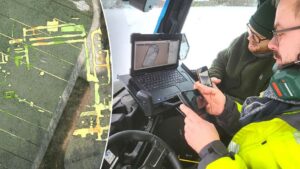
A key feature of the RADA-Langston University project is the deployment of advanced technologies designed to monitor and manage heat stress in animals. Farmers are provided with digital thermometers and thermal imaging cameras, which are instrumental in detecting early signs of heat stress and assessing animal temperature distribution accurately.
Thermal imaging technology, in particular, represents a breakthrough in livestock management. It captures temperature variations across the animal’s body and uploads the data to cloud-based platforms. Specialized software then analyzes heat distribution patterns, enabling farmers and researchers to identify heat-stressed animals quickly and implement timely interventions.
In addition to animal-focused tools, the project has installed ambient temperature and relative humidity meters at farms across six parishes, including St Thomas, St Catherine, Clarendon, St Elizabeth, St James, and St Ann. These environmental sensors provide critical real-time data that informs heat stress mitigation strategies tailored to local climatic conditions.
Beyond technology deployment, the partnership places strong emphasis on capacity building among small ruminant farmers. Training sessions are conducted to educate farmers on recognizing heat stress symptoms, utilizing new tools effectively, and implementing best practices for animal care during periods of elevated heat and humidity.
Farmers like Sheldon Brown from St Thomas have benefitted directly from hands-on guidance provided by Langston University researchers. This personalized support enhances farmers’ confidence and competence in managing their herds under challenging environmental conditions, ultimately leading to improved animal health and farm productivity.
The initiative’s inclusive approach ensures that knowledge transfer is accessible to rural farmers who often lack exposure to modern agricultural technologies. This empowerment fosters community resilience and encourages the adoption of sustainable farming practices that can withstand climatic variability.
The project strategically targets small ruminant farmers across six key parishes in Jamaica: St Thomas, St Catherine, Clarendon, St Elizabeth, St James, and St Ann. These regions were selected based on their climatic vulnerability and the prevalence of small ruminant farming as a livelihood activity.
By focusing on these parishes, the initiative maximizes its impact on communities that are heavily reliant on livestock for income and food security. The targeted support helps to alleviate the disproportionate effects of heat stress on smallholder farmers who may lack resources to implement advanced mitigation measures independently.
The selection of diverse geographic areas also allows researchers to tailor interventions according to specific environmental conditions and farming systems, enhancing the relevance and effectiveness of the project’s strategies across different contexts.
Continuous research and monitoring are central to the success of the RADA-Langston University partnership. Data collected via thermal imaging and environmental sensors provide valuable insights into how heat stress affects ruminant physiology and productivity under Caribbean conditions.
This evidence-based approach enables the refinement of heat stress mitigation techniques and informs policy recommendations for broader agricultural development. It also contributes to the scientific community’s understanding of climate adaptation in tropical livestock systems.
Moreover, the project’s extension to two years allows for longitudinal studies that capture seasonal variations and long-term trends, ensuring that interventions remain adaptive and responsive to evolving climatic challenges.
The successful implementation of this partnership has far-reaching implications beyond individual farms. By enhancing the resilience of small ruminant farming to heat stress, the initiative contributes to regional food security, economic stability, and rural development in the Caribbean.
Improved animal welfare and productivity translate into higher yields of meat and dairy products, supporting local markets and reducing dependence on imports. This aligns with broader goals of sustainable agriculture and climate-smart farming practices in the region.
Furthermore, the project sets a precedent for international cooperation in addressing climate-related challenges in agriculture, demonstrating how academic institutions and government agencies can collaborate to drive innovation and empower vulnerable farming communities.
The partnership between Jamaica’s Rural Agricultural Development Authority and Langston University embodies a forward-thinking approach to overcoming the challenges of heat stress in small ruminant farming. By integrating innovative technology, rigorous research, and farmer empowerment, the initiative not only safeguards animal health but also enhances the livelihoods of rural communities across multiple parishes. As climate variability continues to impact agriculture, such collaborative projects are vital to building resilient food systems and ensuring sustainable agricultural growth in the Caribbean. The success of this program highlights the transformative potential of strategic partnerships in advancing climate adaptation and food security.
Originally reported by jamaica.loopnews.com. Adapted for our readers.
Keep reading
Top Stories
NEWYou can now listen to Fox News articles! Researchers recently uncovered a long-lost medieval convent in an unusual location in Denmark: a soccer field…
News
By Engr. Tamunofiniarisa BrownReading Time: 6 Minutes The conflict between Russia and Ukraine is often framed in the media as a simple battle between…
TAMFIS NIG LTD
Electrical and instrumentation engineering, bid preparation and consulting, IT and software.