Top Stories
Discovery beneath soccer field reveals massive medieval convent lost for centuries
NEWYou can now listen to Fox News articles! Researchers recently uncovered a long-lost medieval convent in an unusual location in Denmark: a soccer field…
TAMFIS NIG LTDRC 8067447CAC ACTIVEFinima, Bonny Island, Rivers State

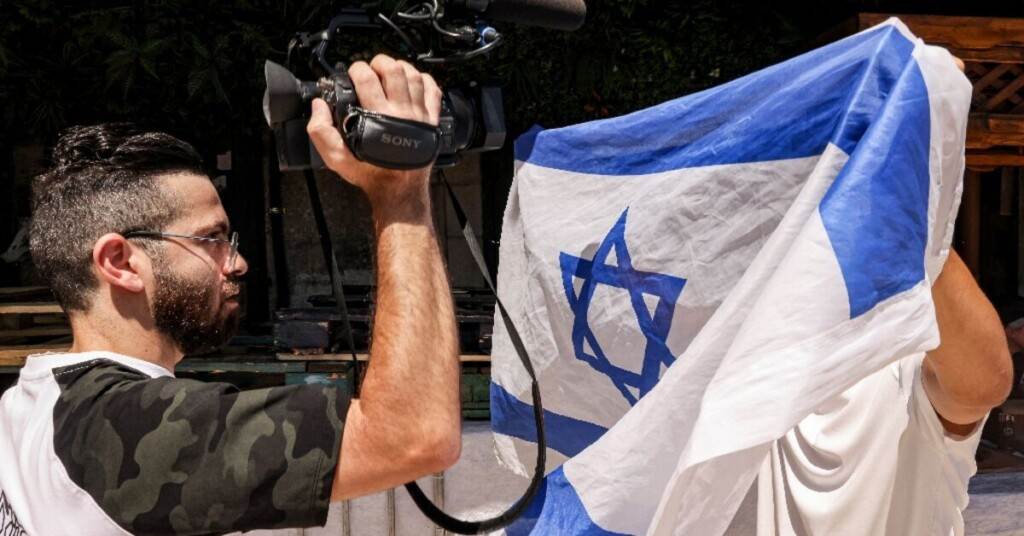
The Gaza war that erupted on October 7, 2023, following Hamas's unprecedented attack on Israel, has dominated Israeli news coverage. Israeli television channels have provided continuous updates on military campaigns and national security concerns. Yet, amid this intense coverage, a glaring absence remains: the stories, experiences, and suffering of Palestinians living under the bombardment in Gaza are scarcely represented. This article delves into the complex dynamics behind this media silence, examining the role of Israeli news outlets, societal trauma, and political narratives that shape the coverage. It also highlights the consequences this has for public understanding and the broader discourse surrounding the conflict.
Since the onset of hostilities on October 7, Israeli media has prioritized reporting on the military response to Hamas's attack. Four major channels dominate the Israeli television landscape: Channel 11 (public broadcaster), Channel 12 (the most watched), Channel 13 (known for critical perspectives), and Channel 14 (aligned with Prime Minister Netanyahu’s viewpoints). Each provides extensive coverage of Israel’s military operations, national trauma, and the impact on Israeli civilians.
Despite the saturation of news about military developments and Israeli casualties, Palestinian narratives and the human cost in Gaza remain minimal or absent. Viewers are frequently shown images of destruction—bombed buildings and rubble—but rarely the personal stories or faces of those affected. This absence reflects a broader editorial choice and societal condition influenced by the shock and trauma of the initial Hamas attack.
Media analysts and sociologists point out that this pattern is consistent with longstanding trends in Israeli media, where Palestinian voices have often been marginalized or rendered invisible. The current conflict has intensified this dynamic, with coverage overwhelmingly focusing on Israeli suffering and security concerns.
The surprise and scale of the Hamas attack on October 7 inflicted deep trauma on Israeli society, which strongly influences media coverage. Journalists and editors have prioritized stories about Israeli victims, framing the conflict through the lens of national pain and resilience. This focus serves both to inform and to unify the Israeli public during a crisis.
Experts like Jerome Bourdon, a media sociologist at Tel Aviv University, emphasize that this trauma-driven coverage sidelines Palestinian experiences, reinforcing a one-sided narrative. The collective shock has created an environment where Palestinian suffering is often viewed through a security prism rather than a humanitarian one.
Furthermore, the prevailing mistrust towards Palestinian sources and narratives contributes to their exclusion. Israeli journalists frequently question the reliability of information emerging from Gaza, especially when it conflicts with official Israeli statements or military reports, which further diminishes Palestinian visibility in the news.
While all major Israeli channels share the tendency to underrepresent Palestinian perspectives, there are nuances in their editorial lines. Channel 12, the most popular, focuses heavily on the trauma and suffering of Israeli civilians, often avoiding Palestinian stories altogether. Channel 13, which is considered more critical of the government, still largely centers Israeli narratives but occasionally highlights settler violence in the West Bank.
Channel 14 stands out as an ultra-conservative outlet closely aligned with Netanyahu’s government. It adopts a hardline stance, often labeling Palestinians in Gaza as terrorists and emphasizing military successes. This channel also uses inflammatory language and propagandistic imagery, including chyrons referencing “40,000 terrorists eliminated.”
Channel 11, as a public broadcaster, maintains a somewhat more balanced approach but still largely reflects the national mood and official positions. Across all these channels, the dominant theme remains Israel’s security and victimhood, with Palestinian suffering portrayed, if at all, only in abstract or collective terms rather than individual human stories.
One of the most striking features of Israeli news coverage is the lack of personal stories from Palestinians in Gaza. Instead of interviews with civilians or accounts of daily life under bombardment, viewers are presented with military briefings, casualty figures, and strategic updates.
This absence obscures the human dimension of the conflict for Israeli audiences, reducing Palestinians to faceless statistics or security threats. Media watchdogs like The Seventh Eye have criticized this approach, noting that the lack of images showing individual suffering contributes to a depersonalized and dehumanized portrayal of Gaza.
The omission also limits public empathy and understanding, reinforcing entrenched narratives that prioritize Israeli experiences and justify military actions. By not showcasing Palestinian voices, Israeli media effectively narrows the scope of the conflict to a binary struggle focused on Israeli victimhood and retaliation.
Political considerations heavily influence Israeli media coverage, especially during times of conflict. Government pressure and national security concerns often shape editorial decisions, encouraging narratives that support military operations and government policy.
Channel 14 exemplifies this dynamic, functioning as a government-aligned mouthpiece that amplifies official messaging and downplays Palestinian perspectives. Journalists working for such outlets often frame the war as a righteous fight against terrorism, legitimizing harsh military measures.
Military censorship and restrictions on reporting from Gaza also limit journalists’ access to information. Israeli media depend largely on official military briefings and statements, which tend to exclude Palestinian accounts or humanitarian reports. This structural limitation reinforces one-sided coverage and restricts the flow of independent information.
Foreign media outlets covering the Gaza war tend to include more comprehensive portrayals of Palestinian suffering. International reporters often highlight civilian casualties, humanitarian crises, and personal stories from Gaza, providing a broader context for the conflict.
In contrast, Israeli media’s narrower focus reflects domestic political and societal priorities. While foreign coverage can be criticized for bias or sensationalism, it frequently addresses aspects that Israeli news omits, such as Gaza’s health system collapse and displacement of civilians.
This divergence influences international perceptions and complicates efforts to foster dialogue or mutual understanding. Israeli audiences, lacking exposure to Palestinian narratives, may find it harder to appreciate the conflict’s complexity or the humanitarian consequences of military actions.
Within Israeli media circles, there are ongoing debates about the ethics of covering the conflict. Some journalists argue that focusing solely on Israeli suffering neglects journalistic responsibility to present balanced and truthful reporting.
Controversial discussions have even emerged regarding the treatment of Palestinian detainees and the limits of acceptable military conduct, highlighting tensions between security concerns and human rights. For instance, debates on Channel 12 over alleged torture of Palestinian prisoners sparked outrage and raised questions about media complicity.
Journalists also face practical challenges, including limited access to Gaza, safety concerns, and editorial pressures. Many admit that the emotional impact of October 7 and the polarized public atmosphere affect editorial choices, resulting in self-censorship or avoidance of Palestinian stories.
The absence of Palestinian voices in Israeli media has significant implications for Israeli society. It reinforces a monolithic narrative that frames the conflict as a struggle between Israeli victims and Palestinian aggressors, leaving little room for nuance or empathy.
This media environment may deepen societal divisions, harden public attitudes, and reduce support for diplomatic solutions or humanitarian considerations. It also risks perpetuating cycles of violence by obscuring the human costs experienced by Palestinians.
In the long term, inclusive and balanced media coverage is essential for fostering understanding, accountability, and peaceful coexistence. Without it, Israeli society may remain trapped in a narrative that prioritizes security over human rights and inhibits progress toward resolving the conflict.
The Israeli media’s near-complete omission of Palestinian voices and human stories from Gaza during the ongoing war reflects a complex interplay of trauma, political influence, and journalistic challenges. While understandable in the context of national crisis, this media blackout denies Israeli audiences a full understanding of the conflict’s human dimension and perpetuates polarized narratives. For meaningful progress toward peace and reconciliation, Israeli media must strive for more balanced coverage that acknowledges the suffering on all sides, fostering empathy and informed public discourse.
Originally reported by al-monitor.com. Adapted for our readers.
Keep reading
Top Stories
NEWYou can now listen to Fox News articles! Researchers recently uncovered a long-lost medieval convent in an unusual location in Denmark: a soccer field…
News
By Engr. Tamunofiniarisa BrownReading Time: 6 Minutes The conflict between Russia and Ukraine is often framed in the media as a simple battle between…
TAMFIS NIG LTD
Electrical and instrumentation engineering, bid preparation and consulting, IT and software.