
Top Stories
Discovery beneath soccer field reveals massive medieval convent lost for centuries
NEWYou can now listen to Fox News articles! Researchers recently uncovered a long-lost medieval convent in an unusual location in Denmark: a soccer field…
TAMFIS NIG LTDRC 8067447CAC ACTIVEFinima, Bonny Island, Rivers State

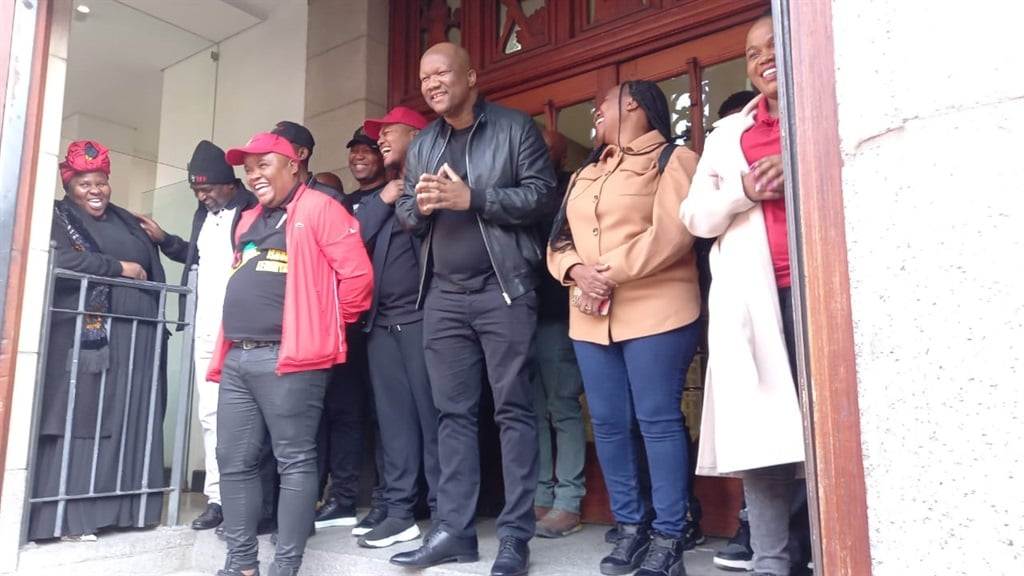
In a high-profile case that captured national attention, Economic Freedom Fighters (EFF) secretary-general Marshall Dlamini was sentenced for assaulting a police officer within the halls of South Africa’s Parliament. The incident, which took place after the State of the Nation Address in February 2019, culminated in Dlamini slapping Warrant Officer Johan Carstens and damaging his glasses. Despite the court’s ruling, Dlamini defiantly stated, “What I did that day, I can do it again,” signaling deep political tensions and raising questions about accountability within the country’s political landscape. This article provides an in-depth analysis of the event, the court’s decision, and the broader socio-political context surrounding the case.
The altercation involving Marshall Dlamini and Warrant Officer Johan Carstens unfolded in the National Assembly building lobby on the day of the 2019 State of the Nation Address. This setting, typically reserved for formal political proceedings, became the stage for a physical confrontation that shocked observers and raised concerns about decorum within the nation’s legislative heart.
Dlamini, serving as the EFF’s secretary-general and then head of security, was involved in a heated dispute with Carstens, a police officer assigned to maintain order during the event. The conflict escalated rapidly, culminating in Dlamini striking Carstens in the face, an act witnessed by multiple officials and media personnel.
The incident was not only a breach of parliamentary protocol but also sparked a nationwide debate about respect for law enforcement officers and the limits of political protest within government institutions. It highlighted the volatile relationship between the EFF and state authorities, reflecting broader tensions in South African politics.
Following the assault, legal action was promptly taken against Dlamini. The case was heard at the Cape Town Regional Court, where Magistrate Nasha Banwari presided over the proceedings. The prosecution presented evidence including eyewitness testimonies and video footage that corroborated the claim of assault with grievous bodily harm.
After careful deliberation, Magistrate Banwari sentenced Dlamini to an 18-month prison term, wholly suspended for five years. This meant that although Dlamini received a custodial sentence, he would avoid imprisonment unless he committed another offense within the suspension period. The sentence also accounted for the malicious damage caused to Officer Carstens’s glasses during the altercation.
The verdict sent a clear message emphasizing the rule of law and the consequences of violence against law enforcement officers, especially within government premises. However, it also sparked polarized reactions among political factions and the public, with some viewing the sentence as lenient and others as politically motivated.
In a striking display of defiance, Marshall Dlamini publicly declared after his sentencing, “What I did that day, I can do it again.” This statement was made outside the Cape Town Regional Court and was met with applause from his supporters, underscoring the deep ideological convictions driving his actions.
Dlamini’s remarks reflect a broader narrative within the EFF, which positions itself as a radical opposition force willing to challenge established institutions and authority figures. His unapologetic stance has fueled debates about the balance between political activism and respect for law enforcement and parliamentary rules.
The statement also raises concerns about the potential for repeated confrontations and the challenges faced by South African authorities in maintaining order during politically charged events. It highlights the ongoing tensions between the government and opposition parties, particularly the EFF’s confrontational approach.
The incident involving Dlamini has significant political ramifications for the Economic Freedom Fighters and the broader parliamentary environment. The EFF’s aggressive tactics have been both praised by supporters as necessary resistance and criticized for undermining parliamentary decorum and democratic processes.
Within Parliament, the assault has intensified discussions about security protocols and the treatment of police officers and officials during political events. It has prompted calls for stricter enforcement of rules and possibly revising the conduct codes for members of Parliament and their affiliates.
Moreover, the case has influenced public perceptions of the EFF, reinforcing its image as a disruptive but influential political force. This duality poses challenges for South Africa’s political stability and the pursuit of constructive dialogue among parties.
The altercation sheds light on the complex role of law enforcement officers within political spaces like Parliament. Officers such as Warrant Officer Johan Carstens are tasked with maintaining order while navigating the delicate balance of enforcing laws without escalating political tensions.
This case illustrates the risks faced by police officers during politically sensitive events and the importance of clear protocols to protect their safety and authority. It also raises questions about how law enforcement can effectively manage confrontations without infringing on political expression rights.
The assault has sparked nationwide conversations about respect for police officers and the mechanisms available to hold perpetrators accountable, especially when offenses occur in highly visible and symbolic locations like the National Assembly.
The media coverage of Dlamini’s sentencing was extensive, with News24 providing in-depth reporting and video footage that brought the incident into the public eye. The coverage helped inform South Africans about the legal consequences of the assault and the ongoing political tensions it exemplified.
Public reaction was divided. Some viewed the sentence as a necessary enforcement of the law, emphasizing that violence against police officers cannot be tolerated regardless of political motivations. Others sympathized with Dlamini’s cause and viewed the sentence as an attempt to suppress political dissent.
Social media platforms became battlegrounds for debate, reflecting the polarized nature of South African society regarding issues of political protest, law enforcement, and parliamentary conduct. This discourse continues to shape public opinion and political narratives.
The Dlamini case is emblematic of a broader challenge facing South Africa: addressing political violence and ensuring accountability among public figures. Instances of physical confrontations and aggressive political behavior have increased scrutiny on how political actors engage with institutions and each other.
Accountability mechanisms, including judicial processes and parliamentary disciplinary actions, are crucial in maintaining democratic norms and preventing the normalization of violence. The court’s handling of Dlamini’s case demonstrates the judiciary’s role in upholding these standards.
However, persistent political tensions and factionalism complicate efforts to foster a culture of respect and non-violence. The incident underscores the need for ongoing dialogue, reforms, and education aimed at promoting peaceful political engagement and respect for the rule of law.
The sentencing of Marshall Dlamini serves as a critical case study for South Africa’s political and judicial systems. It highlights the importance of balancing political expression with respect for law enforcement and institutional rules to preserve democratic integrity.
Moving forward, Parliament and political parties may need to revisit their codes of conduct and security arrangements to prevent similar incidents. Strengthening training for both political representatives and law enforcement officers could enhance mutual understanding and reduce conflict.
Ultimately, the case invites reflection on the nature of political activism in South Africa and the responsibilities of public figures to act within the bounds of the law while advocating for change. It remains a touchstone for debates about justice, power, and democracy in the country.
The sentencing of EFF secretary-general Marshall Dlamini for assaulting a police officer within the National Assembly marks a pivotal moment in South Africa’s political and judicial landscape. His unapologetic stance and willingness to repeat the offense reflect underlying tensions between political activism and institutional respect. As the country grapples with issues of political violence and accountability, this case serves as a reminder of the need for adherence to democratic principles and the rule of law. Moving forward, strengthened protocols, open dialogue, and mutual respect between political actors and law enforcement will be essential to safeguard South Africa’s democratic future.
Originally reported by news24.com. Adapted for our readers.
Keep reading
Top Stories
NEWYou can now listen to Fox News articles! Researchers recently uncovered a long-lost medieval convent in an unusual location in Denmark: a soccer field…
News
By Engr. Tamunofiniarisa BrownReading Time: 6 Minutes The conflict between Russia and Ukraine is often framed in the media as a simple battle between…
TAMFIS NIG LTD
Electrical and instrumentation engineering, bid preparation and consulting, IT and software.