
Top Stories
Discovery beneath soccer field reveals massive medieval convent lost for centuries
NEWYou can now listen to Fox News articles! Researchers recently uncovered a long-lost medieval convent in an unusual location in Denmark: a soccer field…
TAMFIS NIG LTDRC 8067447CAC ACTIVEFinima, Bonny Island, Rivers State

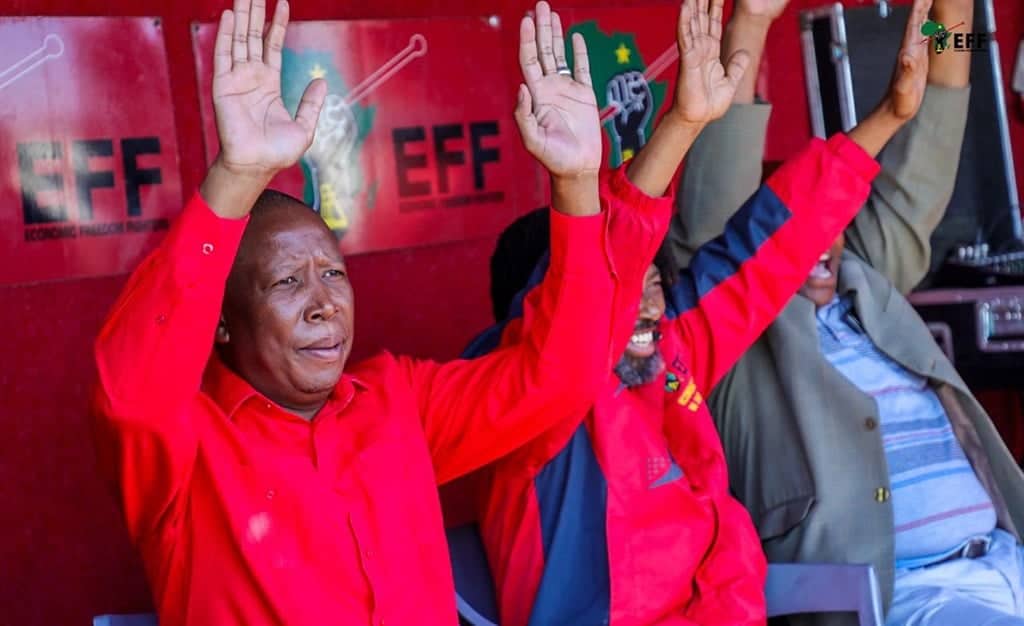
In a recent and impactful speech delivered at King Sabata Dalindyebo University in Mthatha, Eastern Cape, Economic Freedom Fighters (EFF) president Julius Malema addressed the youth with a provocative message. He encouraged young South Africans to inform their parents and grandparents that Nelson Mandela, the iconic figure synonymous with the African National Congress (ANC), is no longer affiliated with the party. Malema’s remarks underline a critical shift in the political landscape, highlighting generational divides and the evolving identity of South Africa’s liberation movement. This article explores the context, implications, and reactions surrounding Malema’s statement, providing a comprehensive understanding of its significance in contemporary South African politics.
Julius Malema’s statement was made during a rally at King Sabata Dalindyebo University, a significant venue in Mthatha, a city with deep historical ties to the anti-apartheid struggle. The Eastern Cape has long been considered an ANC stronghold, partly due to its association with Mandela and other liberation icons. Malema’s call to the youth to challenge the older generation’s loyalty to the ANC is a strategic move aimed at reshaping political allegiances in this heartland.
The Economic Freedom Fighters, founded by Malema in 2013 after his expulsion from the ANC, have positioned themselves as the radical alternative to the ANC, drawing support primarily from younger South Africans disillusioned with the ruling party’s governance. By invoking Mandela’s name and legacy, Malema seeks to question the ANC’s current legitimacy and reframe the narrative around South Africa’s political future.
Malema’s message resonates with a broader sentiment among South African youth who feel marginalized by the slow pace of economic transformation and persistent issues like unemployment and corruption. In this light, his directive to ‘tell your grandparents’ carries symbolic weight, representing a call for generational accountability and political renewal.
Nelson Mandela remains a towering figure in South African history, revered globally for his leadership in the struggle against apartheid and his efforts to foster reconciliation post-1994. His legacy is closely intertwined with the ANC, which he led to victory in South Africa’s first democratic elections. For many South Africans, Mandela symbolizes hope, unity, and the liberation movement’s ideals.
However, Malema’s statement challenges the perception that Mandela’s legacy is inseparable from the ANC’s current identity. He suggests a distinction between the founding principles Mandela embodied and the actions of the contemporary ANC leadership, particularly under President Cyril Ramaphosa. This separation signals a critical reassessment of the party’s direction and credibility.
By urging youth to communicate this distinction to their elders, Malema is fostering a dialogue about the ANC’s evolution and whether it still reflects the values Mandela championed. This discourse is crucial as South Africa grapples with political disillusionment, economic challenges, and social divisions decades after apartheid’s end.
Malema’s appeal highlights a growing generational divide in political allegiance within South Africa. Older generations, who lived through apartheid and the liberation struggle, often maintain strong emotional and historical ties to the ANC. Their loyalty is rooted in the party’s role in dismantling apartheid and establishing democracy.
Conversely, many young South Africans, born after 1994, experience a different reality marked by economic hardship, high unemployment, and perceived corruption within the ANC. This generation is more critical of the status quo and open to alternative political voices, such as the EFF, which promises radical economic transformation and social justice.
This divide not only influences voting patterns but also shapes national conversations about identity, history, and the future of South Africa. Malema’s message is a direct challenge to the intergenerational transmission of political loyalty, urging young people to rethink inherited allegiances in light of contemporary realities.
Central to Malema’s message is a sharp critique of the current ANC leadership under President Cyril Ramaphosa. While Ramaphosa is often seen as a reformist within the ANC, Malema argues that the party has strayed far from the ideals Mandela espoused. He accuses the ANC of failing to address corruption, economic inequality, and social injustice effectively.
Malema positions the EFF as the true inheritor of Mandela’s revolutionary spirit, advocating for bold policies such as land expropriation without compensation, nationalization of key industries, and wealth redistribution. This ideological stance appeals to those frustrated with the ANC’s perceived incrementalism and compromises.
By contrasting Mandela’s legacy with the current ANC leadership, Malema seeks to delegitimize the ruling party and galvanize support for the EFF’s agenda. This rhetoric intensifies political competition and reflects broader debates about governance and accountability in South Africa.
Malema’s direct address to the youth in Mthatha underscores the importance of young people in South Africa’s political future. With a majority of the population under 35, youth engagement is critical for any party seeking long-term relevance. The EFF has successfully mobilized young voters through grassroots campaigns, social media, and educational outreach.
Encouraging youth to ‘tell their grandparents’ serves as both an empowerment strategy and a call to action. It challenges young South Africans to question established political narratives and become active participants in shaping their country’s trajectory. This approach fosters a sense of ownership and responsibility among emerging generations.
Moreover, youth mobilization is essential in a democracy facing voter apathy and political disengagement. By appealing to issues that resonate with younger citizens, such as unemployment and social justice, Malema and the EFF aim to build a robust support base that could influence future elections and policy directions.
Malema’s statement has sparked diverse reactions across the political spectrum. ANC supporters view it as a provocative and disrespectful tactic designed to undermine the party’s historical significance. Some accuse Malema of exploiting Mandela’s legacy for political gain, while others see it as a necessary critique to prompt self-reflection within the ANC.
The ANC faces the challenge of addressing these criticisms while maintaining its core support base. The party must reconcile its liberation history with contemporary demands for reform and accountability. Failure to do so risks alienating younger voters who are increasingly open to alternative political voices.
This discourse also raises questions about how Mandela’s legacy should be preserved and interpreted in today’s political context. It highlights the need for inclusive conversations that bridge generational and ideological divides, fostering unity without stifling legitimate debate.
Malema’s intervention signals a potential realignment in South African politics, where historical loyalties are being reassessed in light of current challenges. The EFF’s growing influence suggests that the political landscape is becoming more competitive, with new narratives challenging established parties.
The youth’s response to Malema’s message will be critical in shaping electoral outcomes and policy priorities. If younger generations continue to embrace alternative political platforms, the ANC may need to undertake significant reforms to retain relevance and trust.
Ultimately, South Africa’s democracy stands at a crossroads where honoring its liberation past must be balanced with addressing present-day socio-economic realities. This dynamic interplay will define the nation’s political future and its pursuit of inclusive growth and social justice.
Media outlets like News24 play a vital role in informing the public about statements such as Malema’s and facilitating informed debate. Responsible journalism ensures that complex political messages are contextualized and understood within broader social frameworks.
Public discourse, shaped by media narratives, influences how citizens perceive political figures and movements. Coverage of Malema’s speech and its fallout contributes to national conversations about leadership, legacy, and democracy.
As South Africa navigates these debates, transparent and balanced media reporting remains essential to fostering an engaged and informed electorate capable of making thoughtful decisions about the country’s direction.
Julius Malema’s call to Mthatha’s youth to inform their grandparents that Nelson Mandela is no longer part of the ANC encapsulates the dynamic and contested nature of South African politics today. It reflects broader themes of generational change, political realignment, and the ongoing struggle to honor a liberation legacy while addressing contemporary socio-economic challenges. As the youth become increasingly pivotal in shaping the nation’s future, the dialogue sparked by Malema’s statement offers an opportunity for reflection, debate, and renewed commitment to South Africa’s democratic ideals. The evolving political landscape demands that all stakeholders engage thoughtfully to ensure a prosperous and inclusive future for all South Africans.
Originally reported by news24.com. Adapted for our readers.
Keep reading
Top Stories
NEWYou can now listen to Fox News articles! Researchers recently uncovered a long-lost medieval convent in an unusual location in Denmark: a soccer field…
News
By Engr. Tamunofiniarisa BrownReading Time: 6 Minutes The conflict between Russia and Ukraine is often framed in the media as a simple battle between…
TAMFIS NIG LTD
Electrical and instrumentation engineering, bid preparation and consulting, IT and software.