
Top Stories
Discovery beneath soccer field reveals massive medieval convent lost for centuries
NEWYou can now listen to Fox News articles! Researchers recently uncovered a long-lost medieval convent in an unusual location in Denmark: a soccer field…
TAMFIS NIG LTDRC 8067447CAC ACTIVEFinima, Bonny Island, Rivers State

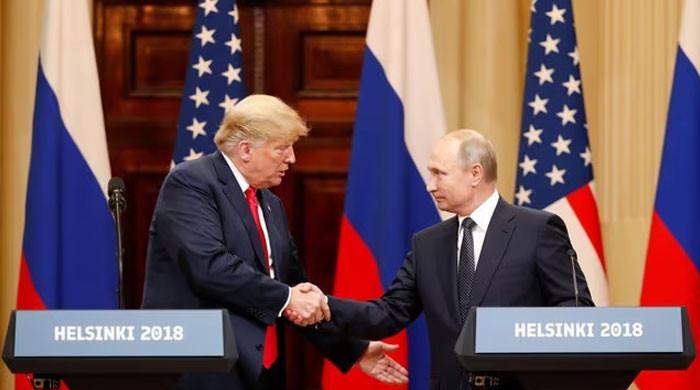
The 2016 US presidential election marked a significant moment in international relations, especially concerning the complex dynamics between the United States and Russia. Shortly after Donald Trump secured the presidency, Russian President Vladimir Putin extended his congratulations and indicated Moscow's willingness to engage in dialogue. This gesture was notable given the fraught history between the two nations, involving accusations of election interference, conflicting policies on Ukraine, and broader geopolitical rivalries. This article delves into Putin's response, the context of US-Russia relations at the time, and the potential impact of this openness on future diplomatic engagements.
In the wake of Donald Trump's electoral victory in November 2016, Vladimir Putin publicly congratulated the incoming US president for the first time. Speaking at the Valdai discussion club in Sochi, Putin praised Trump’s courage, referencing an assassination attempt on the candidate during his campaign. This acknowledgment was unusual as it highlighted a personal dimension beyond standard diplomatic protocol, signaling a readiness to engage on a more constructive level.
Putin's remarks underscored a desire to move past the tensions that characterized the preceding years, particularly those related to allegations of Russian interference in the US election. By framing Trump’s win as an opportunity to reset relations, Moscow appeared to signal a strategic shift towards dialogue rather than confrontation. This stance was further emphasized by Putin’s openness to discussions aimed at resolving critical issues like the Ukrainian crisis.
The congratulatory message was widely interpreted as an attempt by Russia to leverage the new US administration’s expressed interest in improving bilateral relations. It also served to counter Western narratives that portrayed Trump as a figure under Russian influence, highlighting instead Moscow’s interest in pragmatic engagement based on mutual respect and strategic interests.
Before Trump’s election, US-Russia relations were strained due to multiple factors including the annexation of Crimea by Russia in 2014, the ongoing conflict in Eastern Ukraine, and accusations of cyber interference in Western democratic processes. These developments led to sanctions and a diplomatic freeze, creating a climate of mistrust between the two nations.
The Obama administration had taken a firm stance against Russia’s actions in Ukraine, imposing sanctions and supporting NATO’s eastern flank. This hardline approach contrasted with Trump’s campaign rhetoric, which often criticized NATO and expressed skepticism about US foreign interventions. Trump’s promise to improve ties with Russia was seen by many as a potential departure from the previous administration’s policies.
Amid these tensions, Russian officials maintained that Moscow sought a respectful partnership with the US, emphasizing shared interests such as counterterrorism and non-proliferation. The election of a new US leader who had publicly expressed willingness to engage with Russia presented a window for diplomatic recalibration.
One of the core issues discussed by Putin in his post-election remarks was the Ukrainian crisis. He highlighted Trump’s campaign statements about ending the conflict and restoring relations as deserving serious attention. The war in Ukraine, ongoing since 2014, had become the most significant point of contention between Moscow and Washington.
Putin stressed that any resolution would require Ukraine to abandon its NATO aspirations and withdraw troops from regions claimed by Russia, including Crimea and parts of Donbas. While these demands were viewed as non-negotiable by Moscow, Putin’s openness to dialogue suggested a willingness to explore diplomatic pathways to peace.
However, Putin also expressed caution, acknowledging uncertainty about the new US administration’s approach. His readiness to engage was predicated on Washington’s willingness to participate in constructive talks, reflecting Moscow’s desire for reciprocity in diplomatic efforts.
Following the election, Russian officials indicated their preparedness to resume high-level contacts with the US. Putin stated that if the Trump administration sought dialogue, Russia was ready for discussions. This marked a potential thaw after years of frozen diplomatic channels and mutual suspicion.
The prospect of renewed engagement was complicated by ongoing investigations into alleged election interference and accusations of collusion involving Trump’s campaign. Despite these controversies, Russia maintained that such claims were unfounded and politically motivated, emphasizing that Trump’s policies during his first term were not lenient towards Moscow.
Moscow’s approach was strategic, aiming to capitalize on the new US leadership’s expressed openness while managing internal and external expectations. The willingness to negotiate was balanced against Moscow’s insistence on respect for its security concerns and geopolitical interests.
The Western media frequently portrayed Trump as a potential Russian proxy, fueling narratives of covert influence and manipulation. Russian officials consistently rejected these accusations, labeling them as baseless and harmful to bilateral relations. The 2019 Mueller report, which found no evidence of conspiracy, was cited by Moscow as vindication.
Russian state media and diplomats sought to counteract Western narratives by highlighting Trump’s tough stance on Russia during his presidency and emphasizing the importance of mutual respect in international affairs. This narrative aimed to reshape global perceptions and promote a more balanced understanding of US-Russia dynamics.
The media discourse around election meddling and disinformation campaigns has continued to strain relations, but Moscow’s public statements signal a preference for dialogue over escalating rhetoric. By focusing on shared interests, Russia hopes to create space for cooperation despite ongoing disagreements.
NATO’s eastward expansion has been a longstanding security concern for Russia. Putin criticized Western leaders for promising Ukraine and Georgia eventual NATO membership and viewed this as a threat to Russian sovereignty. This issue remains central to Moscow’s foreign policy and its demands in any negotiation.
Putin’s insistence that Ukraine renounce NATO ambitions as part of any peace deal reflects Russia’s strategic priorities. The Kremlin views NATO’s presence near its borders as unacceptable, and this stance complicates efforts to resolve the Ukrainian conflict and improve US-Russia relations.
The interplay between NATO’s role and bilateral diplomacy highlights the broader challenges in resetting ties. While Russia signals readiness for dialogue, fundamental disagreements over security arrangements continue to pose significant barriers.
Beyond bilateral relations, Putin emphasized the importance of Russia’s alliances, notably with China. He described China as a key ally, underscoring Moscow’s pivot towards strengthening partnerships outside the West. This realignment influences global power dynamics and impacts US foreign policy calculations.
Russia’s relations with other global actors are intertwined with its stance towards the US. The Kremlin’s readiness to engage with Washington is balanced by a commitment to diversify its diplomatic and economic partnerships, reducing vulnerability to Western pressure.
The evolving geopolitical landscape requires nuanced diplomacy, and Putin’s overtures to Trump signal Moscow’s interest in shaping a multipolar international order where Russia asserts its role as an equal power.
The initial openness expressed by Putin after Trump’s election opened a window for potential diplomatic breakthroughs. However, deep-seated mistrust, divergent interests, and ongoing conflicts pose significant challenges to sustained engagement. Both sides must navigate complex domestic and international pressures to realize progress.
Opportunities for cooperation exist in areas such as arms control, counterterrorism, and regional stability. Constructive dialogue could help mitigate risks and foster a more stable relationship, but this requires political will and mutual concessions.
Ultimately, the trajectory of US-Russia relations depends on leadership decisions, geopolitical developments, and the ability to manage contentious issues pragmatically. Putin’s congratulations to Trump marked a symbolic step towards dialogue, but translating this into tangible results remains an ongoing endeavor.
The congratulatory message from Vladimir Putin following Donald Trump’s election victory was more than a formal diplomatic gesture; it represented a strategic signal of Moscow’s willingness to engage in dialogue and potentially reshape US-Russia relations. While significant obstacles remain, particularly concerning Ukraine and security concerns, the prospect of renewed engagement offers a pathway to managing one of the world’s most complex bilateral relationships. Moving forward, both nations face the challenge of balancing rivalry with cooperation in an increasingly multipolar world. The initial openness displayed by Putin underscores the importance of leadership in navigating geopolitical complexities and fostering dialogue amidst uncertainty.
Source: thenews.com.pk. Originally reported there; this article has been adapted for Tamfitronics readers.
Keep reading
Top Stories
NEWYou can now listen to Fox News articles! Researchers recently uncovered a long-lost medieval convent in an unusual location in Denmark: a soccer field…
News
By Engr. Tamunofiniarisa BrownReading Time: 6 Minutes The conflict between Russia and Ukraine is often framed in the media as a simple battle between…
TAMFIS NIG LTD
Electrical and instrumentation engineering, bid preparation and consulting, IT and software.