
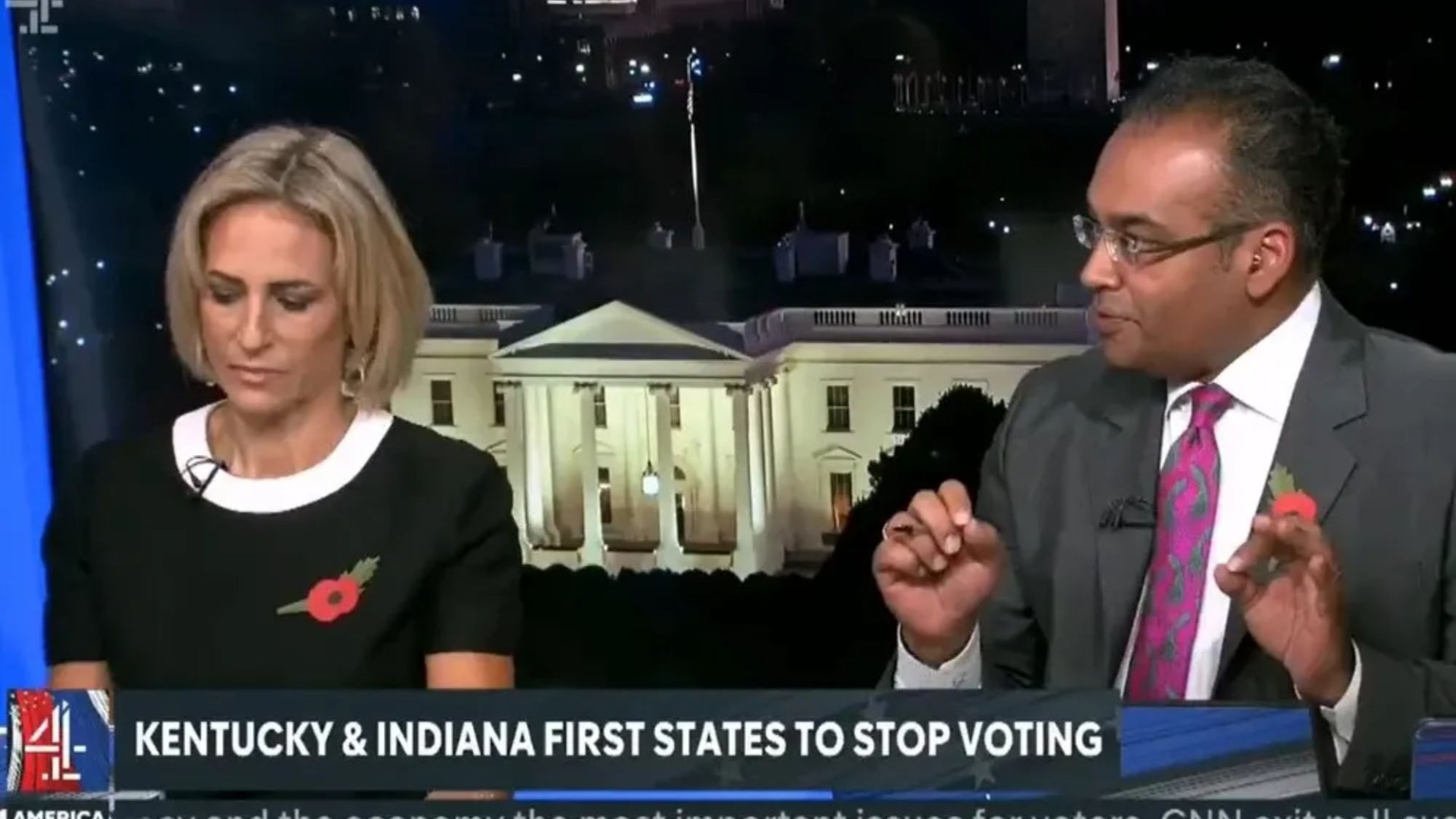
Live television often brings unpredictable moments, but few are as striking as when seasoned journalists break their usual composure. During a Channel 4 US election night special, Emily Maitlis, renowned for her incisive reporting, referred to then-President Donald Trump as ‘batsh**’ on live TV. The unexpected slip prompted her co-host Krishnan Guru-Murthy to intervene and apologize to viewers. This incident ignited discussions about journalistic impartiality, live broadcasting challenges, and the intense emotions surrounding the 2020 US presidential election. In this article, we delve deep into the moment, the context behind Maitlis’s comment, and the wider implications for live political coverage.
The Incident: Emily Maitlis’s Unscripted Remark on Live TV
On a Channel 4 election night special covering the 2020 US presidential race, Emily Maitlis made headlines with an unfiltered comment. While discussing controversial statements made by Donald Trump, Maitlis referred to the former US president as ‘batsh**’, a euphemism for ‘batshit’, expressing disbelief at some of Trump’s remarks.
The comment came amidst a discussion of a racist conspiracy theory Trump had mentioned about Haitian immigrants in Ohio allegedly eating local pets. Maitlis’s blunt reaction highlighted the incredulity many felt about such claims, but it also breached the usual decorum expected from broadcasters on live TV.
Co-host Krishnan Guru-Murthy quickly intervened, asking Maitlis to stop swearing, emphasizing the need for professionalism and reminding her that guests were being asked to refrain from swearing. Maitlis immediately apologized, acknowledging the slip, but the moment had already captured viewers’ attention.
Context Behind the Comment: Trump’s Controversial Statements
Emily Maitlis’s comment was rooted in the broader context of the 2020 US presidential election, which was marked by heated rhetoric and divisive claims from both candidates. Trump’s mention of a conspiracy theory involving Haitian immigrants was widely criticized for being baseless and racially charged.
During a presidential debate with Kamala Harris, Trump referenced the unfounded claim that Haitian immigrants in Ohio were eating pets. This statement sparked outrage and disbelief, prompting journalists like Maitlis to express strong reactions on air.
Maitlis’s use of the term ‘batsh**’ was a candid reflection of the disbelief many felt about the spread of such conspiracy theories by a sitting president. It underscored the challenge journalists face in balancing objective reporting with personal reactions to inflammatory political rhetoric.
Krishnan Guru-Murthy’s Role and On-Air Apology
As co-host, Krishnan Guru-Murthy played a crucial role in managing the live broadcast following Maitlis’s slip. His immediate interjection served to maintain the broadcast’s professionalism and to remind viewers of the standards expected on Channel 4.
Guru-Murthy’s apology was not only directed at the audience but also at the guests present on the show, who were being asked to avoid swearing. His calm response helped to diffuse the tension and keep the discussion on track.
Later in the program, Guru-Murthy humorously acknowledged Maitlis’s slip-off by saying he would ‘tell her off later’ and noted that British television remains sensitive to swearing, especially during live broadcasts. This lighthearted remark contrasted with the seriousness of the moment.
Public and Media Reaction to the Incident
The incident quickly went viral on social media, with viewers expressing mixed reactions. Some praised Maitlis for her candidness and willingness to speak frankly about Trump’s controversial remarks, while others criticized the breach of broadcasting etiquette.
Media outlets covered the event extensively, highlighting the rarity of such an explicit on-air comment by a prominent journalist during a major political broadcast. The incident sparked debates about the boundaries of professionalism and authenticity in live journalism.
Supporters of Maitlis viewed the moment as a genuine reflection of the frustrations many felt during a tumultuous election cycle, while critics argued that journalists should maintain impartiality and refrain from emotive language, especially on live TV.
Comparisons to Similar On-Air Swearing Incidents
The Maitlis incident was not isolated; other live television moments have seen presenters or guests swearing or making controversial remarks. For example, ITV’s Good Morning Britain experienced a similar situation when guest Joe Walsh swore during a discussion about the US election.
Walsh’s comments included strong language describing Trump as ‘an utterly horrible human being’, which led to immediate apologies from hosts. These incidents demonstrate the challenges live broadcasters face in managing spontaneous, emotional responses.
Such moments highlight the tension between capturing genuine, unscripted reactions and adhering to broadcasting standards, especially during politically charged events where emotions run high.
The Impact on Emily Maitlis’s Career and Reputation
Emily Maitlis, known for her incisive interviewing style on BBC’s Newsnight, has built a reputation for tough but fair journalism. The live incident added a new dimension to her public persona, showing a willingness to express personal views in moments of intense political drama.
Following the event, Maitlis continued to receive both praise and criticism, but it did not appear to negatively impact her professional standing. Instead, many saw the moment as emblematic of the frustrations many in the media felt during the divisive 2020 US election.
Maitlis’s brief departure from the Channel 4 show later that night for another work project suggested that the incident did not disrupt her career trajectory, though it remains a memorable moment in live political broadcasting.
Lessons for Live Political Broadcasting
The incident underscores the unpredictable nature of live political broadcasting, where even experienced journalists can slip in moments of high tension. It highlights the importance of maintaining professionalism while acknowledging the emotional weight of political coverage.
Broadcasters may use such moments as learning opportunities to refine protocols around live language, ensuring co-hosts are prepared to intervene swiftly and gracefully when necessary.
Moreover, the event illustrates the balance journalists must strike between impartial reporting and the natural human reaction to controversial statements, a challenge that will persist as political discourse remains highly polarized.
Broader Implications for Media and Political Discourse
Emily Maitlis’s slip reflects broader societal tensions regarding political discourse, media impartiality, and the role of journalists in holding power to account. Her candid reaction resonates with a public fatigued by misinformation and inflammatory rhetoric.
The incident also raises questions about how media outlets navigate the fine line between objective reporting and editorializing, especially in an era where audiences increasingly demand authenticity and transparency.
Ultimately, Maitlis’s comment and the subsequent fallout highlight the evolving expectations placed on journalists and broadcasters amid a rapidly changing media landscape influenced by social media, 24-hour news cycles, and political polarization.
Conclusion
The moment Emily Maitlis referred to Donald Trump as ‘batsh**’ on live television remains a striking example of the unpredictable nature of live political broadcasting. It captured the raw emotions surrounding the 2020 US presidential election and sparked a broader conversation about journalistic impartiality, professionalism, and authenticity. While Maitlis’s slip was brief and met with immediate correction, it resonated deeply with viewers and highlighted the challenges media faces in an era of polarized political discourse. As live news continues to evolve, such moments remind us of the human element behind journalism and the delicate balance broadcasters must maintain in delivering honest yet respectful coverage.