Top Stories
KFF Health News’ ‘What the Health?’: The Supreme Court and the Abortion Pill
Since the Supreme Court overturned Roe v. Wade in 2022, the landscape of abortion rights in the United S...
TAMFIS NIG LTDRC 8067447CAC ACTIVEFinima, Bonny Island, Rivers State

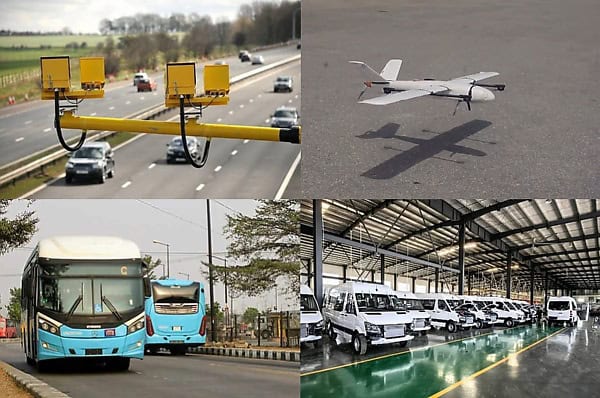
Nigeria is witnessing transformative developments in both its transportation and security landscapes. The Lagos State Government (LASG) has significantly enhanced traffic management through advanced traffic cameras, capturing hundreds of thousands of violations to improve road safety. Meanwhile, Ogun State has deployed innovative anti-crime drones, demonstrating a commitment to leveraging technology in crime prevention. Complementing these efforts are large-scale initiatives to introduce Compressed Natural Gas (CNG) powered vehicles, including 2,000 mass transit buses in Lagos and the Federal Government's nationwide rollout of CNG vehicles. This article delves into these pivotal projects, examining their scope, benefits, and impact on Nigeria's urban mobility and security.
The Lagos State Government has made significant strides in traffic management with the deployment of an advanced Traffic Management Solution (TMS) equipped with Automated Number Plate Recognition (ANPR) cameras. Since January 2023, over 53 ANPR cameras have been strategically installed across various locations in Lagos. These cameras have been instrumental in real-time monitoring and enforcement of traffic regulations, capturing more than 856,000 traffic violations within a 15-month period.
The Commissioner for Transportation, Mr. Oluwaseun Osiyemi, highlighted the success of this system during a recent press briefing. He noted that in just the last three months, the TMS recorded 26,816 traffic infringements, underscoring its effectiveness in curbing traffic offenses and promoting safer roads. This system enables traffic officers to efficiently track errant drivers and enforce penalties, thereby reducing accidents and congestion.
By automating violation detection, LASG has not only enhanced traffic law enforcement but also improved data collection for traffic management planning. The system's ability to monitor traffic patterns and identify hotspots for infractions allows the state to implement targeted interventions. This initiative aligns with Lagos’s broader vision of creating a safer and more efficient transportation ecosystem.
Ogun State has embraced cutting-edge technology in its fight against crime with the introduction of the Proforce Eagle 3 drone. This Unmanned Aerial Vehicle (UAV), developed by Proforce Air Systems Limited, is equipped with advanced surveillance and reconnaissance capabilities designed to enhance security operations across the state.
The drone’s inaugural flight was witnessed by the Inspector General of Police, Kayode Egbetokun, and Ogun State Governor, Prince Dapo Abiodun. Its deployment marks a significant step toward integrating aerial technology into law enforcement, enabling rapid response and real-time monitoring of crime-prone areas. The Proforce Eagle 3 provides law enforcement agencies with a tactical advantage by offering aerial perspectives that were previously inaccessible.
The use of drones in security operations supports proactive policing by enhancing situational awareness and facilitating evidence gathering. Ogun State’s forward-thinking adoption of this technology exemplifies Nigeria’s growing commitment to leveraging innovation for public safety and crime prevention.
In a bid to revolutionize public transportation and reduce environmental pollution, the Lagos State Government announced plans to introduce 2,000 mass transit buses powered by Compressed Natural Gas (CNG). This initiative is part of a Public-Private Partnership (PPP) scheme aimed at modernizing Lagos’s transportation sector while promoting sustainable energy use.
Commissioner Oluwaseun Osiyemi revealed this plan during the 2024 Ministerial Press Briefing, emphasizing the government’s commitment to providing efficient, eco-friendly transportation options. The introduction of CNG buses is expected to significantly reduce carbon emissions compared to traditional diesel-powered buses, contributing to improved air quality in Lagos.
Alongside the CNG buses, the government also plans to launch 250 new Electric Vehicles (EV) taxis, further diversifying its green transportation portfolio. This dual approach highlights Lagos’s dedication to adopting cleaner technologies to address urban mobility challenges and environmental concerns.
The Federal Government of Nigeria is complementing state-level efforts by launching a nationwide deployment of Compressed Natural Gas (CNG) vehicles. This initiative is strategically timed to coincide with the first anniversary of President Bola Tinubu’s administration, reflecting a national commitment to sustainable transportation.
According to Bayo Onanuga, the President’s Special Adviser on Media and Strategy, the government allocated N100 billion last year to procure 5,500 CNG-powered vehicles, including buses and tricycles, alongside 100 electric buses and over 20,000 CNG conversion kits. This substantial investment aims to accelerate the adoption of cleaner fuel alternatives across Nigeria’s transport sector.
The funding also supports the expansion of CNG refilling stations and electric vehicle (EV) charging infrastructure, addressing critical barriers to widespread adoption. This comprehensive approach ensures that the transition to greener vehicles is sustainable and accessible for operators nationwide.
The shift towards Compressed Natural Gas and electric vehicles presents significant environmental benefits for Nigeria. CNG combustion produces fewer pollutants such as nitrogen oxides and particulate matter compared to diesel and petrol, leading to improved air quality in urban centers. This shift is crucial for cities like Lagos, where vehicular emissions contribute heavily to pollution.
Electric vehicles further enhance these benefits by eliminating tailpipe emissions altogether. The introduction of 250 electric taxis in Lagos will not only reduce carbon footprints but also demonstrate the feasibility of EVs in Nigeria’s urban transport landscape. These initiatives align with Nigeria’s commitments under international climate agreements to reduce greenhouse gas emissions.
Beyond environmental advantages, CNG and EV adoption can lead to economic benefits including reduced fuel costs for operators and decreased maintenance expenses due to cleaner engine operations. These savings can translate into more affordable public transportation fares and improved service quality for commuters.
The integration of technology in Nigeria’s transportation and security sectors is transforming how services are delivered. LASG’s use of Automated Number Plate Recognition cameras exemplifies how data-driven solutions enhance regulatory compliance and traffic safety. Similarly, Ogun’s deployment of surveillance drones introduces a new dimension to crime fighting, leveraging aerial intelligence for better policing outcomes.
These technological advancements are supported by growing investments in infrastructure, such as CNG refilling stations and EV charging points, creating an enabling environment for sustainable vehicle adoption. The collaboration between government agencies and private sector players through Public-Private Partnerships accelerates the development and deployment of these innovations.
These initiatives collectively showcase Nigeria’s readiness to embrace smart city concepts, integrating technology to solve urban challenges and improve the quality of life for its citizens.
Despite the promising developments, challenges remain in fully realizing the potential of CNG vehicles and security technologies in Nigeria. Infrastructure gaps, such as limited CNG refilling stations and EV charging networks, need rapid expansion to support widespread adoption. Additionally, public awareness and acceptance of new technologies require continuous education and engagement.
Security technology deployments like drones must also address regulatory frameworks, privacy concerns, and operational training for law enforcement personnel. Ensuring that these tools are used responsibly and effectively is critical to maintaining public trust and maximizing benefits.
Looking ahead, sustained government commitment, private sector collaboration, and community involvement will be key to overcoming these hurdles. With strategic planning and investment, Nigeria can accelerate its transition to greener transportation and smarter security solutions, setting a benchmark for other African nations.
Nigeria’s recent initiatives in deploying advanced traffic management systems, anti-crime drones, and large-scale CNG vehicle programs underscore a strategic commitment to enhancing urban mobility, security, and environmental sustainability. Lagos and Ogun States, supported by the Federal Government, are pioneering efforts that integrate technology and green energy solutions to address pressing urban challenges. While obstacles such as infrastructure gaps and regulatory concerns persist, the momentum generated by these projects positions Nigeria as a leader in Africa’s transition toward smarter, cleaner, and safer cities. Continued collaboration among government, private sector, and citizens will be essential to fully harness these innovations and build a sustainable future for Nigerian urban centers.
Originally reported by autojosh.com. Adapted for our readers.
Keep reading
Top Stories
Since the Supreme Court overturned Roe v. Wade in 2022, the landscape of abortion rights in the United S...
Top Stories
Top Stories Tamfitronics One evening in May, nursing assistant Debra Ragoonanan’s vision blurred during her shift at a state-run Massachusetts vet...
Top Stories
2:54 PM Saudi Arabia shouldn’t be part of Iran-U.S. war, Turkish foreign minister says Turkish Foreign Minister Hakan Fidan spoke out Saturday about…
TAMFIS NIG LTD
Electrical and instrumentation engineering, bid preparation and consulting, IT and software.