
Top Stories
KFF Health News’ ‘What the Health?’: The Supreme Court and the Abortion Pill
Since the Supreme Court overturned Roe v. Wade in 2022, the landscape of abortion rights in the United S...
TAMFIS NIG LTDRC 8067447CAC ACTIVEFinima, Bonny Island, Rivers State

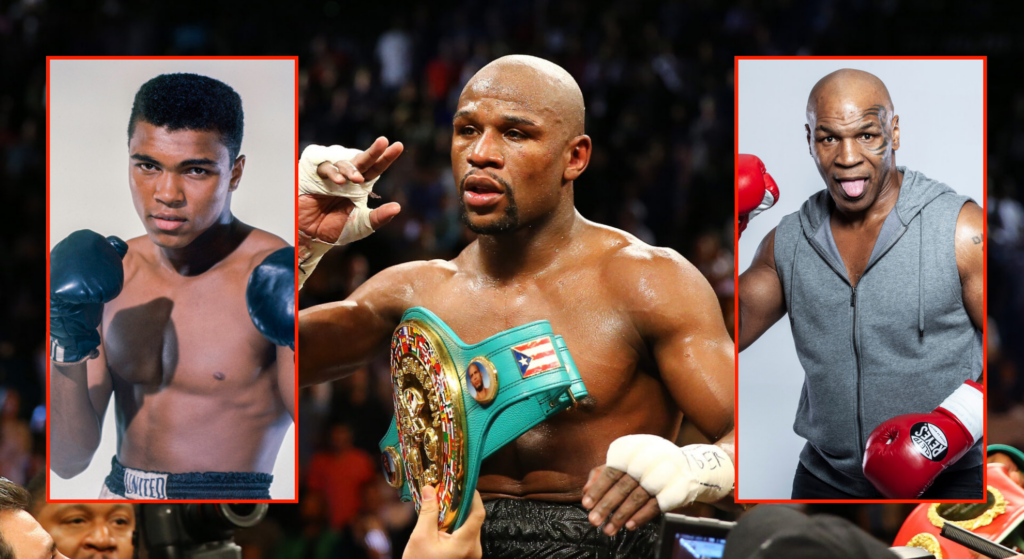
When Floyd Mayweather named Pernell Whitaker, Roberto Duran, Larry Holmes, Aaron Pryor and himself as his top five boxers of all time, he left out two names synonymous with the sport: Muhammad Ali and Mike Tyson. The revelation, made during a 2020 Instagram Live session with rapper Fat Joe, continues to provoke debate among fans, analysts and former fighters. Mayweather’s reasoning centred on era-specific dominance, technical fundamentals and what he views as the broader picture of a fighter’s career — including life after boxing. His selection reflects not only personal taste but also a broader conversation about how greatness is measured in boxing: is it pure skill, longevity, cultural impact, or a combination of factors? This article explores the context behind Mayweather’s list, the reactions it provoked, and what it reveals about evolving perceptions of boxing excellence in both Nigerian and global markets.
Mayweather’s selection process was not based solely on accolades or fame. Instead, he emphasized in-ring fundamentals, consistency across a career, and the ability to adapt and succeed against evolving competition. He praised Larry Holmes for his jab, fundamentals, and longevity, noting that Holmes beat many young fighters even after his prime and came back from retirement to compete at a high level. For Mayweather, greatness includes not just peak performance but sustained excellence and intelligent life choices outside the ring, such as smart investments that allow fighters to live well post-retirement.
He also highlighted Pernell Whitaker’s defensive mastery and four-weight world championship success, Roberto Duran’s iconic status and multi-division dominance, and Aaron Pryor’s reputation as the best light welterweight of the 20th century — despite acknowledging Pryor’s one loss was due to drug-related issues. Mayweather’s framework prioritises technical skill, versatility across weight classes, and career longevity over singular moments of fame or heavyweight spectacle.
This approach reveals a businessman’s lens on athleticism: valuing durability, adaptability, and long-term viability — traits that resonate with entrepreneurs and professionals in competitive industries who value sustained performance over flash-in-the-pan success.
The exclusion of Muhammad Ali and Mike Tyson surprised many, given their global recognition and transformative impact on boxing. Ali, a three-time heavyweight champion, was celebrated not only for his speed and skill but also for his social activism and cultural influence. Tyson, meanwhile, became the youngest heavyweight champion in history and remains one of the most feared punchers the sport has ever seen.
Mayweather acknowledged Tyson’s power and Ali’s significance but argued that heavyweight greatness must be evaluated differently. He pointed to Holmes’ era dominance — beating everyone in his time — and suggested that Tyson’s victory over Holmes came when the latter was past his prime and coming off a year’s retirement. In Mayweather’s view, beating a faded legend does not equate to surpassing him in all-time rankings.
This perspective invites scrutiny: while Mayweather’s emphasis on peak-era dominance has merit, it may undervalue the symbolic and transcendent roles Ali and Tyson played beyond the ring. For audiences in Nigeria and across Africa, where Ali’s stand on civil rights and Tyson’s raw power resonated deeply, their omission feels less like a technical assessment and more like a dismissal of legacy.
The list drew immediate reactions from fans and commentators. UFC analyst Joe Rogan defended Mayweather’s right to his opinion, even calling him ‘the best boxer of all time’ — a statement that ironically reinforced the subjectivity of such rankings. Rogan also criticised the referee in Mayweather’s later exhibition fight against John Gotti III, suggesting the boxing legend was justified in dismissing the official mid-bout.
Meanwhile, Mike Tyson responded with visible frustration, calling Mayweather’s take ‘disrespectful’ and insisting that Ali’s impact on the sport and society cannot be measured by wins and losses alone. Tyson’s reaction underscored a sentiment shared by many: that boxing greatness includes influence, courage, and cultural resonance — qualities that may not show up in BoxRec statistics but are vital to the sport’s soul.
In Nigeria, where boxing enjoys a passionate following and local heroes like Dick Tiger and Hogan ‘Kid’ Bassey are celebrated, the debate echoes broader conversations about how we honour athletes — not just for what they achieved in the ring, but for what they represented outside it.
Mayweather’s list ultimately reflects a personal philosophy shaped by his own career: undefeated, financially successful, and known for defensive precision and business acumen. His emphasis on fundamentals, longevity, and post-career stability mirrors the values of many professionals who prioritise sustainability over short-term glory. In this sense, his rankings are less a dismissal of Ali or Tyson and more an articulation of what he believes constitutes a complete athlete.
Yet boxing, unlike many professions, thrives on mythology. Ali’s ‘float like a butterfly, sting like a bee’ persona and Tyson’s intimidating presence became part of global pop culture, inspiring generations far beyond sports fans. To overlook that dimension is to risk reducing greatness to a spreadsheet — useful for analysts, but incomplete for storytellers and communities who find meaning in symbolism and struggle.
For business consultants and entrepreneurs observing from afar, the debate offers a parallel: how do we measure success in leadership? Is it quarterly profits and market share, or also innovation, employee welfare, and societal impact? Mayweather’s list invites that reflection — reminding us that greatness, in sport or in enterprise, is rarely defined by a single metric.
Floyd Mayweather’s controversial GOAT list may never satisfy those who see Muhammad Ali and Mike Tyson as immutable icons of boxing. Yet it serves a useful purpose: it forces a conversation about what we value in athletes and leaders alike. Is greatness defined by dominance in one’s era, the ability to adapt and endure, or the power to inspire beyond the field of play? Mayweather’s answer leans toward the first two — a perspective shaped by his own meticulous, business-minded approach to boxing and life. For shoppers, entrepreneurs, and professionals in Nigeria and beyond, the discussion offers a lens through which to examine their own definitions of success. In a world where performance metrics often overshadow meaning, remembering both the numbers and the narrative may be the truest mark of greatness.
Originally reported by bloodyelbow.com. Adapted for our readers with AI assistance.
Keep reading
Top Stories
Since the Supreme Court overturned Roe v. Wade in 2022, the landscape of abortion rights in the United S...
Top Stories
Top Stories Tamfitronics One evening in May, nursing assistant Debra Ragoonanan’s vision blurred during her shift at a state-run Massachusetts vet...
TAMFIS NIG LTD
Electrical and instrumentation engineering, bid preparation and consulting, IT and software.

