
Top Stories
KFF Health News’ ‘What the Health?’: The Supreme Court and the Abortion Pill
Since the Supreme Court overturned Roe v. Wade in 2022, the landscape of abortion rights in the United S...
TAMFIS NIG LTDRC 8067447CAC ACTIVEFinima, Bonny Island, Rivers State

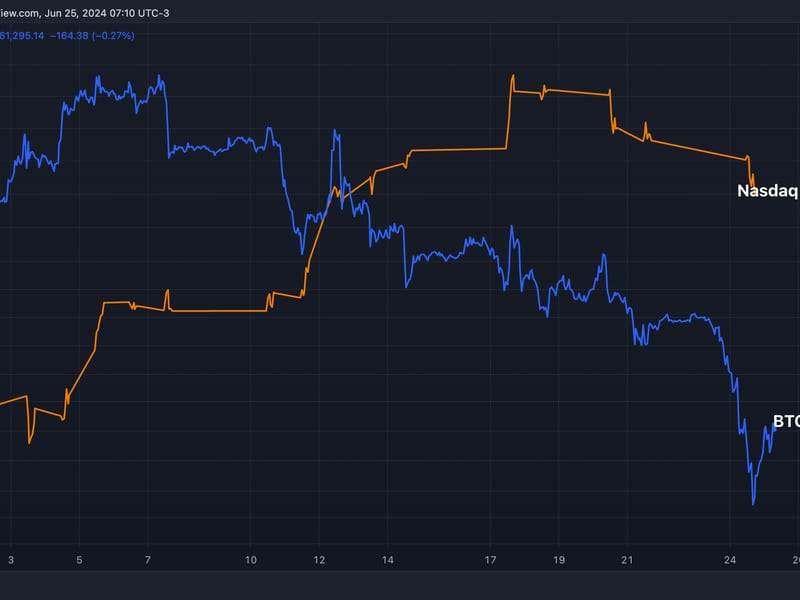
The cryptocurrency market entered the week with a mix of cautious optimism and lingering uncertainty. Bitcoin (BTC), often regarded as a barometer for market liquidity and risk appetite, has steadied following a challenging month marked by nearly a 10% loss. This performance stands in stark contrast to the Nasdaq 100 index, which has gained approximately 5% during the same period. Such divergent trajectories between BTC and Nasdaq raise important questions about the underlying strength of the tech rally and potential liquidity shifts in financial markets. Alongside these market movements, political factors and regulatory developments, including the anticipated launch of spot Ether ETFs and the U.S. presidential election outlook, continue to shape investor sentiment. This article explores these interconnected themes in detail, providing a comprehensive analysis of current crypto and equity market dynamics.
After hitting a low near $58,580, Bitcoin has regained composure, trading above the $61,000 mark. Analysts attribute some of the recent volatility to concerns over the planned distribution of 140,000 BTC from the defunct Mt. Gox exchange. Initially, fears that this supply influx could flood the market weighed heavily on prices. However, market participants now view these worries as overstated, allowing BTC to regain footing.
The broader crypto market reflected this renewed confidence, with the CoinDesk 20 Index (CD20) climbing from 2,020 to 2,083 points. This rebound suggests that investors are absorbing supply-related risks and focusing once again on underlying fundamentals. Despite this, Bitcoin remains down nearly 10% for the month, underscoring persistent caution among traders.
The stabilization of BTC is significant because the cryptocurrency often acts as a liquidity proxy for macro traders. The market’s ability to absorb potential supply shocks without a further decline indicates a degree of resilience. However, the sizable monthly loss still signals underlying vulnerabilities that market watchers should monitor closely.
While Bitcoin struggles to regain lost ground, the Nasdaq 100 index has recorded gains of around 5% over the same period. This divergence is notable because BTC and Nasdaq often exhibit correlated movements, especially given the tech sector’s growing interest in blockchain and digital assets. The differing trajectories have sparked debates about the sustainability of Nasdaq’s rally amid tightening liquidity.
Michael Kramer, founder of Mott Capital Management, highlighted this dynamic, suggesting that Bitcoin’s performance could serve as an early warning signal. If BTC, as a liquidity gauge, is falling, it implies a reduction in market liquidity that could eventually pressure Nasdaq to follow suit and decline. This perspective invites investors to reassess the underlying drivers of the tech-heavy index’s recent strength.
Concerns also extend to specific tech companies like Nvidia, which historically has tracked Bitcoin’s price movements closely. A weakening Bitcoin market may foreshadow challenges for such stocks, suggesting that the current Nasdaq rally may not be as robust as it appears. Investors should remain vigilant to these cross-asset signals when making portfolio decisions.
The interplay between cryptocurrency markets and traditional equities underscores broader liquidity conditions in the financial system. Bitcoin’s role as a liquidity proxy means its price movements often reflect shifts in investor risk appetite and funding availability. The recent decline in BTC futures open interest by 14% to $37 billion since early June further illustrates this trend.
This reduction in open interest is attributed to the unwinding of carry and basis trades driven by negative funding rates, according to Bitfinex analysts. Negative funding rates incentivize traders to close positions, leading to decreased leverage and subdued market activity. Such deleveraging can tighten liquidity, affecting asset prices across markets.
As liquidity conditions tighten, risk assets including tech stocks may face headwinds. Investors should consider this macro backdrop when evaluating market rallies. The current divergence between Bitcoin and Nasdaq may reflect a transitional phase where liquidity is contracting, potentially leading to increased volatility and price corrections in the near term.
Political developments, particularly the 2024 U.S. presidential election, have become a focal point for crypto investors. Prediction markets like Polymarket currently favor Republican candidate Donald Trump with a 57% chance of winning, compared to 35% for incumbent Joe Biden. This sentiment reflects broader market expectations and could influence crypto asset flows.
Trump’s historically favorable stance on cryptocurrencies contrasts with Biden’s more cautious regulatory approach. If markets anticipate a Trump presidency, Bitcoin and the wider crypto market may benefit from expectations of a more supportive policy environment. This dynamic adds a political dimension to crypto price movements ahead of the November election.
Furthermore, separate prediction contracts indicate Biden leading the popular vote, though the electoral college outcome remains the decisive factor. Investors should monitor these political signals as they can impact regulatory frameworks, investor confidence, and ultimately market valuations in the digital asset space.
The U.S. Securities and Exchange Commission’s recent approval of spot Ether (ETH) ETF filings has generated significant excitement. These ETFs are poised to open new avenues for retail and institutional investors to gain exposure to ETH without direct custody. However, some analysts caution that demand for spot ETH ETFs may be more subdued compared to Bitcoin ETFs.
Broker Bernstein and investment bank JPMorgan have noted that the absence of an ETH staking feature within the ETFs might limit conversion from spot ETH holdings. Staking provides yield opportunities that could otherwise attract investors, making Bitcoin ETFs comparatively more appealing. Despite this, spot ETH ETFs are expected to contribute positively to market liquidity over time.
The introduction of spot ETH ETFs may also increase price volatility for Ether relative to Bitcoin. Market participants should prepare for potentially sharper swings as these products gain traction. Careful analysis of ETF inflows and outflows will be essential to understanding their impact on the broader crypto ecosystem.
The Mt. Gox exchange’s planned distribution of 140,000 BTC has been a significant overhang on the market. This event raised fears of a large supply shock that could depress prices if holders sell off their coins rapidly. However, recent market behavior suggests these concerns may have been exaggerated.
Bitcoin’s ability to stabilize above $61,000 despite the looming distribution indicates that investors have factored in this supply event. Many anticipate that the distribution will occur gradually rather than as a sudden flood, allowing the market to absorb the coins without disrupting prices significantly.
This episode highlights the importance of understanding structural factors influencing crypto markets. Supply-side events, while impactful, may not always trigger anticipated volatility if market participants adjust expectations accordingly. Continued monitoring of Mt. Gox’s distribution schedule remains crucial for anticipating potential price movements.
Looking ahead, investors face a complex landscape characterized by mixed signals from key assets like Bitcoin and Nasdaq. The divergence between BTC’s monthly losses and Nasdaq’s gains underscores the need for cautious optimism. Market participants should prepare for potential corrections if liquidity tightens further.
Regulatory developments, including the rollout of spot Ether ETFs and evolving U.S. crypto policies, will play critical roles in shaping market dynamics. Political outcomes from the 2024 election could either bolster or hinder crypto adoption and innovation, adding another layer of uncertainty.
Ultimately, successful navigation of these markets requires vigilance and adaptability. Investors should consider cross-asset indicators, monitor liquidity trends, and stay informed on political and regulatory shifts. By doing so, they can better position themselves to capitalize on opportunities while managing risks in an evolving financial ecosystem.
Bitcoin’s recent stabilization amid a challenging month offers some reassurance to crypto investors, yet the nearly 10% loss contrasts sharply with Nasdaq’s gains, highlighting an uneasy divergence. This split raises important questions about liquidity conditions and the durability of the tech rally. Political developments and regulatory milestones, such as the upcoming spot Ether ETFs and the 2024 U.S. elections, add complexity to market dynamics. Navigating this environment demands a nuanced understanding of cross-asset signals, liquidity trends, and external influences. As the financial landscape evolves, investors who remain informed and adaptable will be best positioned to manage risks and seize opportunities across both crypto and traditional markets.
Originally reported by coindesk.com. Adapted for our readers.
Keep reading
Top Stories
Since the Supreme Court overturned Roe v. Wade in 2022, the landscape of abortion rights in the United S...
Top Stories
Top Stories Tamfitronics One evening in May, nursing assistant Debra Ragoonanan’s vision blurred during her shift at a state-run Massachusetts vet...
TAMFIS NIG LTD
Electrical and instrumentation engineering, bid preparation and consulting, IT and software.

