
Top Stories
Discovery beneath soccer field reveals massive medieval convent lost for centuries
NEWYou can now listen to Fox News articles! Researchers recently uncovered a long-lost medieval convent in an unusual location in Denmark: a soccer field…
TAMFIS NIG LTDRC 8067447CAC ACTIVEFinima, Bonny Island, Rivers State

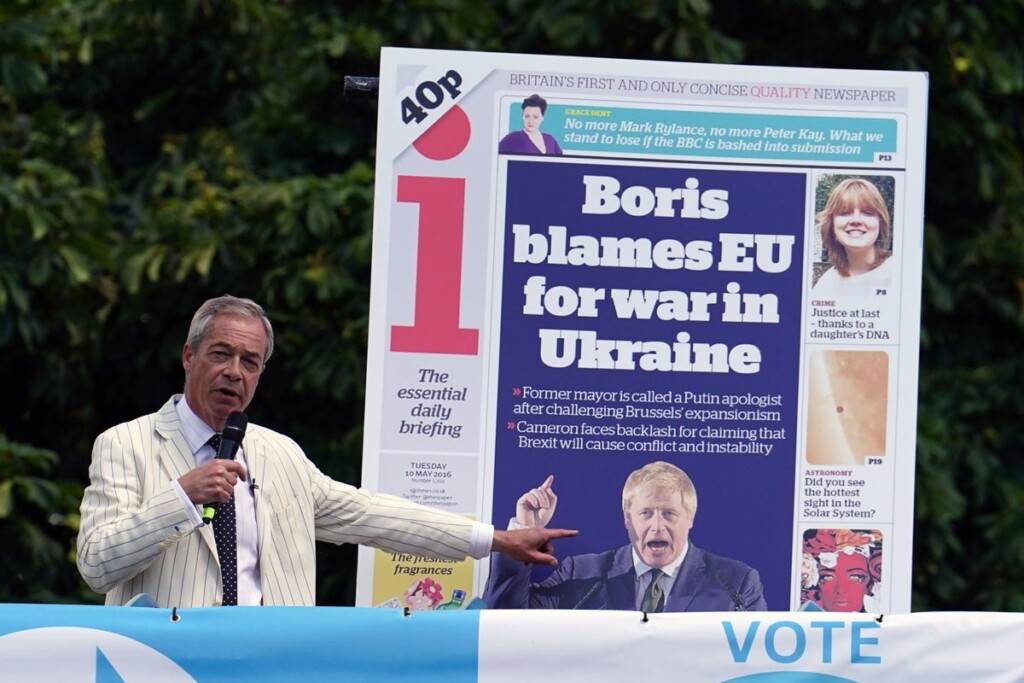
Nigel Farage, leader of Reform UK, has recently intensified his public dispute with former Prime Minister Boris Johnson, particularly regarding their contrasting views on the Russia-Ukraine war. While Farage has faced criticism for comments suggesting Western actions provoked the conflict, he firmly insists he would never defend Vladimir Putin. This article delves into the nuances of Farage's position, the heated exchanges with Johnson, and the wider political context shaping debates on foreign policy, defense, and national security in the UK.
The ongoing row between Nigel Farage and Boris Johnson centers on differing interpretations of the origins and handling of the war in Ukraine. Farage has argued that NATO expansion and EU influence in Eastern Europe contributed to provoking Russia’s invasion, a stance that has drawn sharp rebukes from Johnson and others.
Johnson condemned Farage’s comments as "morally repugnant" and accused him of spreading Kremlin propaganda. The former Prime Minister publicly shared an article by Farage on social media, denouncing the views as "nauseating historical drivel." This public clash has highlighted deep divisions within UK politics over foreign policy narratives.
Farage’s use of a 2016 newspaper headline blaming the EU for the Ukraine conflict further fueled the controversy. By unveiling this poster at a Reform UK rally, he underscored his argument that he had foreseen the war’s potential and positioned himself as a more prescient voice compared to Johnson.
Despite accusations of defending Putin, Farage has been unequivocal in stating he would "never, ever defend" the Russian president. He described Putin’s actions in Ukraine and elsewhere as "reprehensible," distancing himself from any endorsement of the invasion or authoritarian behavior.
Farage emphasized the importance of understanding the origins of the conflict to achieve peace in the future. He argued that recognizing the geopolitical missteps and tensions that led to Russia’s aggression is crucial for crafting effective diplomatic solutions.
His calls for a more nuanced discussion on foreign policy reflect longstanding concerns about the lack of serious debate on defense and security issues within the UK government. Farage contends that without such understanding, efforts toward peace risk being superficial or ineffective.
Farage has not held back in his criticism of Boris Johnson’s tenure as Prime Minister. He described Johnson as "the worst prime minister of modern times," accusing him of betraying the Brexit mandate and failing to address key national issues such as immigration and defense.
He pointed to Johnson’s handling of immigration, suggesting that promises made to Brexit voters were undermined by policies that led to mass immigration. Farage framed this as a betrayal of the Conservative Party’s values and the electorate’s expectations.
Moreover, Farage criticized Johnson’s governance style, labeling it as more aligned with environmentalist policies than traditional conservatism. This perceived ideological shift, according to Farage, contributed to a lack of focus on military readiness and veterans’ welfare.
Central to Farage’s platform is a call for renewed attention to the UK’s defense capabilities and foreign policy strategy. He warns that the global security environment is more precarious than at any time since the Cuban Missile Crisis, highlighting the urgency of a robust national defense.
Farage advocates for strength and deterrence rather than what he describes as "peace through weakness." He argues that the UK must increase its military capacity to maintain influence within NATO and on the global stage, especially in light of challenges posed by Russia and China.
He also criticized the Biden administration’s foreign policy decisions, such as the withdrawal from Afghanistan, as signs of weakness that embolden adversaries. According to Farage, these developments underline the necessity for the UK to assert its own strategic autonomy.
Farage’s comments have provoked strong reactions from across the political spectrum. Home Secretary James Cleverly accused him of echoing Putin’s "vile justification" for the invasion, while Shadow Defence Secretary John Healey labeled him a "Putin apologist" unfit to influence national security.
These critiques reflect broader concerns about the potential consequences of Farage’s rhetoric on public perception and policymaking, especially in a context where unity against Russian aggression is deemed vital.
Nevertheless, Farage’s supporters have rallied behind his message, particularly on issues like immigration and national sovereignty, illustrating the ongoing polarization within UK politics over these critical topics.
Farage claims he was among the few voices warning about the possibility of war in Ukraine before it erupted. He asserts that his foresight sets him apart from mainstream politicians who failed to anticipate the conflict’s scale and implications.
By positioning himself as a prophetic figure in this regard, Farage seeks to bolster his credibility and differentiate Reform UK as a party focused on pragmatic and realistic assessments of international affairs.
His strategy includes leveraging public dissatisfaction with traditional parties and highlighting perceived failures in leadership, especially around defense and immigration, to gain political traction.
The Farage-Johnson dispute underscores the challenges facing UK politics in reconciling divergent views on foreign policy and national identity. It reflects broader societal debates about the country’s role in global affairs post-Brexit.
This controversy also illustrates the difficulties in balancing robust political critique with maintaining a united front on issues of national security and international alliances.
As debates continue, the way political figures frame narratives around conflicts like Ukraine will likely influence public opinion and policy decisions, shaping the UK’s strategic direction for years to come.
Farage’s call for understanding the root causes of the Ukraine conflict points to the complex and delicate nature of achieving peace. He suggests that without addressing underlying geopolitical tensions, lasting resolution remains elusive.
The ongoing political disputes within the UK may complicate coherent policy responses, but they also highlight the importance of transparent and informed dialogue about foreign relations and defense priorities.
Ultimately, the evolving positions of leaders like Farage and Johnson will play a significant role in shaping the UK’s approach to international challenges and its contribution to global stability.
The escalating row between Nigel Farage and Boris Johnson over the Russia-Ukraine conflict and UK foreign policy reveals profound ideological and strategic disagreements within British politics. While Farage firmly rejects any defense of Vladimir Putin, his critiques of Western actions and Johnson’s leadership have sparked intense debate and polarized opinions. This dispute not only reflects contrasting visions for the UK’s role on the global stage but also underscores the need for comprehensive discussion on defense, diplomacy, and national security. As the world grapples with ongoing geopolitical tensions, the UK’s internal political dynamics will play a crucial role in shaping its future policies and international influence.
Originally reported by standard.co.uk. Adapted for our readers.
Keep reading
Top Stories
NEWYou can now listen to Fox News articles! Researchers recently uncovered a long-lost medieval convent in an unusual location in Denmark: a soccer field…
News
By Engr. Tamunofiniarisa BrownReading Time: 6 Minutes The conflict between Russia and Ukraine is often framed in the media as a simple battle between…
TAMFIS NIG LTD
Electrical and instrumentation engineering, bid preparation and consulting, IT and software.