
Top Stories
Discovery beneath soccer field reveals massive medieval convent lost for centuries
NEWYou can now listen to Fox News articles! Researchers recently uncovered a long-lost medieval convent in an unusual location in Denmark: a soccer field…
TAMFIS NIG LTDRC 8067447CAC ACTIVEFinima, Bonny Island, Rivers State

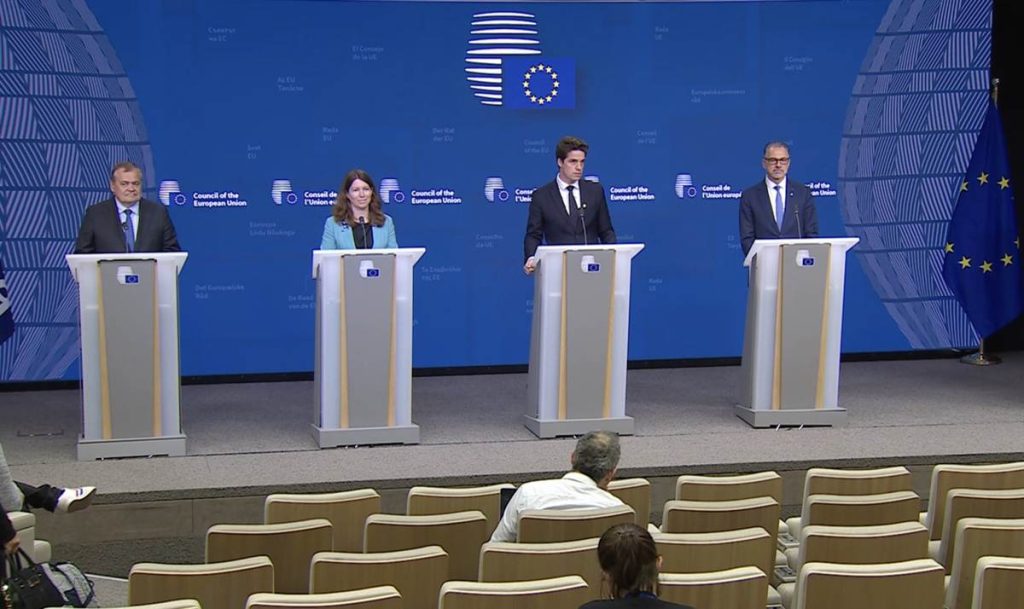
The European Union (EU) and the European Space Agency (ESA) recently concluded a pivotal meeting in Brussels focused on strengthening the competitiveness of Europe’s space sector. While the adopted resolution highlights existing programs and reiterates commitments to innovation and support for small and medium-sized enterprises (SMEs), some industry representatives argue that the measures fall short of what is necessary to secure Europe’s position as a global space power. This article examines the key elements of the resolution, industry reactions, and the broader context of regulatory developments shaping the future of the European space industry.
On May 23, 2023, the European Rental Company and the European Union finalized a resolution aimed at enhancing the competitiveness of Europe’s space sector. The resolution, adopted during a Rental Council meeting in Brussels, primarily underscores ongoing initiatives rather than introducing new, transformative policies. It emphasizes the importance of continued public and private investment to support innovation, particularly highlighting the critical role of SMEs within the sector.
Belgium, holding the EU presidency at the time, played a significant role in steering the discussions. Thomas Dermine, Belgium’s federal space secretary for research, emphasized the resolution’s focus on reinforcing Europe’s strategic policies and the resilience of its space industry. The resolution also draws attention to the EU’s Cassini program, which seeks to stimulate investment in space companies and promote increased procurement of space-related services.
Anna Christmann, Germany’s federal aerospace coordinator and chair of the ESA ministerial council, highlighted the European Space Agency’s commitment to boosting innovation and competitiveness. She pointed to the ESA’s commercial cargo program as an example of rapid progress, noting that contracts were awarded to companies like Thales Alenia Space and The Exploration Company within six months of the program’s announcement in late 2022.
Christmann underscored the urgency of accelerating efforts to maintain Europe’s competitive edge in the global space market, suggesting that the pace set by ESA’s initiatives should serve as a model for future actions across the continent.
Despite the resolution’s positive tone, industry stakeholders expressed disappointment with the lack of new, decisive measures. Eurospace, a prominent European space industry association, stated that the time has come for Europe to equip itself with the necessary tools to become a genuine global space power. They highlighted several challenges, including relatively low demand from European institutional customers compared to the United States and China, as well as declining demand in mature commercial markets traditionally served by European companies.
Eurospace also pointed out the disruptive impact of SpaceX, which has transformed both the satellite and launch service markets, increasing competitive pressure on European firms. To address these challenges, the association called for a comprehensive, Europe-wide industrial strategy that would strengthen supply chains and leverage synergies between defense and civil space capabilities. This strategy would also promote European standards and guidelines focused on sustainability and environmental responsibility.
A significant topic during the council meeting was the status of the proposed EU space law, initially expected to be introduced earlier in 2023. However, officials confirmed that the legislation would likely be delayed until after the European Parliament elections scheduled for June 2024. Thierry Breton, the EU Commissioner responsible for space, indicated in April that the proposal was not yet finalized and that work would resume later in the summer.
Timo Pesonen, head of the European Commission’s Directorate-General for Defence Industry and Space, emphasized the Commission’s commitment to drafting a robust and aligned proposal that reflects the aspirations of both industry and member states. The law aims to create a unified EU space market and introduce sustainability regulations for the sector.
Belgium, during its EU presidency, prioritized the space law but acknowledged the delay as necessary to ensure a comprehensive and well-supported framework. Thomas Dermine remarked that it was preferable to have a thoroughly developed law rather than a rushed, incomplete version.
The current approach by the EU and ESA reflects a balancing act between fostering innovation and navigating complex market and regulatory realities. While ongoing programs like Cassini and ESA’s commercial cargo initiative demonstrate concrete steps toward enhancing competitiveness, the absence of new major initiatives and the delay in regulatory reform highlight the challenges of aligning diverse stakeholder interests across Europe.
Industry calls for a more coordinated and ambitious European space strategy underline the urgency of addressing competitive pressures from global players and the need to build resilient supply chains. Moreover, integrating sustainability considerations into space activities is becoming increasingly important as environmental impacts gain more attention.
The interplay between civil and defense space capabilities also presents opportunities for innovation but requires careful coordination among EU institutions, ESA, and member states to maximize benefits.
The European Union and European Space Agency’s recent resolution marks a reaffirmation of commitment to maintaining Europe’s leadership in the global space sector. While existing programs and investments provide a foundation for competitiveness, industry voices highlight the need for more decisive and coordinated action. The delay in the EU space law underscores the complexities involved in crafting a regulatory framework that aligns with industry ambitions and political realities. Moving forward, a coherent European-wide industrial strategy that integrates innovation, sustainability, and defense-civil synergies will be essential to ensuring that Europe not only retains but strengthens its position as a global space power.
Originally reported by spacenews.com. Adapted for our readers with AI assistance.
Keep reading
Top Stories
NEWYou can now listen to Fox News articles! Researchers recently uncovered a long-lost medieval convent in an unusual location in Denmark: a soccer field…
News
By Engr. Tamunofiniarisa BrownReading Time: 6 Minutes The conflict between Russia and Ukraine is often framed in the media as a simple battle between…
TAMFIS NIG LTD
Electrical and instrumentation engineering, bid preparation and consulting, IT and software.