
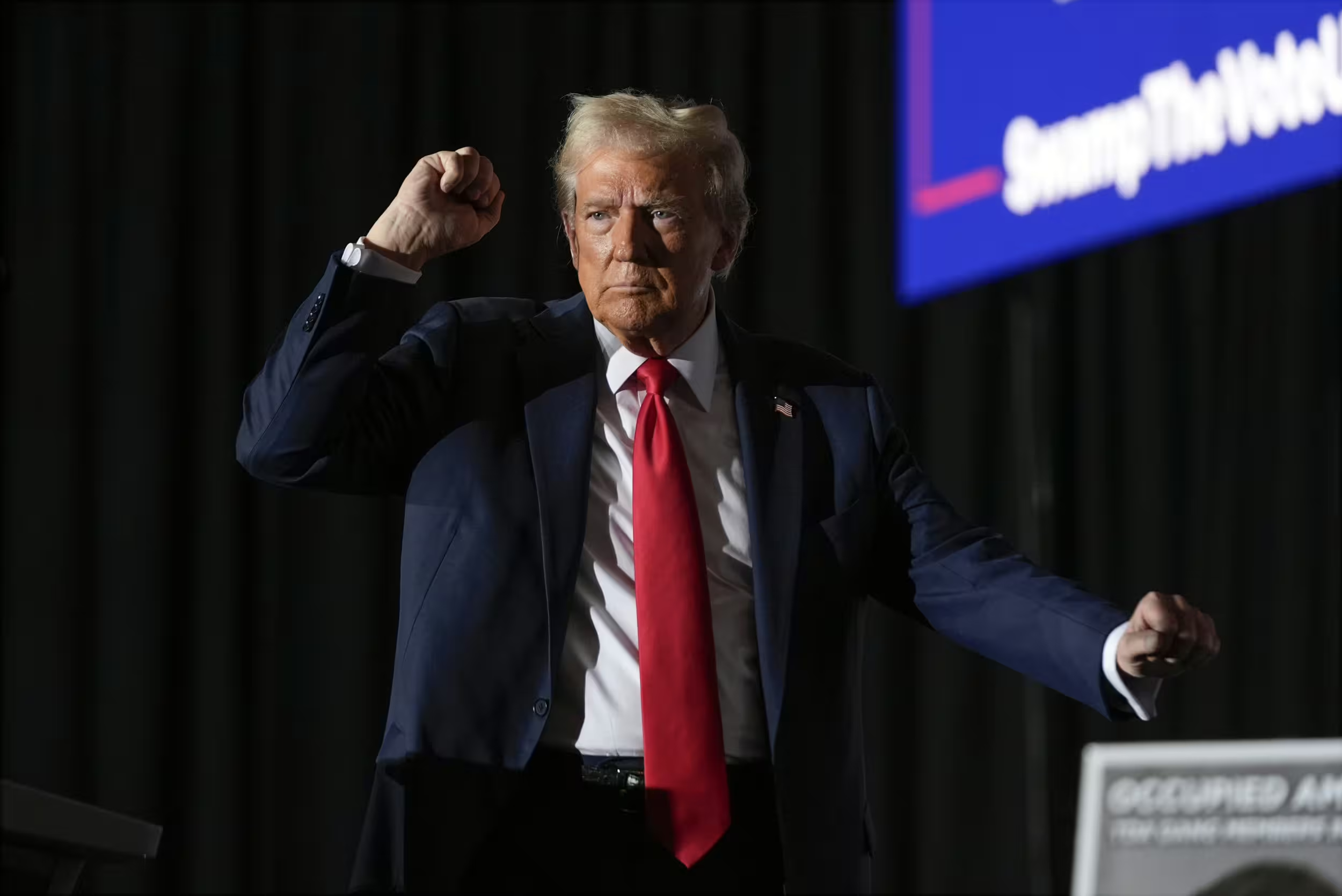
In a notable development ahead of Florida's upcoming elections, The Palm Beach Post, a prominent newspaper headquartered in Palm Beach County—home to former President Donald Trump—has endorsed Amendment 4, a constitutional amendment aimed at safeguarding abortion rights in the state. This endorsement is particularly striking given Trump's vocal opposition to the measure. Amendment 4 seeks to enshrine the right to abortion in Florida’s Constitution, allowing women to make reproductive health decisions up to fetal viability, generally around 24 weeks of pregnancy. As the political battle intensifies, this local newspaper’s stance reflects broader tensions within Florida and the nation regarding reproductive rights, free speech, and the role of government in personal healthcare decisions.
Understanding Florida’s Amendment 4: Protecting Abortion Rights
Amendment 4 proposes to add language to the Florida Constitution that ensures no law may prohibit, penalize, delay, or restrict abortion before fetal viability or when necessary to protect the patient’s health, as determined by their healthcare provider. This measure aims to provide clear constitutional protection for abortion rights in Florida, countering restrictive laws enacted in recent years.
The amendment defines fetal viability as generally around 24 weeks of pregnancy, aligning with medical standards. It also includes provisions to protect the health of the pregnant individual, ensuring that decisions about abortion remain between a patient and their healthcare provider without undue governmental interference.
If passed, Amendment 4 would supersede Florida’s existing six-week abortion ban, signed into law by Governor Ron DeSantis in 2023, which notably lacks exceptions for rape, incest, or the health of the mother. Supporters argue that this amendment is crucial to safeguarding reproductive autonomy and addressing the shortcomings of the current restrictive legal framework.
The Palm Beach Post’s Editorial Endorsement: A Local Newspaper Takes a Stand
The Palm Beach Post’s editorial board publicly urged Floridians to vote yes on Amendment 4, describing it as the most important of the six constitutional amendments on the ballot. This endorsement is significant, given the newspaper’s location in Palm Beach County, where Donald Trump has his Mar-a-Lago residence and considerable influence.
The editorial emphasized that decisions about abortion should be made by women in consultation with their doctors, criticizing the state’s current six-week abortion ban as deeply troubling due to its lack of exceptions for rape, incest, or maternal health. The newspaper framed Amendment 4 as a necessary correction to the restrictive policies currently in place.
By taking this stance, The Palm Beach Post aligns itself with a substantial segment of Floridians who support reproductive rights, highlighting the divide between local public opinion and the political rhetoric from prominent figures like Trump and Governor DeSantis.
Donald Trump’s Opposition to Amendment 4 and Abortion Rights
Former President Donald Trump has voiced clear opposition to Amendment 4, reaffirming his stance in an October 2024 interview on Fox News. He stated he would be voting no, expressing concerns about the amendment’s allowance of abortion up to fetal viability, which he described as a 'radical' position.
Trump’s opposition includes repeated false claims that some Democratic-led states permit post-birth abortion, a misleading assertion that has been widely debunked. Despite this, he maintains that while the six-week ban may be too restrictive, he opposes the expansion of abortion rights proposed by Amendment 4.
This position contrasts sharply with the Palm Beach Post’s endorsement and reflects the broader national divide on abortion. Trump’s vocal opposition also shapes the political landscape in Florida, where his influence remains strong despite local opposition to his views on this issue.
Governor Ron DeSantis’ Aggressive Measures Against Amendment 4
Florida Governor Ron DeSantis has taken a hardline approach to prevent the passage of Amendment 4. His administration recently threatened local television stations with criminal prosecution for airing advertisements supporting the amendment, accusing them of spreading false and dangerous information regarding the state's six-week abortion ban.
Critics of these actions argue that DeSantis’ threats constitute an unconstitutional violation of free speech rights. Legal experts, such as Stetson University law professor Ciara Torres-Spelliscy, have highlighted that these measures reflect a troubling First Amendment problem in Florida.
These aggressive tactics are part of a broader strategy by DeSantis to suppress support for Amendment 4, which requires a 60 percent majority to pass. The use of public resources and legal threats to influence the ballot initiative underscores the high stakes and contentious nature of the abortion debate in Florida.
Public Opinion and Polling Trends on Abortion Rights in Florida
Public opinion on abortion rights in Florida is complex and evolving. A Pew Research poll from April 2024 indicated that 63 percent of Americans believe abortion should be legal in most cases, reflecting a national trend toward supporting reproductive rights. This sentiment appears to be echoed locally in Florida.
Recent polling by Sienna College for The New York Times, conducted between September 29 and October 6, surveyed 622 likely Florida voters. The results showed 46 percent support for Amendment 4, with 38 percent opposed. While support is not yet at the 60 percent threshold needed for passage, the polling suggests a competitive race.
These figures indicate that many Floridians, including those in Trump's home county, may be at odds with the former president’s position. The polling dynamics highlight the importance of voter mobilization and public engagement as the election approaches.
The Broader National Context: Abortion Rights in the 2024 Election
Abortion rights have become a central issue in the 2024 election cycle, with ballot initiatives like Florida’s Amendment 4 drawing national attention. The debate extends beyond state lines, influencing campaigns and voter turnout across the country.
Vice President Kamala Harris’ campaign has emphasized reproductive rights as a key pillar, contrasting with Republican candidates who often advocate for more restrictive abortion laws. This national spotlight adds pressure to local races and ballot measures, including Florida’s Amendment 4.
The outcome of these debates will have lasting implications for reproductive healthcare access and constitutional protections in the United States. Florida’s vote on Amendment 4 is seen as a bellwether for the broader national struggle over abortion rights.
Legal and Ethical Implications of Florida’s Abortion Debate
The legal battles surrounding abortion in Florida highlight significant ethical questions about bodily autonomy, state power, and healthcare rights. Amendment 4 seeks to constitutionally protect the right to abortion, countering restrictive laws that many argue infringe on personal freedoms.
Governor DeSantis’ administration’s efforts to criminalize pro-amendment advertising raise concerns about government overreach and the suppression of free speech. These tactics challenge fundamental democratic principles and have sparked legal scrutiny.
The ethical debate also encompasses the balance between protecting potential life and respecting the rights and health of pregnant individuals. Florida’s ballot initiative encapsulates these tensions, making it a critical case study in reproductive justice and constitutional law.
Looking Ahead: The Impact of Amendment 4’s Outcome
If Amendment 4 passes, Florida would become one of the few states to explicitly enshrine abortion rights in its constitution, potentially influencing legislation and judicial decisions nationwide. This would mark a significant victory for reproductive rights advocates.
Conversely, if the amendment fails, the state’s restrictive six-week abortion ban would remain in place, limiting reproductive autonomy and potentially prompting further legal challenges. The result will send a clear message about the political and cultural climate in Florida.
The election outcome will also affect future political strategies, campaign messaging, and voter engagement efforts on both sides of the abortion debate. The high-profile nature of this ballot initiative underscores the ongoing significance of abortion rights in American politics.
Conclusion
Florida’s Amendment 4 represents a pivotal moment in the state’s ongoing abortion rights debate. The Palm Beach Post’s endorsement, positioned within Donald Trump’s home county, highlights a local divergence from the former president’s opposition and underscores the complexity of public opinion on reproductive rights. As Governor DeSantis intensifies efforts to block the amendment through legal threats, the battle over abortion access in Florida encapsulates broader national tensions over healthcare, free speech, and constitutional protections. The upcoming vote will not only determine the future of abortion rights in Florida but also signal the direction of reproductive justice and political engagement across the country.