
Top Stories
KFF Health News’ ‘What the Health?’: The Supreme Court and the Abortion Pill
Since the Supreme Court overturned Roe v. Wade in 2022, the landscape of abortion rights in the United S...
TAMFIS NIG LTDRC 8067447CAC ACTIVEFinima, Bonny Island, Rivers State

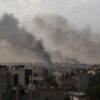
The Gaza Strip is enduring severe consequences as the Israel-Hamas war enters its eighth month. Gaza’s civil defence agency says an Israeli strike on a displacement camp west of Rafah killed at least 21 people on Tuesday, an allegation Israel denies. The incident follows a Sunday strike that Palestinian officials said killed 45 people, sparking global condemnation. As fighting intensifies in southern Gaza, more than one million civilians have fled Rafah since early May. In a parallel diplomatic shift, Ireland, Norway and Spain have formally recognised the State of Palestine, joining over 140 UN member states and challenging the reluctance of most Western governments to take that step. Together, the battlefield violence and diplomatic manoeuvring highlight a conflict that is growing more complex and consequential by the week.
Recent days have brought a sharp rise in violence across southern Gaza, with Rafah bearing the heaviest toll. Gaza civil defence official Mohammad al-Mughayyir said an Israeli strike on Tuesday hit tents housing displaced people in west Rafah, killing at least 21. Hamas described the attack as causing dozens of casualties. Israel’s army rejected the claim, saying it 'did not strike' the designated humanitarian area in Al-Mawasi.
The Tuesday incident came before a UN Security Council meeting on Sunday’s deadly strike, which medics said also wounded hundreds. Israel said Sunday’s attack targeted a Hamas compound and killed senior officials Yassin Rabia and Khaled Nagar. Military spokesperson Rear Admiral Daniel Hagari added that Israeli munitions alone 'could not have ignited a fire of this size', disputing accounts of the blaze that consumed the displacement camp near a UNRWA facility.
Eyewitnesses described continuing danger. Rafah resident Abdel Khatib said people were staying indoors because anyone moving risked being shot at by Israeli drones. Faten Jouda, 30, reported 'random bombing from all directions' and said her family would flee to Al-Mawasi out of fear for their lives. UN Secretary-General Antonio Guterres responded to the Sunday carnage by declaring that 'there is no safe place in Gaza. This horror must stop.' Israeli Prime Minister Benjamin Netanyahu called the Sunday strike a 'tragic accident' but affirmed the campaign to destroy Hamas and recover hostages taken in the October 7 attack would continue.
UNRWA said roughly one million civilians have fled Rafah since Israel launched its assault in early May, despite repeated international warnings. Agency chief Philippe Lazzarini described Rafah as having 'turned into hell on Earth'. Conflicting narratives, restricted access for independent monitors and the proximity of strikes to civilian shelters have fuelled calls for investigations into possible violations of international humanitarian law.
The offensive is straining Gaza’s healthcare system beyond breaking point. The World Health Organization warned that Israel’s Rafah operation is taking a 'dire health toll' on southern Gaza and that continued fighting could bring 'substantial' increases in deaths. WHO representative Rik Peeperkorn said 60 medical trucks are waiting in Egypt to enter Gaza, while only three have made it through since May 7.
Hospitals and clinics face shortages of medicine, fuel and electricity while trying to treat large numbers of wounded. Repeated strikes near UNRWA facilities, which serve as de facto shelters, have heightened alarm that humanitarian zones are not being protected. Aid workers also report severe psychological trauma among children and adults who have endured repeated displacement, bereavement and the constant threat of bombardment.
On Tuesday, Ireland, Norway and Spain formally recognised the State of Palestine, a landmark move by Western European governments. More than 140 UN members already recognise Palestine, but few Western nations had done so. Spanish Prime Minister Pedro Sanchez called the step 'not only a matter of historic justice… it is also an essential requirement if we are all to achieve peace'. Irish Prime Minister Simon Harris said the decision aimed to keep Middle East peace hopes alive and urged Israel to 'stop the humanitarian catastrophe' in Gaza.
Israel condemned the recognitions as a 'reward' for Hamas and recalled its envoys from Madrid, Dublin and Oslo. Spanish Foreign Minister Jose Manuel Albares said the three governments would issue a 'calm but firm' coordinated response. The move comes as Israel faces cases before two Netherlands-based international courts, adding legal pressure to the diplomatic pressure over the conduct of its Gaza campaign.
The conflict is reshaping regional diplomacy and aid flows. Egypt has 'intensified efforts to relaunch' negotiations for a truce and detainee exchange, state-linked Al-Qahera News reported. As a mediator with ties to Hamas and international actors, and as controller of the Rafah crossing, Egypt remains central to any ceasefire and aid-access arrangement.
The United States said it was 'deeply saddened' by Sunday’s Rafah strike and said it would follow Israel’s investigation closely. The Pentagon said sea-borne aid deliveries to Gaza were suspended after bad weather damaged a temporary pier. Across the Arab world the strikes drew widespread condemnation, with many governments and civil society groups calling them massacres, intensifying diplomatic pressure on Israel even as its alliance with Washington remains intact.
The Gaza war is entering a critical phase in which battlefield violence and diplomatic realignment are unfolding together. Civilian casualties in Rafah are mounting, humanitarian access is shrinking and international condemnation is growing, even as Israel insists its operations target Hamas and pursues its strategic aims. The decision by Ireland, Norway and Spain to recognise Palestinian statehood is unlikely to change events on the ground immediately, but it signals shifting international attitudes and adds pressure for a political path forward. With ceasefire efforts still stalled, the urgent priorities remain protecting civilians, restoring unimpeded humanitarian access and reviving credible negotiations. The weeks ahead will test whether diplomatic momentum, legal scrutiny or renewed mediation can break the cycle of violence and address the profound human cost of the conflict.
Originally reported by guardian.ng. Adapted for our readers with AI assistance.
Keep reading
Top Stories
Since the Supreme Court overturned Roe v. Wade in 2022, the landscape of abortion rights in the United S...
Top Stories
Top Stories Tamfitronics One evening in May, nursing assistant Debra Ragoonanan’s vision blurred during her shift at a state-run Massachusetts vet...
TAMFIS NIG LTD
Electrical and instrumentation engineering, bid preparation and consulting, IT and software.

