
Top Stories
Discovery beneath soccer field reveals massive medieval convent lost for centuries
NEWYou can now listen to Fox News articles! Researchers recently uncovered a long-lost medieval convent in an unusual location in Denmark: a soccer field…
TAMFIS NIG LTDRC 8067447CAC ACTIVEFinima, Bonny Island, Rivers State

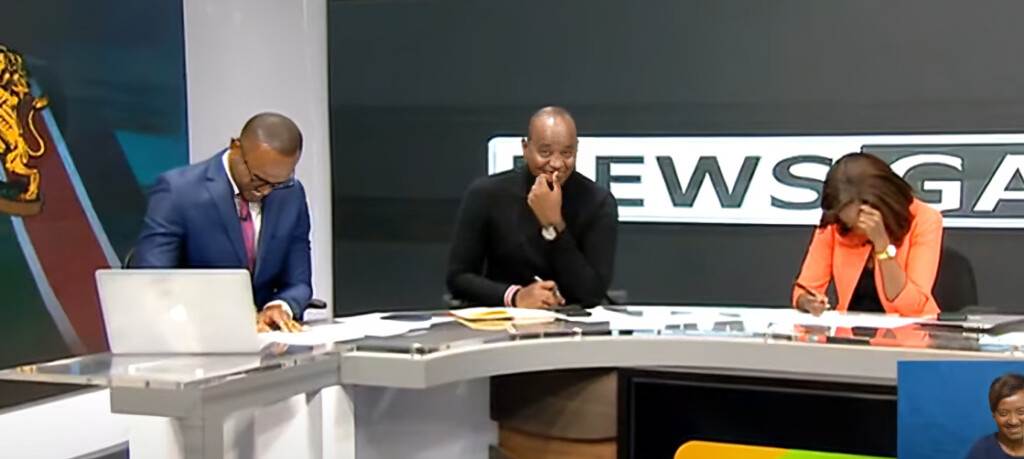
The nomination and vetting of President William Ruto's Cabinet has been a focal point of political discourse in Kenya. As parliament reconvened to scrutinize the qualifications and backgrounds of the nominees, tensions ran high due to public protests and intense debates. In a surprising turn during Citizen TV's widely watched News Gang show, hosts Sam Gituku, Linus Kaikai, and Yvonne Okwara momentarily broke their usual serious demeanor, succumbing to laughter while discussing the academic credentials of the Cabinet picks. This article delves into that viral moment, exploring the educational profiles of the nominees, the public reaction, and the broader implications for Kenya's governance.
On a Thursday evening broadcast, Citizen TV’s flagship political program News Gang took an unexpected comedic turn. Hosts Sam Gituku, Linus Kaikai, and Yvonne Okwara, known for their incisive and often critical political analysis, found themselves unable to maintain composure while reviewing the academic qualifications of President Ruto’s Cabinet nominees.
The laughter erupted spontaneously as they dissected the credentials and backgrounds of several nominees, highlighting perceived ironies and contradictions in the appointments. This break from their usual serious tone was notable given the gravity of the Cabinet vetting process, which has broad implications for Kenya's political landscape.
This moment not only entertained viewers but also reflected the underlying public skepticism and incredulity regarding some of the nominees’ suitability, especially considering some had previously been vocal critics of the current administration.
President William Ruto’s recent Cabinet nominations feature a diverse group of individuals with varied educational and professional backgrounds. The nominees span multiple ministries, including National Treasury, Cooperatives, Mining, Energy, Health, Education, Agriculture, and more, reflecting the administration’s priorities in key sectors.
What stands out is the inclusion of several figures who had previously criticized the government, raising questions about the political motivations behind their appointments. This has fueled public debate about whether the nominations are based on merit, political expediency, or a combination of both.
The vetting process has thus become a focal point for both parliamentarians and citizens, who are keen to assess the nominees' qualifications and suitability to serve in critical government roles amidst Kenya’s complex political and economic challenges.
Several Cabinet nominees boast impressive academic credentials. For example, John Mbadi, nominated for the National Treasury and Planning docket, holds a Master’s of Business Administration (MBA), a Bachelor of Commerce, and is a Certified Public Accountant (CPA) in Kenya. His qualifications align strongly with the financial nature of the ministry.
Similarly, Wycliffe Oparanya, nominated for the Ministry of Cooperatives and MSMEs, has a Bachelor of Commerce in Accounting and a Master’s in Business Administration specializing in Finance. These qualifications suggest readiness to handle the ministry’s economic and cooperative affairs.
Other notable nominees include Dr. Debra Mulongo Barasa for the Ministry of Health, who holds a Bachelor of Medicine and Surgery and a Master’s in Internal Medicine, and Dr. Margaret Nyambura Ndungu for the Ministry of Information, Communication, and the Digital Economy, who possesses a PhD in Internet Governance. These academic backgrounds indicate specialized expertise relevant to their portfolios.
Despite the strong academic profiles of many nominees, some appointments have sparked controversy due to perceived gaps or ongoing studies. For instance, Opiyo Wandayi, nominated for the Ministry of Energy and Petroleum, is still undertaking a Bachelor of Laws degree while holding significant responsibilities, raising questions about readiness.
The public discourse has also focused on the political backgrounds of nominees, with critics arguing that some appointments may prioritize political loyalty over merit. The fact that several nominees were former critics of the administration adds complexity to the debate.
This controversy is amplified by the broader context of public protests and dissatisfaction with government performance, making the vetting process a litmus test for transparency, competence, and commitment to national development.
The educational qualifications of Cabinet members are critical as they directly impact policy formulation and implementation. Ministers equipped with relevant academic and professional expertise are better positioned to understand complex issues and devise effective solutions.
For Kenya, which faces challenges in economic growth, healthcare, education, and infrastructure, having knowledgeable leaders is essential to drive reforms and deliver on government promises. The varied educational backgrounds of the nominees could either be a strength or a weakness depending on their ability to translate knowledge into action.
Moreover, the public perception of the Cabinet’s competence influences trust in government institutions. The laughter on News Gang, while lighthearted, underscores a deeper concern about whether the Cabinet can meet the high expectations placed upon it.
Media outlets like Citizen TV play a pivotal role in informing the public about government processes, including Cabinet nominations and vetting. News Gang, in particular, is known for its in-depth analysis and critical commentary, making it a trusted source for political discourse.
The hosts’ candid reactions during the recent episode brought attention to the vetting process and invited viewers to critically assess the nominees’ qualifications. Such moments humanize political discussions and encourage public engagement.
However, media coverage also shapes narratives that can influence public perceptions positively or negatively. Balanced reporting that highlights both strengths and weaknesses of nominees is essential to foster informed debate rather than polarization.
The unexpected laughter by News Gang hosts quickly went viral on social media platforms, eliciting a mix of amusement, criticism, and reflection among Kenyans. Many viewers resonated with the skepticism expressed, while others debated the fairness of the comments.
Social media discussions have also amplified scrutiny of the nominees’ academic and professional records, with users sharing detailed profiles and opinions. This democratization of information allows citizens to participate actively in governance issues.
Nevertheless, some commentators caution against reducing serious political vetting to moments of humor, emphasizing the importance of respectful discourse and recognition of the nominees’ efforts to serve the nation.
As the vetting process concludes and Cabinet members assume office, their educational backgrounds will be tested against real-world governance challenges. Translating academic knowledge into effective policy and service delivery remains the ultimate benchmark.
The Cabinet’s ability to work cohesively, manage public expectations, and address Kenya’s pressing issues such as economic recovery, healthcare improvement, and infrastructure development will determine the administration’s success.
Moreover, ongoing public and parliamentary oversight will be crucial to ensure accountability and performance. The recent media spotlight, including moments like those on News Gang, signals a vigilant citizenry eager to see tangible results from their leaders.
The spontaneous laughter by Citizen TV’s News Gang hosts over the education of President William Ruto’s Cabinet nominees was more than just a lighthearted moment; it encapsulated the broader public sentiment of scrutiny and skepticism. While many nominees possess impressive academic qualifications, the vetting process has exposed both strengths and controversies surrounding the appointments. As Kenya looks forward to the new Cabinet’s performance, the fusion of education, experience, and political will will be pivotal to addressing the nation’s challenges. Ultimately, the public and media will remain vigilant, ensuring that these leaders deliver on their mandate with competence and integrity.
Originally reported by pulselive.co.ke. Adapted for our readers.
Keep reading
Top Stories
NEWYou can now listen to Fox News articles! Researchers recently uncovered a long-lost medieval convent in an unusual location in Denmark: a soccer field…
News
By Engr. Tamunofiniarisa BrownReading Time: 6 Minutes The conflict between Russia and Ukraine is often framed in the media as a simple battle between…
TAMFIS NIG LTD
Electrical and instrumentation engineering, bid preparation and consulting, IT and software.