Top Stories
Discovery beneath soccer field reveals massive medieval convent lost for centuries
NEWYou can now listen to Fox News articles! Researchers recently uncovered a long-lost medieval convent in an unusual location in Denmark: a soccer field…
TAMFIS NIG LTDRC 8067447CAC ACTIVEFinima, Bonny Island, Rivers State

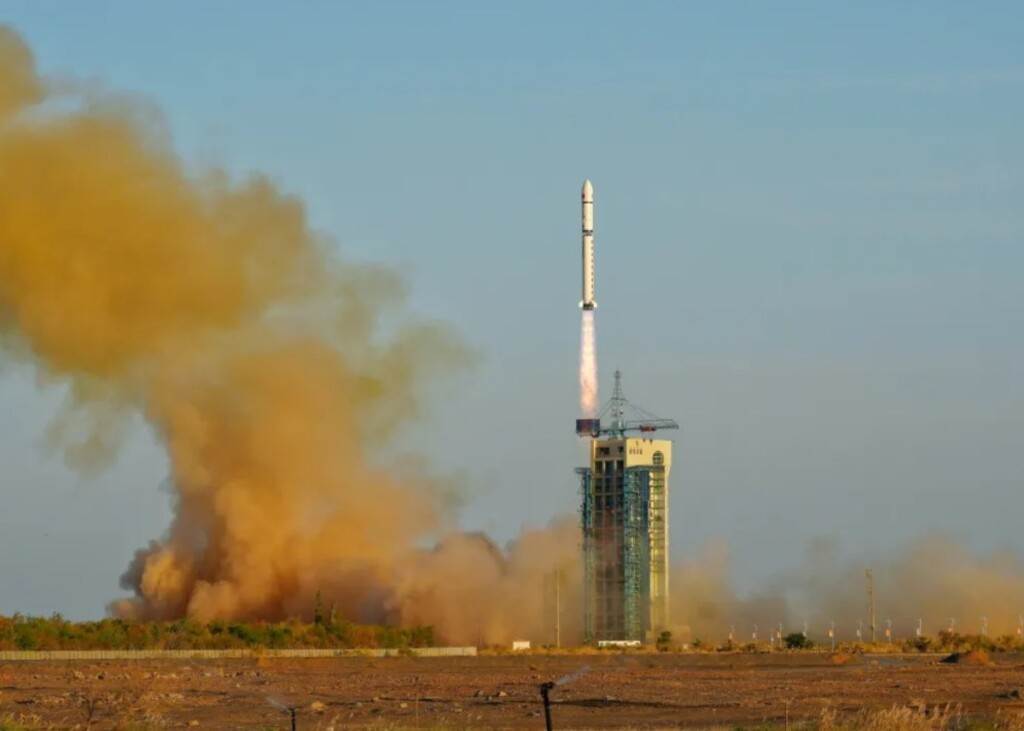
On September 27, 2024, China achieved a remarkable advancement in its space exploration program by launching the Shijian-19 satellite. Carried by the Long March 2D rocket from the Jiuquan Satellite Launch Center, this retrievable and reusable satellite is designed to conduct a series of experiments in low Earth orbit (LEO). The mission aims to explore space breeding techniques by exposing various plant seeds to the unique radiation environment of space, while simultaneously testing new domestic space technologies and materials. As China continues to expand its ambitions beyond Earth orbit, Shijian-19 represents a significant step forward in both scientific research and reusable spacecraft development.
The Shijian-19 satellite was launched at 8:30 a.m. Eastern Time (1030 UTC) on September 27, 2024, from the Jiuquan Satellite Launch Center, located in China’s Gobi Desert. The launch vehicle, a Long March 2D rocket, propelled the satellite into a low Earth orbit with an altitude ranging between 322 and 339 kilometers and an orbital inclination of 41.6 degrees. The clear blue skies over the launch site provided ideal conditions for the ascent.
The Shanghai Academy of Spaceflight Technology (SAST) confirmed the successful deployment of the Shijian-19 satellite shortly after liftoff. This mission marks the inaugural flight of the Shijian series’ reusable and retrievable satellite platform, which was first introduced by the China Academy of Space Technology (CAST) in 2018 with plans for approximately 15 missions scheduled through 2025.
Tracking data from the U.S. Space Force’s Space Delta 2 verified the satellite’s orbit, underscoring international monitoring of China’s expanding space activities. The satellite’s deployment into a stable orbit enables the commencement of its multi-faceted mission objectives, including scientific experiments and technology demonstrations.
One of the primary objectives of the Shijian-19 mission is to facilitate space breeding experiments by exposing various plant seeds to the unique conditions of space. This involves subjecting seeds to cosmic radiation and microgravity in LEO, which can induce genetic mutations that may accelerate breeding cycles or produce advantageous traits such as increased crop resilience and yield.
China has been investing heavily in space breeding as a strategic approach to improve agricultural outputs. By leveraging the space environment, researchers hope to develop new crop varieties that can better withstand environmental stresses on Earth, such as drought, pests, and diseases. The Shijian-19 mission carries a diverse selection of seeds sourced from multiple geographic locations to maximize the potential for beneficial mutations.
The mission patch, featuring three rabbits alongside a parachute and a returning capsule, symbolically represents fertility and reproduction, alluding to the satellite’s role in advancing biological research. The space breeding program aligns with China’s broader goals to enhance food security through scientific innovation.
Shijian-19 is distinguished by its reusable and retrievable design, a feature that sets it apart from many traditional satellites. The satellite weighs approximately 3,500 kilograms and can be configured for different mission durations. The short-term version is designed for missions lasting around two weeks, after which it returns promptly to Earth. In contrast, the long-term configuration is equipped with solar arrays on its propulsion and power modules, enabling it to support extended experiments in orbit.
The payload capacity of the recoverable section ranges between 500 to 600 kilograms, allowing for a versatile assortment of scientific instruments and experimental materials. The reusable design not only reduces costs but also allows for the retrieval of experimental samples for detailed post-flight analysis, enhancing the scientific value of the mission.
Unlike previous retrievable satellites such as Shijian-10, which did not feature a payload fairing, Shijian-19’s payload fairing was attached 48 hours before launch. This advancement improves the satellite’s protection during ascent and indicates technological progress in satellite integration and launch procedures.
Beyond biological experiments, Shijian-19 serves as a testbed for domestic components, raw materials, and new space technologies developed within China. The mission includes in-orbit flight test verification to assess the performance and durability of these materials in the harsh space environment, which is critical for future spacecraft design and manufacturing.
Microgravity science experiments onboard the satellite aim to deepen understanding of how materials behave under weightless conditions, informing improvements in manufacturing processes and spacecraft systems. These tests contribute to China’s ambitions to develop more reliable and efficient space technologies, particularly for reusable spacecraft and long-duration missions.
The mission’s dual focus on life sciences and technology validation highlights China’s integrated approach to space exploration, where biological research and engineering innovation advance hand in hand. The data gathered will influence the development of future missions, including crewed spacecraft and deep space exploration vehicles.
Shijian-19 carries payloads from five different countries, including Thailand and Pakistan, showcasing China’s commitment to international cooperation in space research. This multinational participation enables a broader exchange of scientific knowledge and fosters collaborative advancements in space science.
The inclusion of foreign payloads diversifies the range of experiments conducted onboard, thereby maximizing the mission’s scientific output. By supporting international partners, China reinforces its role as a key player in the global space community and promotes peaceful uses of outer space.
The China National Space Administration (CNSA) has emphasized the importance of such partnerships in expanding the scope and impact of space missions. These collaborations also help build diplomatic ties and facilitate shared benefits from space technology and research.
Upon completion of its mission, the retrievable portion of Shijian-19 is designed to safely return to Earth with its valuable experimental cargo. While the initial landing site was announced as Siziwang Banner in Inner Mongolia, it is more likely that the satellite will land at the Dongfeng recovery zone, which is closer to the Jiuquan launch center and has been used for previous crewed spacecraft returns.
The recovery process involves the deployment of a parachute system, as depicted on the mission patch, to slow the satellite’s descent and ensure a soft landing. This capability is vital for preserving the integrity of biological samples and sensitive instruments for subsequent analysis.
Successful recovery operations not only enable detailed scientific study of the space-bred seeds and tested materials but also validate the satellite’s reusable design, paving the way for future missions that emphasize cost-effectiveness and sustainability in spaceflight.
The Shijian-19 mission is part of China’s broader, ambitious space agenda in 2024, which includes over 46 launches scheduled throughout the year. This robust launch cadence demonstrates China’s rapid progress and growing capabilities in both crewed and uncrewed spaceflight.
Recent missions have included cargo and crew flights to the Tiangong space station, deep space exploration initiatives, and the development of advanced reusable launch vehicles. The Shijian-19 satellite complements these efforts by focusing on microgravity science, space life sciences, and reusable spacecraft technology.
Looking ahead, China plans to continue expanding its space infrastructure with upcoming launches of the Long March 12 and Long March 8 rockets, as well as further crewed missions such as Shenzhou-19 and Tianzhou-8. These efforts collectively position China as a major space power with a diversified portfolio of space exploration and scientific research activities.
The success of Shijian-19 lays the groundwork for future missions utilizing reusable satellite platforms to conduct long-term biological and technological experiments in orbit. Reusability is expected to significantly reduce mission costs and increase the frequency of space-based research operations.
Space breeding, as demonstrated by this mission, holds promising potential to revolutionize agricultural science by accelerating the development of improved crop varieties. Continued research in this field may contribute to global food security challenges amid climate change and population growth.
Furthermore, the integration of international payloads and technology tests aboard reusable platforms like Shijian-19 suggests a future where collaborative, cost-effective, and sustainable space missions become the norm. These advances will support China’s aspirations for lunar exploration, deep space missions, and the establishment of permanent space habitats.
The launch of the Shijian-19 satellite marks a significant milestone in China’s space exploration efforts, combining pioneering space breeding experiments with cutting-edge reusable spacecraft technology. By successfully deploying a retrievable platform capable of conducting biological and technological research in low Earth orbit, China is advancing both agricultural science and space technology innovation. The inclusion of international payloads further highlights the collaborative potential of space exploration. As China continues to push the boundaries of its space program in 2024 and beyond, missions like Shijian-19 will play a crucial role in shaping the future of sustainable, cost-effective, and cooperative space research.
Originally reported by spacenews.com. Adapted for our readers.
Keep reading
Top Stories
NEWYou can now listen to Fox News articles! Researchers recently uncovered a long-lost medieval convent in an unusual location in Denmark: a soccer field…
News
By Engr. Tamunofiniarisa BrownReading Time: 6 Minutes The conflict between Russia and Ukraine is often framed in the media as a simple battle between…
TAMFIS NIG LTD
Electrical and instrumentation engineering, bid preparation and consulting, IT and software.