Top Stories
Discovery beneath soccer field reveals massive medieval convent lost for centuries
NEWYou can now listen to Fox News articles! Researchers recently uncovered a long-lost medieval convent in an unusual location in Denmark: a soccer field…
TAMFIS NIG LTDRC 8067447CAC ACTIVEFinima, Bonny Island, Rivers State

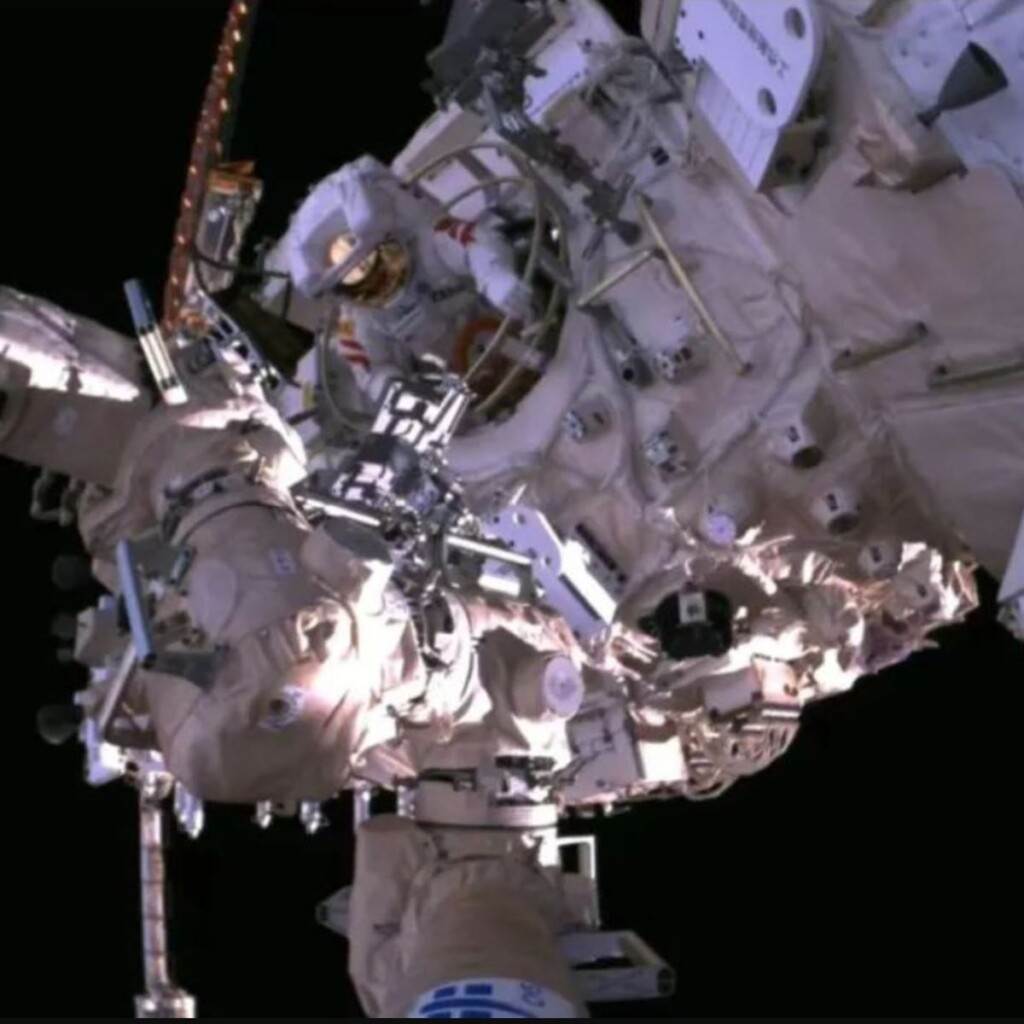
In a significant move to enhance the sustainability and efficiency of its Tiangong space station operations, China’s human spaceflight agency, the China Manned Space Engineering Office (CMSEO), has chosen two teams to develop low-cost cargo spacecraft. This initiative reflects China’s growing emphasis on integrating commercial entities into its space program, aiming to reduce operational costs and foster a competitive aerospace ecosystem. The selected projects promise to transform how China manages space station resupply missions, echoing successful models pioneered by NASA’s Commercial Resupply Services.
China completed its Tiangong space station—a three-module, T-shaped orbital facility—in late 2022. Designed to remain continuously occupied and operational for at least a decade, Tiangong currently relies on Tianzhou cargo spacecraft for resupply and refueling. These Tianzhou vehicles, developed by the China Academy of Space Technology (CAST), deliver necessary supplies and fuel but are designed to burn up upon reentry into Earth’s atmosphere, disposing of waste by plunging into the Pacific Ocean.
While Tianzhou spacecraft effectively support the station, their operational costs and single-use design present challenges. Additionally, crewed Shenzhou spacecraft have limited capacity for returning payloads to Earth, creating a gap in efficient cargo return capabilities. Recognizing these limitations, CMSEO opened a call for proposals in 2023 to develop low-cost cargo transportation systems capable of enhancing Tiangong’s logistics.
In response to the 2023 call, CMSEO received 10 submissions and shortlisted four for detailed design evaluation. On October 29, 2024, the agency announced the selection of two standout proposals: the Qingzhou cargo spacecraft from the Innovation Academy for Microsatellites of the Chinese Academy of Sciences (IAMCAS) and the Haolong cargo space shuttle from the Chengdu Aircraft Design Institute under the Aviation Industry Corporation (AVIC).
The Qingzhou spacecraft is set to launch aboard the CAS Space Lijian-2 rocket, a kerosene-liquid oxygen vehicle expected to debut in the latter half of 2025. CAS Space, a commercial spinoff from the Chinese Academy of Sciences, marks a notable entry of a commercial company into China’s national space station program. Meanwhile, AVIC’s Haolong shuttle represents a new player in the space sector, as AVIC has traditionally been less involved in space activities compared to established aerospace entities.
The selection of these teams highlights CMSEO’s intent to diversify participation beyond traditional state-owned enterprises, fostering a more dynamic and competitive environment in China’s human spaceflight sector.
CMSEO has set clear performance and cost targets for the new cargo spacecraft. Each vehicle must be capable of delivering at least 1,800 kilograms of cargo to low Earth orbit. Cost efficiency is paramount, with a maximum price threshold of 120 million yuan (approximately US$17.2 million) per 1,000 kilograms delivered. This pricing goal aims to significantly reduce the expense of resupply missions compared to current standards.
Additionally, the spacecraft must support controlled reentry to safely dispose of more than 2,000 kilograms of waste from the space station. This capability is critical for maintaining the station’s operational environment and managing orbital debris responsibly.
These requirements underscore China’s ambition to develop reusable or semi-reusable cargo vehicles that can lower costs while maintaining reliability and safety.
The inclusion of CAS Space and AVIC in this program marks a strategic shift toward integrating commercial and non-traditional players into China’s space ecosystem. Historically, large state-owned enterprises like CAST and the Shanghai Academy of Spaceflight Technology (SAST) have dominated spacecraft development. However, their proposals were not selected in this round, signaling a potential rebalancing of influence toward innovation-driven and commercially oriented entities.
This approach aligns with China’s broader efforts since 2014 to foster a vibrant commercial space sector. By opening national projects to diverse participants, China aims to stimulate competition, reduce costs, and accelerate technological advancement. Cities and provinces across China are actively supporting this trend through incentives and action plans to nurture commercial space companies.
The move also mirrors NASA’s successful Commercial Resupply Services program, which began in 2008 and led to the first commercial cargo flights to the International Space Station in 2012. Experts view CMSEO’s strategy as an effort to replicate this model, leveraging commercial innovation to sustain long-term human spaceflight operations.
Looking ahead, China plans to expand Tiangong with additional modules, including a co-orbiting space telescope comparable to Hubble. This telescope will be capable of docking with the station for maintenance and upgrades, enhancing China’s scientific capabilities in orbit.
The development of low-cost cargo spacecraft is a foundational step toward supporting these ambitious expansions. By lowering operational costs and increasing logistics flexibility, China can maintain a continuous human presence in space and support more complex missions.
Moreover, the gradual opening of national space projects to new players suggests that China’s space ecosystem will become more dynamic and competitive. This environment is likely to foster innovation, attract investment, and position China as a major player in the global commercial space market.
China’s selection of two innovative teams to develop low-cost cargo spacecraft marks a pivotal moment in the evolution of its human spaceflight program. By embracing commercial participation and setting ambitious cost and performance targets, China is positioning the Tiangong space station for sustainable, long-term operations. This strategy not only enhances China’s capabilities in space logistics but also signals a broader transformation of its space industry toward a more dynamic and competitive ecosystem. As China continues to expand Tiangong and pursue advanced orbital projects, these developments will play a crucial role in shaping the future of Chinese space exploration and its role on the global stage.
Originally reported by spacenews.com. Adapted for our readers with AI assistance.
Keep reading
Top Stories
NEWYou can now listen to Fox News articles! Researchers recently uncovered a long-lost medieval convent in an unusual location in Denmark: a soccer field…
News
By Engr. Tamunofiniarisa BrownReading Time: 6 Minutes The conflict between Russia and Ukraine is often framed in the media as a simple battle between…
TAMFIS NIG LTD
Electrical and instrumentation engineering, bid preparation and consulting, IT and software.