Top Stories
Discovery beneath soccer field reveals massive medieval convent lost for centuries
NEWYou can now listen to Fox News articles! Researchers recently uncovered a long-lost medieval convent in an unusual location in Denmark: a soccer field…
TAMFIS NIG LTDRC 8067447CAC ACTIVEFinima, Bonny Island, Rivers State

In a significant cross-border counterterrorism operation, Canadian and U.S. law enforcement agencies have arrested Muhammad Shahzeb Khan, a 20-year-old Pakistani national and Canadian resident, in Ormstown, Quebec. Khan allegedly planned a violent attack on a Jewish center in Brooklyn, New York, intending to carry out the assault around the anniversary of Hamas' attack on Israel. This arrest underscores the persistent threat posed by extremist ideologies and the critical role of international cooperation in preventing acts of terror. This article explores the details of the plot, the investigation, and the broader implications for security in North America.
Muhammad Shahzeb Khan, also known as Shahzeb Jadoon, was apprehended on his way to New York, where he allegedly intended to execute an attack targeting Jewish individuals. The plot was reportedly inspired by the Islamic State (ISIS), with Khan expressing a desire to inflict mass casualties using firearms and knives. Authorities revealed that Khan planned the attack to coincide with the October 7 anniversary of Hamas' assault on Israel, aiming to maximize impact during a period of heightened tension.
According to the U.S. Department of Justice, Khan communicated his intentions via encrypted messaging apps, engaging with undercover agents posing as collaborators. He sought to procure automatic and semi-automatic weapons to carry out the attack, boasting that it would be "the largest attack on U.S. soil since 9/11." This chilling declaration emphasized the severity of the threat and the potential scale of violence Khan aimed to unleash.
The arrest followed a sustained investigation involving the Royal Canadian Mounted Police (RCMP) and the FBI. Authorities confirmed that Khan's plans escalated over time but stressed that he was not considered an immediate threat prior to his detention. The collaborative efforts between Canadian and American law enforcement agencies were instrumental in thwarting the plot before it could be realized.
The investigation into Khan's activities began months before his arrest, with law enforcement agencies monitoring his communications and movements. The RCMP worked closely with the FBI to track Khan's interactions on encrypted platforms, ultimately leading to the infiltration of his network by undercover agents. This strategy allowed authorities to gather substantial evidence while preventing any immediate danger to the public.
Khan's arrest in Quebec was the culmination of a carefully coordinated operation. After traveling from Toronto to Napanee and then to Montreal, Khan was stopped approximately 19 kilometers from the U.S. border. The meticulous surveillance and tactical planning ensured that the arrest was executed safely and effectively, minimizing risks to officers and civilians.
This case highlights the importance of international cooperation in combating terrorism. By sharing intelligence and resources, Canadian and U.S. agencies were able to disrupt a potentially devastating attack. Such partnerships are vital in addressing threats that transcend national borders, especially in regions with close geographic and political ties.
Khan's intended target was a Jewish community center in Brooklyn, New York, where he planned to use firearms and knives to inflict maximum harm. The choice of location and timing was deliberate, aiming to exploit significant dates such as the October 7 Hamas attack anniversary and the Yom Kippur holy day on October 11. Authorities believe Khan expected protests around these dates, which he thought would create opportunities for carrying out the attack unnoticed.
The FBI complaint reveals that Khan envisioned forming an "offline cell" of the Islamic State, directing undercover agents to acquire assault rifles and ammunition. His rhetoric included violent and graphic language about his intentions, highlighting the extremist ideology driving his actions. Khan's statements emphasized a desire to commit mass murder in the name of ISIS, underscoring the ongoing threat posed by radicalization.
This plot was part of a broader pattern of homegrown extremism, where individuals radicalized within Western countries plan attacks inspired by global terror groups. The sophistication of Khan's planning, including his use of encrypted communications and coordination with others, demonstrates the evolving nature of such threats and the challenges faced by security agencies.
Khan's arrest came shortly after the July arrests of Ahmed Eldidi and his son Mostafa Eldidi in Toronto, who were charged with terror-related offenses. U.S. authorities indicated that these earlier arrests influenced Khan's behavior, prompting him to caution his contacts to "lay low" and avoid social media exposure. This sequence of events suggests a network of individuals potentially linked by extremist ideologies.
The Eldidi case and Khan's arrest underscore ongoing concerns about terrorism threats within Canada, particularly involving individuals with ties to extremist groups like ISIS. These incidents highlight the vigilance required by law enforcement to detect and intervene in plots before they materialize into violent acts.
Canadian officials have reiterated their commitment to preventing violent extremism and hate-motivated crimes. RCMP Commissioner Mike Duheme emphasized that such ideologies have no place in Canada. These arrests serve as a reminder of the importance of community awareness, intelligence sharing, and proactive law enforcement measures in safeguarding public safety.
Following his arrest, Khan faces multiple charges in both Canada and the United States. In Canada, he is charged with attempting to leave the country to commit an offense for a terrorist group, participating in terrorist group activities, and conspiracy related to violating U.S. immigration laws. These charges reflect the serious nature of his alleged actions and the legal framework designed to address terrorism.
In the U.S., Khan faces charges for attempting to provide material support and resources to a terrorist organization, specifically ISIS. The complaint filed in New York's Southern District details his communications with undercover agents and his explicit plans for violence. The U.S. government has expressed its intention to seek extradition to prosecute Khan under American law.
Khan was scheduled to appear in the Superior Court of Justice in Montreal on September 13. The extradition process will involve legal proceedings to determine whether he will be transferred to the United States for trial. This case exemplifies the complexities involved in prosecuting cross-border terrorism cases and the importance of judicial cooperation.
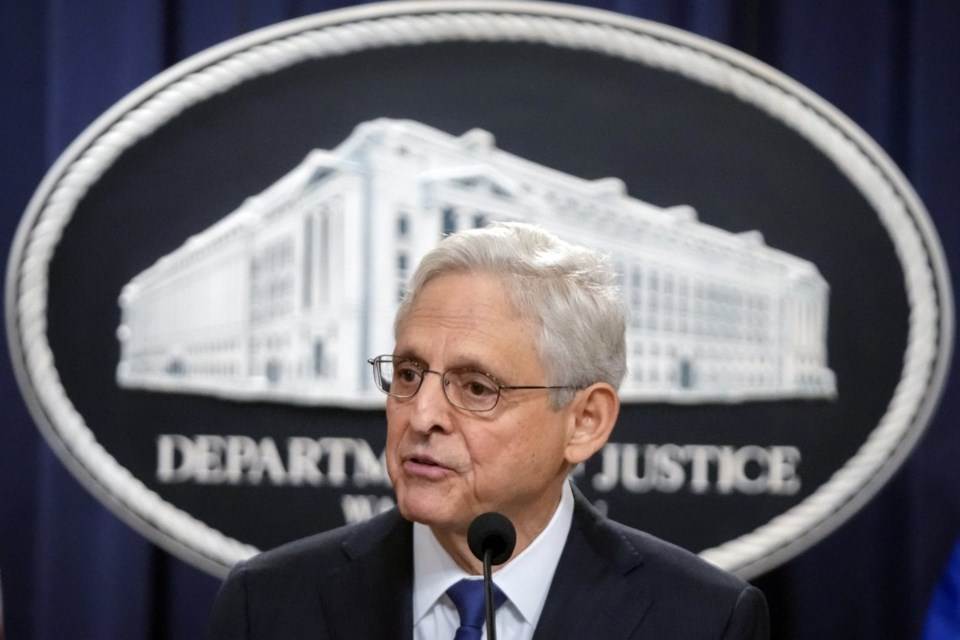
U.S. Attorney General Merrick Garland praised the swift action taken by Canadian law enforcement, emphasizing that Khan's goal was to "slaughter, in the name of ISIS, as many Jewish people as possible." Garland's statement highlighted the gravity of the threat and the successful prevention of a potential massacre.
FBI Director Christopher Wray described Khan as "determined to kill Jewish people here in the United States," noting the significance of the arrest in disrupting what could have been a catastrophic attack. Wray's comments reinforced the FBI's commitment to counterterrorism and protecting vulnerable communities.
On the Canadian side, RCMP Commissioner Mike Duheme condemned the ideological and hate-motivated nature of Khan's alleged crimes, affirming that such extremism is unacceptable in Canada. These unified statements from officials on both sides of the border demonstrate a shared resolve to combat terrorism and uphold public safety.
The thwarted plot involving Khan underscores the persistent threat of violent extremism in North America, particularly from individuals inspired by global terror organizations like ISIS. It highlights the need for continuous monitoring, intelligence gathering, and community engagement to identify and disrupt radicalization before it leads to violence.
This case also illustrates the challenges posed by encrypted communication technologies, which terrorists exploit to plan attacks covertly. Law enforcement agencies face the dual task of respecting privacy rights while ensuring public safety, requiring sophisticated investigative techniques and international cooperation.
Moreover, the plot's timing around significant political and religious events points to the strategic considerations terrorists use to maximize impact. Authorities must remain vigilant during such periods, increasing security measures and public awareness to deter potential attacks and reassure affected communities.
The arrest of Khan has prompted reactions from Jewish communities and advocacy groups, who have expressed relief at the prevention of the attack but also concern over ongoing security threats. Community leaders emphasize the importance of solidarity and resilience in the face of extremist violence and hate-motivated crimes.
Public awareness plays a crucial role in counterterrorism efforts. Authorities encourage citizens to report suspicious activities and support initiatives aimed at countering radicalization. Educational programs and interfaith dialogues can help build understanding and reduce the appeal of extremist ideologies.
Ultimately, preventing terrorism requires a collective effort involving law enforcement, government agencies, community organizations, and the public. The Khan case serves as a reminder that vigilance and cooperation are essential components of a comprehensive security strategy.
The arrest of Muhammad Shahzeb Khan in Quebec represents a critical success in North American counterterrorism efforts, preventing a potentially devastating attack on a Jewish community in New York. This case underscores the evolving nature of terrorist threats, the importance of cross-border cooperation, and the need for robust intelligence and community engagement strategies. As violent extremism continues to pose risks, law enforcement and society must remain vigilant, united, and proactive to safeguard public safety and uphold the values of tolerance and security.
Originally reported by barrietoday.com. Adapted for our readers.
Keep reading
Top Stories
NEWYou can now listen to Fox News articles! Researchers recently uncovered a long-lost medieval convent in an unusual location in Denmark: a soccer field…
News
By Engr. Tamunofiniarisa BrownReading Time: 6 Minutes The conflict between Russia and Ukraine is often framed in the media as a simple battle between…
TAMFIS NIG LTD
Electrical and instrumentation engineering, bid preparation and consulting, IT and software.