
Top Stories
KFF Health News’ ‘What the Health?’: The Supreme Court and the Abortion Pill
Since the Supreme Court overturned Roe v. Wade in 2022, the landscape of abortion rights in the United S...
TAMFIS NIG LTDRC 8067447CAC ACTIVEFinima, Bonny Island, Rivers State

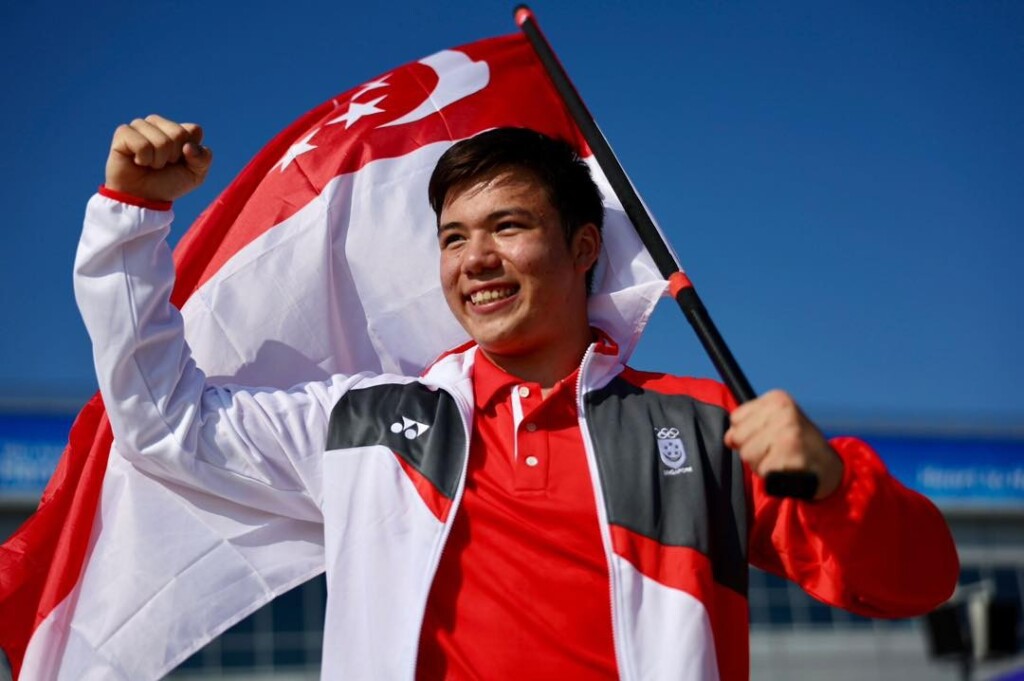
Singapore's sporting history was forever changed in 2016 when Joseph Schooling clinched the nation’s first-ever Olympic gold medal in swimming. Eight years later, as Singapore celebrates its 59th National Day, another Olympic medal is within reach — this time from an entirely new sport and a new generation of athlete. Maximilian Maeder, a 17-year-old kitefoiler, is poised to make history as kitefoiling makes its Olympic debut at Paris 2024. Known for his youthful spirit and fearless approach, Maeder epitomizes the fusion of athleticism, strategy, and innovation required to excel in this cutting-edge discipline. This article delves deep into what kitefoiling entails, Maeder’s journey, the dynamics of the Olympic competition, and what it takes to bring home a medal for Singapore.
Kitefoiling is a thrilling and relatively new sailing sport that combines wind power with hydrofoil technology to allow athletes to 'fly' above the water’s surface. Unlike traditional kiteboarding, kitefoilers are equipped with a hydrofoil — a wing-like structure beneath the board that lifts it out of the water, dramatically reducing drag and enabling higher speeds.
The sport made a spectacular Olympic debut in 2024, captivating audiences with its blend of speed, agility, and technical prowess. Riders harness the wind using a large kite, which propels them forward, while controlling their board’s position on the water through subtle shifts in body weight and kite manipulation. Speeds can exceed 80 km/h, demanding exceptional physical fitness and razor-sharp reflexes.
Max Maeder, Singapore’s kitefoiling prodigy, famously described the sport on social media as 'Boy got skateboard can fly,' capturing the essence of the sport’s youthful energy and airborne excitement. For spectators unfamiliar with kitefoiling, think of it as a futuristic fusion of skateboarding, sailing, and surfing — a high-adrenaline sport where athletes glide above the waves, chasing the wind and victory.
At just 17 years old, Maximilian Maeder has rapidly risen through the ranks to become a dominant force in kitefoiling. His impressive resume includes titles such as Formula Kite World Champion, Asian Champion, and European Champion — a testament to his versatility and skill on the international stage.
Maeder’s journey began at a young age, fueled by a passion for wind and water sports. His dedication to mastering kitefoiling techniques, combined with rigorous physical training and mental preparation, has positioned him as one of the top contenders at the Paris Olympics. His youthful enthusiasm and fearless style have earned him respect and admiration from peers and fans alike.
Beyond his athletic prowess, Maeder’s story resonates deeply with Singaporeans, symbolizing the nation’s growing presence in diverse sporting arenas. His quest for Olympic glory is not just personal ambition but a source of national pride and inspiration, especially as Singapore continues to nurture young talents across unconventional sports.
Kitefoiling races at the Olympics follow a dynamic and strategic format. Competitors navigate a pre-set course marked by buoys, often spanning up to 10 kilometers and lasting around 12 minutes per race. The challenge lies in balancing speed, tactical positioning, and adapting to shifting wind conditions.
The race unfolds in three critical phases: the start, the early race, and the late race. The start is crucial, as riders jostle for optimal positioning to maneuver effectively throughout the course. Early in the race, athletes engage in intense battles for control and momentum, where split-second decisions can lead to either gains or costly mistakes.
In the final stages, competitors consolidate their positions or execute daring overtakes to secure the best finish. Wind variability can cause delays or sudden changes in race dynamics, testing both an athlete’s physical endurance and mental resilience. Maeder’s ability to read the wind and make tactical calls has been a key factor in his success so far.
Kitefoiling demands exceptional cardiovascular fitness, strength, and agility. Athletes routinely reach heart rates of up to 200 beats per minute during races, reflecting the intense physical exertion involved. Maintaining balance on the foil board while controlling the kite requires finely tuned coordination and core stability.
Beyond physicality, mental toughness is paramount. Riders must remain focused amid rapidly changing wind patterns and competitor maneuvers. The pressure of Olympic competition adds an extra layer of intensity, where composure and tactical intelligence often make the difference between podium finishes and early exits.
Max Maeder’s training regimen includes not only on-water practice but also cross-training to enhance strength and endurance. His psychological preparation emphasizes adaptability and calmness under pressure — qualities essential for navigating the unpredictable nature of kitefoiling races.
Singapore’s Olympic journey has seen historic milestones, notably Joseph Schooling’s gold medal in swimming at Rio 2016. This victory ignited a new era of sporting ambition in the nation, inspiring young athletes to dream bigger and pursue excellence in diverse disciplines.
Maeder’s pursuit of an Olympic medal in kitefoiling represents a continuation of this legacy, showcasing Singapore’s expanding sporting horizon beyond traditional fields. Kitefoiling’s debut at Paris 2024 offers a fresh platform for Singapore to shine on the world stage, demonstrating the nation’s adaptability and commitment to nurturing talent in emerging sports.
The timing of Maeder’s Olympic campaign, coinciding with Singapore’s 59th National Day, adds symbolic weight to his efforts. A medal win would not only be a personal triumph but a unifying moment for the nation, celebrating resilience, innovation, and youthful determination.
When watching Maeder compete, three key moments demand attention: the start, the mid-race positioning battles, and the final sprint. The start sets the tone, where clean launches and strategic placement are crucial to avoid congestion and crashes.
Mid-race, Maeder’s ability to navigate wind shifts and maintain optimal foil height can create opportunities to overtake rivals or defend his position. This phase is often where races are won or lost, given the tight competition and changing conditions.
The finish demands a combination of stamina and split-second decision-making. Maeder’s experience and composure under pressure will be instrumental in executing final maneuvers to cross the line ahead of his competitors, potentially clinching a historic Olympic medal for Singapore.
Maeder has already secured a place in the Grand Final, a testament to his consistency and skill throughout the Olympic series. With only a handful of points separating finalists, the competition is fierce and every race counts towards the ultimate prize.
To win gold, Maeder must secure two victories in the final rounds, overcoming seasoned athletes from countries with strong sailing traditions. His youth, however, brings an element of unpredictability and boldness that could tip the scales in his favor.
Singapore’s support, including National Service deferment to focus on training, underscores the nation’s belief in Maeder’s potential. His journey embodies the spirit of perseverance and innovation, inspiring a new generation of athletes to pursue excellence on the global stage.
Maximilian Maeder’s journey to Olympic glory is more than a personal athletic pursuit—it represents Singapore’s evolving sporting identity and ambition. As kitefoiling takes its place on the Olympic stage for the first time, Maeder embodies the spirit of innovation, resilience, and youthful daring. His quest to bring home a medal for Singapore on its 59th National Day is a story of dedication, skill, and national pride. Whether or not he ultimately clinches gold, Maeder has already ignited a new chapter in Singapore’s sporting history, inspiring countless young athletes to dream of soaring — quite literally — above the waves.
Originally reported by asiaone.com. Adapted for our readers.
Keep reading
Top Stories
Since the Supreme Court overturned Roe v. Wade in 2022, the landscape of abortion rights in the United S...
Top Stories
Top Stories Tamfitronics One evening in May, nursing assistant Debra Ragoonanan’s vision blurred during her shift at a state-run Massachusetts vet...
TAMFIS NIG LTD
Electrical and instrumentation engineering, bid preparation and consulting, IT and software.