
Top Stories
KFF Health News’ ‘What the Health?’: The Supreme Court and the Abortion Pill
Since the Supreme Court overturned Roe v. Wade in 2022, the landscape of abortion rights in the United S...
TAMFIS NIG LTDRC 8067447CAC ACTIVEFinima, Bonny Island, Rivers State

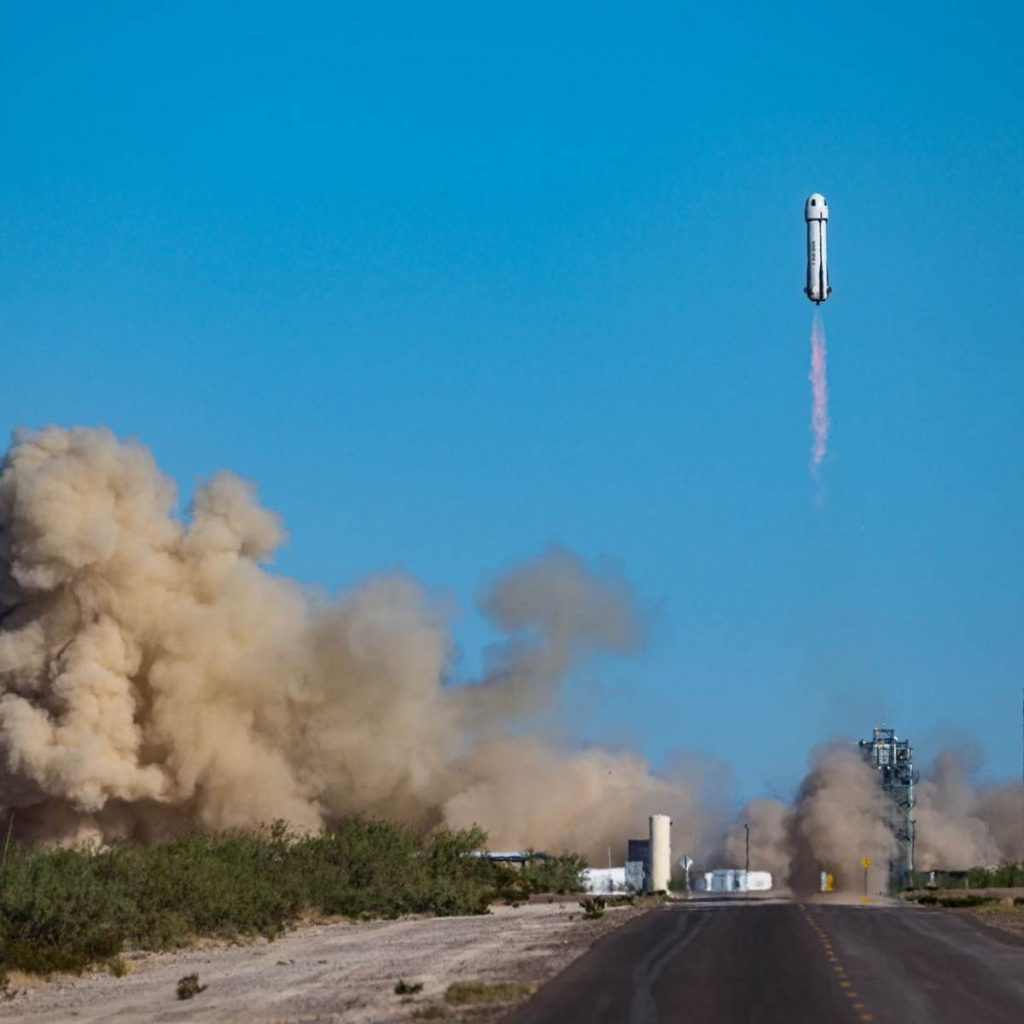
Blue Origin has completed the inaugural flight of its second human-rated New Shepard capsule and upgraded booster, a milestone that underscores the company's efforts to scale operations amid rising interest in suborbital spaceflight. The NS-27 mission, launched from West Texas on 23 October, carried no passengers but transported 12 payloads, including navigation systems destined for the New Glenn orbital vehicle. While the flight reached a slightly lower peak altitude than previous missions, Blue Origin described it as 'nominal and on target' for a shakeout flight designed to validate new hardware. This development reflects broader trends in the commercial space sector, where companies are investing in reusable systems to meet growing demand from both space tourists and research institutions seeking affordable access to microgravity environments.
The NS-27 mission introduced the RSS Kármán Line capsule and an improved booster, featuring enhanced reusability systems, updated avionics, and external payload mounting capabilities. Unlike earlier flights, Blue Origin did not release detailed telemetry during the webcast, which focused on the booster's descent after separation. Independent analysis of the broadcast suggested the vehicle peaked at approximately 102.3 kilometres above mean sea level for the booster and 102.4 kilometres for the capsule – notably below the 105–107 kilometre range typical of prior New Shepard flights.
Company officials confirmed these figures in response to inquiries, attributing the reduced altitude to an earlier engine cutoff, which occurred about two seconds sooner than on the NS-26 flight in August. As a result, maximum ascent speed was recorded at 3,473 km/h compared to 3,602 km/h on the previous mission. Blue Origin emphasised that the flight performed as expected for a test of new systems, with the primary goal being to gather data on the upgraded vehicle's behaviour rather than achieve maximum altitude.
The modifications include structural refinements to improve turnaround time between flights and the addition of payload interfaces on the booster section, allowing for experiments to be mounted externally during ascent. These changes are intended to increase flight frequency and diversify revenue streams beyond passenger tourism.
The RSS Kármán Line joins the RSS First Step as Blue Origin's second human-rated New Shepard capsule, a direct response to what the company describes as 'growing customer demand.' While specific flight rates or timelines for crewed missions were not disclosed, the duplication of human-rated hardware suggests preparations for a more regular launch cadence. Industry analysts interpret this as a strategic move to support both the expanding space tourism market and increased interest from scientific users.
This demand was exemplified on the NS-26 mission in August, which carried NASA-funded researcher Rob Ferl from the University of Florida. Ferl conducted an experiment examining how spaceflight stresses influence gene expression in plants, a study requiring precise, timed interactions with biological samples during the brief microgravity phase of flight. His preparation involved two years of training, including sessions with a mockup capsule and hundreds of laboratory rehearsals to develop muscle memory for activating experiment tubes in sync with flight events.
Ferl likened the mental and physical readiness required to that of an athlete preparing for the Olympics, noting the importance of performing complex tasks under novelty and pressure. Post-flight, he reported initial disbelief upon exit, quickly followed by verification that the experiment had been completed correctly. His colleague Anna-Lisa Paul confirmed the integrity of the samples upon landing, and data analysis remains ongoing.
Despite the intensive preparation for NS-26, Ferl suggested that future researchers could achieve readiness in significantly less time – potentially three to four months – citing procedural improvements by Blue Origin and Virgin Galactic in standardising experiment integration and astronaut-style training for payload specialists.
The successful test flight of the upgraded New Shepard system occurs amid intensifying competition in the suborbital sector, where companies are vying to offer reliable, repeatable access to the edge of space. Blue Origin's focus on reusability and operational efficiency aims to reduce costs and increase flight frequency, key factors in making suborbital platforms viable for regular scientific use.
For businesses and investors, the expansion of human-rated capacity signals confidence in near-term market growth. While space tourism remains the most visible application, the ability to fly tended experiments – particularly those requiring human intervention – opens opportunities in fields such as biomedicine, materials science, and Earth observation. The standardisation of payload interfaces and flight procedures could lower barriers to entry for universities and small research entities seeking affordable microgravity test beds.
From a procurement perspective, government agencies and private firms may increasingly consider suborbital flights as a complement to orbital missions, especially for technology validation or high-altitude atmospheric sampling. The ability to fly and recover payloads quickly, combined with minimal training requirements for automated experiments, enhances the appeal of these systems for time-sensitive research campaigns.
Blue Origin's NS-27 mission represents a quiet but significant step in the maturation of the suborbital space industry. By flying an upgraded vehicle designed for greater reusability and flexibility, the company is laying the groundwork for increased flight rates that could serve both the experiential demands of space tourists and the precise needs of scientific researchers. While the lower altitude of this test flight raised questions, the emphasis on vehicle performance and system validation aligns with a maturing approach to spaceflight operations – one where reliability and turnaround time may ultimately matter more than peak altitude. For stakeholders in Nigeria and beyond, including tech entrepreneurs, research institutions, and investors watching the commercial space sector, this development highlights how incremental advances in reusable hardware are gradually transforming what was once extraordinary into a more accessible, repeatable capability. As procedures standardise and flight heritage builds, the barrier to conducting meaningful work in microgravity may continue to fall, opening new avenues for innovation in science, technology, and even commercial product development.
Originally reported by spacenews.com. Adapted for our readers with AI assistance.
Keep reading
Top Stories
Since the Supreme Court overturned Roe v. Wade in 2022, the landscape of abortion rights in the United S...
Top Stories
Top Stories Tamfitronics One evening in May, nursing assistant Debra Ragoonanan’s vision blurred during her shift at a state-run Massachusetts vet...
TAMFIS NIG LTD
Electrical and instrumentation engineering, bid preparation and consulting, IT and software.

