
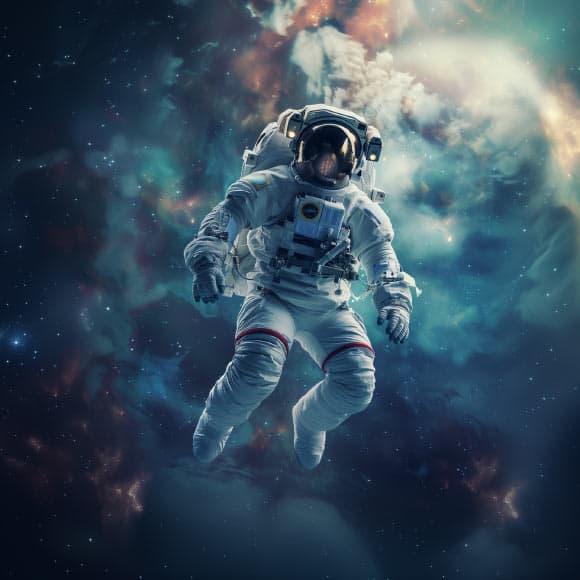
Human perception of movement and spatial orientation is a complex process involving the integration of multiple sensory inputs, including visual, vestibular, and proprioceptive cues. In the unique environment of space, where gravity is nearly absent, understanding how astronauts maintain their sense of direction and estimate distance traveled is critical for crew safety and mission success. Recent studies aboard the International Space Station (ISS) have shed light on astronauts’ remarkable ability to adapt and compensate for the lack of Earth-like gravitational cues, revealing how visual information plays a dominant role in spatial awareness during spaceflight. This article explores these findings in detail, examining how astronauts orient themselves, gauge distance traveled, and what these insights mean for long-duration missions and even for understanding balance and perception on Earth.
The Challenge of Spatial Orientation in Microgravity
On Earth, gravity provides a constant reference frame that the human brain relies upon to determine up from down and to gauge movement through space. In microgravity environments like the ISS, this gravitational cue is effectively nullified, posing a significant challenge to astronauts’ spatial orientation and movement perception.
Without gravity, the vestibular system—the inner ear structure responsible for balance and sensing acceleration—receives altered or diminished signals. This disruption can lead to disorientation, motion sickness, and difficulty in judging how far and fast astronauts have moved, which can affect their ability to perform tasks efficiently and safely.
Understanding how astronauts overcome these challenges is essential for designing training protocols, spacecraft interiors, and emergency procedures. It also provides valuable insights into how the human sensory system adapts when deprived of familiar environmental cues.
Visual Cues: The Dominant Factor in Space Navigation
Recent research conducted by Professor Laurence Harris and colleagues has demonstrated that visual information plays a crucial role in astronauts’ ability to perceive self-motion and estimate distance traveled in microgravity. Their experiments aboard the ISS involved presenting astronauts with controlled visual stimuli simulating movement, known as optic flow.
Optic flow refers to the pattern of apparent motion of objects, surfaces, and edges in a visual scene caused by the relative motion between an observer and the environment. On Earth, this visual input complements vestibular and proprioceptive cues to create a coherent sense of movement.
In microgravity, despite the lack of reliable vestibular input, astronauts were able to use optic flow effectively to judge how far they had traveled. This suggests that visual cues can partially compensate for the absence of gravity-based sensory information, enabling astronauts to maintain spatial orientation during complex maneuvers.
The Role of Body Posture in Perception of Movement
The study also investigated how body posture influences perception of self-motion and distance estimation. It was found that astronauts experienced a stronger sensation of having traveled farther when supine (lying down) compared to sitting upright, even when exposed to the same amount of optic flow.
This indicates that body orientation relative to visual cues affects the integration of sensory information and perception of movement. The findings suggest that visual and non-visual cues are at least partially integrated, with posture modulating the effectiveness of visual stimuli in eliciting a sense of self-motion.
Understanding this interaction is important for designing spacecraft environments and tasks that optimize astronauts’ spatial awareness and reduce disorientation, particularly during emergency procedures requiring rapid movement.
Comparing Earth and Space: Vestibular Cues and Self-Motion Perception
Interestingly, the research found no significant differences between astronauts’ performance in estimating distance traveled on Earth and in the microgravity of the ISS, indicating that vestibular cues may play a minor role in visually presented self-motion tasks.
This challenges traditional views that vestibular input is essential for accurate self-motion perception, highlighting the brain’s remarkable ability to reweight sensory inputs and rely more heavily on vision when vestibular information is unreliable or absent.
Such sensory reweighting is a key adaptation mechanism that supports astronauts’ functional capabilities in space and may inform rehabilitation strategies for patients with vestibular dysfunction on Earth.
Implications for Astronaut Safety and Mission Success
The ability to accurately orient oneself and judge distance traveled is not merely academic; it has direct implications for astronaut safety during routine and emergency operations aboard spacecraft like the ISS.
For example, astronauts must often navigate quickly to specific modules or safety shelters in response to hazards such as micrometeoroid impacts or system failures. The study’s findings that astronauts maintain an intact sense of distance traveled and spatial orientation reassure mission planners that crews can perform these critical maneuvers reliably.
Moreover, understanding sensory adaptation in space can guide the development of training programs and onboard systems that enhance spatial awareness, reducing the risk of accidents and improving overall mission efficiency.
Parallels Between Microgravity Adaptation and Aging on Earth
The physiological effects of prolonged exposure to microgravity have been likened to accelerated aging, including bone density loss, muscle atrophy, hormonal changes, and immune system alterations. However, the recent findings reveal that self-motion perception remains largely unaffected by microgravity, contrasting with the balance impairments often observed in older adults.
This suggests that the sensory integration mechanisms supporting spatial orientation are robust against the physiological stresses of spaceflight, offering a unique perspective on how balance and perception might be preserved or rehabilitated in aging populations.
Further research into these mechanisms could inform therapeutic approaches to mitigate balance decline and fall risk in elderly individuals, leveraging insights gained from space neuroscience.
Future Research Directions and Technological Innovations
While current studies provide valuable insights, early adaptation phases immediately after arrival in microgravity remain understudied due to logistical constraints. Capturing these initial days could reveal rapid neural and sensory adjustments critical for training and acclimatization protocols.
Advancements in virtual reality (VR) and augmented reality (AR) technologies hold promise for simulating space environments and optic flow patterns on Earth, allowing astronauts to train their spatial orientation skills more effectively before flight.
Additionally, integrating multisensory feedback systems in spacecraft design may further enhance astronauts’ ability to navigate and perform complex tasks in microgravity, contributing to safer and more efficient long-duration missions to the Moon, Mars, and beyond.
Conclusion: Embracing the Resilience of Human Perception in Space
The astonishing capacity of astronauts to orient themselves and accurately gauge distance traveled in the absence of gravity underscores the adaptability and resilience of human perceptual systems.
Visual cues emerge as the primary drivers of spatial awareness in microgravity, with the brain’s sensory integration processes dynamically adjusting to maintain effective navigation and movement perception.
These insights not only enhance our understanding of human physiology in space but also offer valuable lessons for improving balance and orientation on Earth, ultimately supporting safer space exploration and healthier aging.
Conclusion
The remarkable ability of astronauts to maintain spatial orientation and accurately gauge distance traveled despite the absence of gravity reveals the incredible adaptability of the human sensory system. Visual information, particularly optic flow, compensates for diminished vestibular cues, enabling astronauts to navigate complex environments safely and efficiently. These findings not only bolster confidence in crew safety during space missions but also provide valuable insights for addressing balance and perceptual challenges on Earth, including those related to aging. Continued research and technological advancements will further empower astronauts and enrich our understanding of human perception in extreme environments.