
Top Stories
Discovery beneath soccer field reveals massive medieval convent lost for centuries
NEWYou can now listen to Fox News articles! Researchers recently uncovered a long-lost medieval convent in an unusual location in Denmark: a soccer field…
TAMFIS NIG LTDRC 8067447CAC ACTIVEFinima, Bonny Island, Rivers State

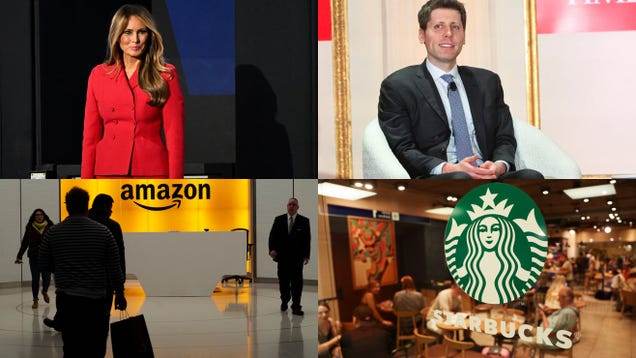
In the rapidly changing landscape of leadership and corporate culture, recent developments have sparked widespread discussion and analysis. Amazon’s Return-to-Office (RTO) policy has ignited significant employee backlash, raising questions about workplace flexibility in the post-pandemic era. Meanwhile, OpenAI CEO Sam Altman, a figure at the forefront of artificial intelligence innovation, reveals his surprisingly analog habit of taking notes by hand, emphasizing the enduring value of traditional methods. On the political front, former First Lady Melania Trump reportedly received a substantial fee for a rare political appearance, highlighting the intersection of politics and personal branding. This article delves into these stories and more, providing a detailed leadership news roundup that reflects the complexities and nuances of today's professional and political environments.
Amazon’s recent enforcement of its Return-to-Office (RTO) policy has met with notable resistance from its workforce. The tech retail giant, known for its rigorous operational standards, announced a mandate requiring employees to return to physical offices several days a week after a prolonged period of remote work during the COVID-19 pandemic. Many employees expressed frustration, citing concerns over work-life balance, commuting challenges, and diminished productivity.
The backlash underscores a broader tension between corporate leadership and employee expectations in the evolving work environment. While Amazon emphasizes collaboration and innovation that they argue are best fostered in-person, employees advocate for the flexibility and autonomy that remote work provides. This clash reflects an ongoing debate about how companies can balance operational efficiency with employee satisfaction in a post-pandemic world.
Industry experts suggest that Amazon’s approach may influence other major corporations grappling with similar decisions. The company’s stance also raises questions about the future of hybrid work models and how organizations can effectively accommodate diverse workforce preferences without compromising business goals.
Despite spearheading OpenAI, a company at the cutting edge of artificial intelligence, CEO Sam Altman prefers a surprisingly traditional method to organize his thoughts: pen and paper. This analog practice stands in contrast to the high-tech environment in which he operates and highlights a leadership style grounded in simplicity and clarity.
Altman’s note-taking habit is more than a quirk; it reflects a broader philosophy about managing complexity in an era dominated by digital overload. By manually jotting down ideas, Altman can distill complex concepts into manageable insights, fostering creativity and strategic thinking. This approach also serves as a reminder that even in technologically advanced fields, foundational skills remain invaluable.
Moreover, Altman’s leadership exemplifies how blending traditional practices with innovative technologies can yield effective results. His ability to navigate the future of AI while maintaining grounded personal habits offers lessons for leaders aiming to balance progress with practicality.
Former First Lady Melania Trump reportedly received $237,000 for a rare political event appearance in April, a sum that has drawn public and media attention. While the details regarding the payer remain unclear, the fee underscores the significant financial aspects tied to political engagements and personal branding for high-profile figures.
This revelation sparks discussions about the monetization of political influence and the evolving role of former political figures in public life. Melania Trump’s participation in political events, despite being less publicly active than other former first ladies, demonstrates how political capital can translate into lucrative opportunities.
Experts note that such fees are part of a broader trend where political personalities leverage their platforms for speaking engagements, endorsements, and appearances. This dynamic raises important questions about transparency, ethics, and the commercialization of political influence in contemporary society.
Amazon’s RTO controversy provides valuable insights into leadership challenges in managing workforce expectations amid shifting cultural norms. The company’s insistence on in-office presence highlights a leadership approach focused on control, coordination, and perceived productivity gains from face-to-face interaction.
However, the employee pushback reveals the importance of empathetic leadership that considers individual needs and modern work-life realities. Leaders today must navigate complex emotional and logistical factors to retain talent and maintain morale, especially as remote and hybrid work models become standard.
Amazon’s experience serves as a case study for other organizations striving to develop flexible yet effective workplace policies. It emphasizes the necessity of clear communication, adaptability, and willingness to incorporate employee feedback in leadership strategies.
Sam Altman’s preference for handwritten notes amid his role at a leading AI company exemplifies how traditional leadership habits can coexist with cutting-edge technology. This intersection challenges the assumption that technological leaders must rely exclusively on digital tools.
Such practices suggest that foundational skills like handwriting can enhance cognitive processes, aiding memory retention and idea generation. Leaders who integrate these methods may foster deeper reflection and strategic clarity, countering the distraction often caused by constant digital input.
Altman’s example encourages a reevaluation of leadership development programs to include diverse approaches to information management. Balancing technology with traditional techniques can cultivate more effective decision-making in fast-paced, innovation-driven environments.
Melania Trump’s substantial fee for a political appearance highlights the lucrative nature of engagements for former public officials and figures. These financial arrangements often reflect the continuing influence and public interest surrounding political personalities.
The monetization of political appearances raises ethical and practical considerations. Transparency about payment sources and the purpose of these events is crucial to maintain public trust and avoid perceptions of undue influence or conflicts of interest.
This trend also illustrates how political careers can evolve into platforms for financial gain beyond traditional roles. Understanding these dynamics is essential for observers of politics, media, and leadership, as they shape public discourse and perceptions of political legitimacy.
The stories of Amazon, Sam Altman, and Melania Trump collectively reflect broader shifts in leadership and corporate culture. Amazon’s RTO backlash signals a reevaluation of workplace norms and employee empowerment, while Altman’s habits underscore the value of balance between innovation and tradition.
Meanwhile, the financial aspects of political appearances reveal how leadership extends beyond organizational boundaries into public influence and personal branding. Leaders today must navigate a complex environment where professional decisions intersect with cultural expectations and media scrutiny.
These developments suggest that successful leadership in the modern era requires adaptability, authenticity, and strategic communication. Organizations and individuals alike benefit from embracing diverse approaches to leadership that respond to evolving societal and technological landscapes.
The recent developments surrounding Amazon’s Return-to-Office policy, Sam Altman’s leadership style, and Melania Trump’s political engagement fee collectively illuminate the multifaceted nature of leadership today. As organizations and leaders confront evolving workplace expectations, technological advancements, and the commercialization of political influence, adaptability and authenticity become paramount. These stories underscore the importance of balancing innovation with tradition, operational demands with employee needs, and public roles with personal branding. Understanding these dynamics equips current and aspiring leaders to navigate the challenges and opportunities of a rapidly changing world with insight and resilience.
Originally reported by qz.com. Adapted for our readers.
Keep reading
Top Stories
NEWYou can now listen to Fox News articles! Researchers recently uncovered a long-lost medieval convent in an unusual location in Denmark: a soccer field…
News
By Engr. Tamunofiniarisa BrownReading Time: 6 Minutes The conflict between Russia and Ukraine is often framed in the media as a simple battle between…
TAMFIS NIG LTD
Electrical and instrumentation engineering, bid preparation and consulting, IT and software.