The World Cup Bronze Final: An Unwanted Tie or a Match with a Golden Layer?
Since 1934, the FIFA World Cup has featured a third-place play-off match, commonly known as the Bronze Final, to determine the tournament’s bronze medalist. Despite being a consistent part of the competition for 72 years, the fixture remains controversial. Players and coaches often express reluctance to participate, viewing it as a consolation game after the heartbreak of missing out on the final. However, the match carries tangible benefits, including prize money, historical records, and opportunities for less-utilized players. As England and France prepare to face off in Miami, this article examines the Bronze Final’s significance, the arguments for and against it, and its place in modern football.
The World Cup Bronze Final: An Unwanted Tie or a Match with a Golden Layer?
The Bronze Final: Origins and Current Context
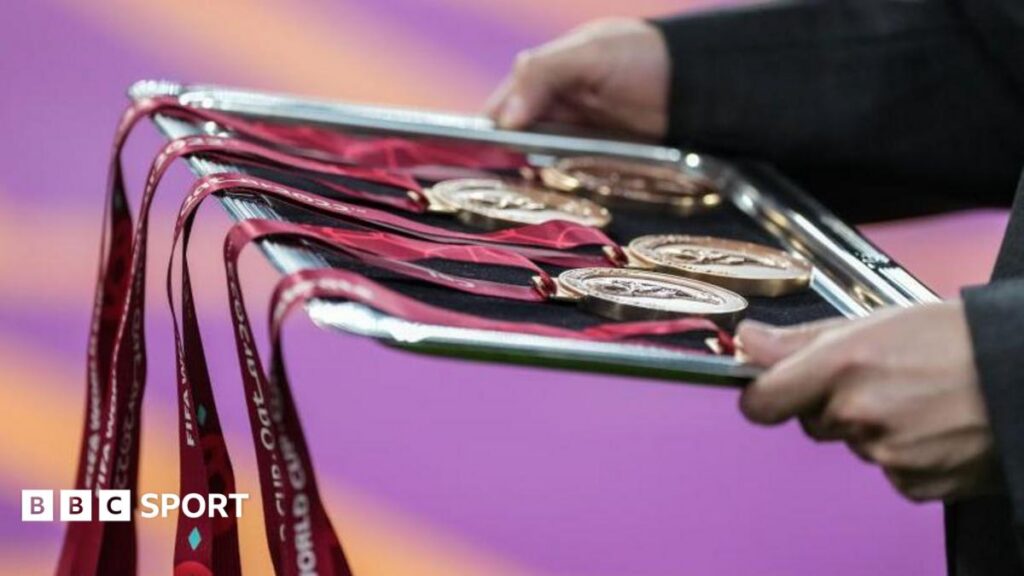
The third-place play-off was first introduced in the 1934 World Cup and became a regular fixture from 1954 onwards. It has been played at every FIFA World Cup since, serving as a decider for the bronze medal and the official third and fourth positions in the tournament standings.
England has participated in this match twice since their 1966 World Cup victory, losing to Italy in 1990 and Belgium in 2018. France, frequent contenders on the world stage, have also been involved in this fixture multiple times. The upcoming match between England and France in Miami continues this long-standing tradition.
Mixed Feelings Among Players and Coaches
The mood around the Bronze Final is often subdued. France’s head coach Didier Deschamps expressed a common sentiment before the England clash, stating that the best outcome would be for the match not to exist. England’s manager Thomas Tuchel echoed this view, acknowledging that neither squad desires to play after the disappointment of missing the final.
Despite this, Tuchel also highlighted a positive perspective, noting that a victory would represent England’s best World Cup result in six decades. The match offers a chance for players who have had limited playing time, such as England’s James Trafford and Kobbie Mainoo, to gain valuable World Cup experience.
French defender Ibrahima Konate, who has seen minimal action in the tournament, admitted reluctance to add more minutes in the Bronze Final but recognized the lack of alternatives.
The Sporting and Commercial Rationale Behind the Match
FIFA maintains the Bronze Final for several practical reasons. It officially determines the third-place team, which affects historical records, final standings, and player statistics. The match also carries financial incentives: the difference in prize money between third and fourth place is approximately $2 million (around £1.5 million).
From a commercial standpoint, the game provides an additional fixture for spectators, broadcasters, and sponsors, extending the tournament’s engagement. This is notable given the recent expansion of the World Cup from 64 to 104 matches, increasing the overall number of games and opportunities for fan interaction.
Notable Moments and Impact on Player Achievements
The Bronze Final has played a pivotal role in individual accolades, particularly the Golden Boot award for the tournament’s top scorer. Seven Golden Boot winners have scored in the third-place match, with four relying on those goals to secure the award. Notable players include Germany’s Thomas Muller (2010), Croatia’s Davor Suker (1998), Italy’s Salvatore Schillaci (1990), and Brazil’s Leonidas (1938).
The match also tends to be high-scoring and entertaining. Since 1974, only one Bronze Final has featured fewer than two goals, with most producing three or more, offering fans an exciting spectacle despite the fixture’s lower stakes compared to the final.
Criticism and Calls for Abolition
Despite its benefits, the Bronze Final faces criticism. Some coaches and players view it as a 'booby prize' or an unfair fixture that forces teams to play after the disappointment of missing the final. Netherlands coach Louis van Gaal famously called the match unfair prior to the 2014 edition, emphasizing the emotional difficulty of playing a game that could result in two consecutive losses after a semi-final defeat.
England’s Gareth Southgate also acknowledged the unpopularity of the match, describing it as a game no team wants to play. Morocco’s coach Walid Regragui labeled the Bronze Final a consolation that holds little prestige.
The emotional toll and perceived lack of motivation have led some to question whether the fixture should continue, especially as the World Cup expands to include more teams and matches.
The Future of the Bronze Final in an Expanding World Cup
With the World Cup expanding to 48 teams in 2026 and increasing the number of matches to 104, the relevance of the Bronze Final is under scrutiny. The tournament’s length and intensity raise questions about the necessity of an additional match that some teams and fans may view as redundant.
However, FIFA has not indicated any plans to remove the fixture. The Bronze Final provides a definitive ranking, financial rewards, and an opportunity for countries to claim a medal, which can be especially meaningful for nations that rarely reach the latter stages of the competition.
As the tournament evolves, balancing commercial interests, sporting integrity, and player welfare will be crucial in determining the future of the Bronze Final.
What this means
The World Cup Bronze Final remains a complex and often divisive element of the tournament. While it may lack the glamour and emotional appeal of the final, it serves important functions in determining official rankings, distributing prize money, and providing additional playing opportunities. The mixed feelings among players and coaches reflect the challenge of competing for third place after missing out on the ultimate prize. As the World Cup expands and evolves, the future of the Bronze Final will depend on balancing tradition, player welfare, and commercial interests. For now, the match between England and France represents another chapter in a historic fixture that continues to carry its own unique significance.
Originally reported by bbc.co.uk. Adapted for our readers with AI assistance.
Thousands of young protesters in Delhi continue to demand education reforms and the resignation of Education Minister Dharmendra Pradhan after a police crackdown. The…
Facing a looming financial collapse, Thames Water’s main lenders have offered the UK government a ‘golden share’ and increased local authority involvement to avoid…
Facing record-breaking temperatures and severe drought, Thames Water has introduced a hosepipe ban impacting over 10 million customers across parts of southern England to…