
Business
Nigeria’s Economic Performance: Domestic Debt Rise and Agriculture Trade Shift in Q2 2026
Nigeria's economic landscape in the second quarter of 2026 presents a mixed picture of fiscal press...
TAMFIS NIG LTDRC 8067447CAC ACTIVEFinima, Bonny Island, Rivers State

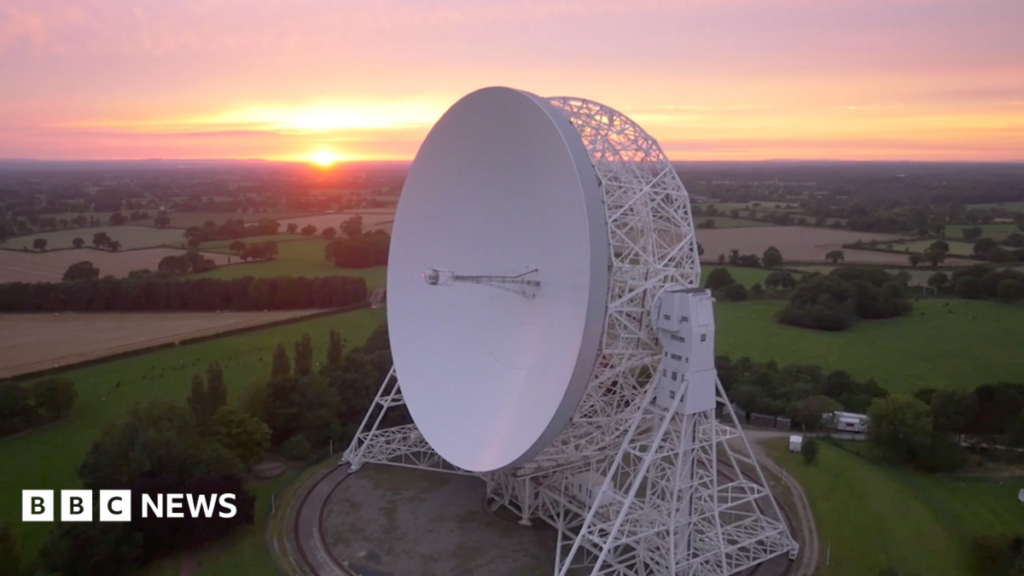
Jodrell Bank Observatory, home to the UK's largest and one of the world's most renowned radio telescopes, stands at a crossroads. After nearly 70 years of groundbreaking contributions to astronomy and national security, the observatory faces the prospect of closure following the withdrawal of its funding by UK Research and Innovation (UKRI). This decision, part of broader cuts to astronomy and physics research, has sparked concern among scientists about the future of UK radio astronomy and its global standing. This article examines the background of Jodrell Bank, the reasons behind the funding cuts, the scientific and community impact, and the broader context of radio astronomy research in the UK and internationally.
Established in 1945, Jodrell Bank Observatory has been at the forefront of radio astronomy for nearly seven decades. Its centerpiece, the Lovell telescope, is the third largest steerable radio telescope globally and has undergone continuous upgrades to maintain its scientific relevance. The observatory played a critical role during the Cold War by monitoring Soviet missile activity and has contributed extensively to the study of distant galaxies, star formation, and cosmic phenomena.
The observatory's significance was internationally recognized when it received UNESCO World Heritage status in 2019, underscoring its cultural and scientific importance. Beyond research, Jodrell Bank serves as a national hub for training astronomers and inspiring future generations in science and engineering, particularly in the north-west of England.
Moreover, the Lovell telescope is integrated into the e-Merlin network, a collaboration of seven telescopes across central England. This network enhances observational power, enabling astronomers to capture images of deep space with clarity comparable to the Hubble Space Telescope. Research conducted through e-Merlin spans critical topics such as planetary formation, galaxy evolution, and the investigation of dark matter and dark energy.
In a recent announcement, UK Research and Innovation (UKRI) revealed it would cease funding for Jodrell Bank by April 2028, citing the need to prioritize projects with the greatest long-term impact amid escalating research and operational costs. The observatory's annual budget of £2.8 million is being cut as part of a wider 2.7% reduction in funding allocated to astronomy, nuclear, and particle physics over the next four years.
UKRI's decision also affects the UK's participation in other major international astronomy projects. Funding has been withdrawn from involvement in the James Clark Maxwell Telescope in Hawaii, instruments on the Extremely Large Telescope under construction in Chile, and there is a 20% cut to support for the Vera Rubin Telescope in Chile. These projects are at the cutting edge of astronomical research, including imaging supermassive black holes and searching for extraterrestrial life.
UKRI's executive chair for science and technology, Prof Michele Dougherty, acknowledged the difficulty of these decisions but emphasized the agency's responsibility to ensure financial sustainability by 2029/30. The focus remains on protecting core discovery research, even as some capabilities face reduction or closure.
The potential closure of Jodrell Bank Observatory threatens not only the loss of a historic scientific facility but also the disruption of research for nearly 3,000 scientists who rely on its telescopes. Twenty-eight jobs at the Cheshire site are at risk, and the broader UK astronomy community faces diminished capacity in radio astronomy.
Prof Simon Garrington, associate director of the observatory, described the decision as devastating, highlighting the observatory's role as a beacon for science and a critical training ground for young scientists and engineers. The Lovell telescope's integration into the e-Merlin network amplifies its importance, as losing this capability would reduce the resolution and clarity of astronomical images produced by the UK and European networks.
The closure would also impact the UK's international reputation and collaboration in radio astronomy. Prof Michael Kramer of the Max Planck Institute criticized the decision as short-sighted scientifically, technologically, and economically. Similarly, Scotland's Astronomer Royal, Prof Catherine Heymans, called the cuts a form of national self-harm, underscoring the broader implications for the UK's scientific leadership.
Jodrell Bank's cultural significance extends beyond science; it has been featured in popular science fiction such as 'The Hitchhiker's Guide to the Galaxy' and 'Doctor Who,' symbolizing the UK's rich scientific heritage.
The UK faces this funding challenge at a pivotal moment in radio astronomy. Globally, investments are accelerating in new observatories and technologies, notably the Square Kilometre Array (SKA), a massive international project with 197 dishes in South Africa and over 130,000 antennas in Australia. Scheduled to begin partial operations in five years, the SKA promises to revolutionize our understanding of the universe.
The UK has historically been a leader in radio astronomy and played a significant role in the SKA's development. However, the loss of Jodrell Bank's capabilities could undermine the UK's ability to contribute effectively to this next-generation facility. Prof Philip Diamond, former head of both Jodrell Bank and the SKA organization, warned that cutting funding jeopardizes the training and career prospects of young researchers and the long-term health of UK radio astronomy.
Other countries are expanding their national observatories and research infrastructure, positioning themselves to capitalize on the anticipated scientific breakthroughs. The UK's retreat from key facilities risks diminishing its influence and missing out on what many astronomers consider a forthcoming golden age in the field.
In response to the funding withdrawal, Jodrell Bank's leadership is exploring alternative funding avenues to sustain operations beyond 2028. Prof Garrington acknowledged the difficulty of finding new financial support without UKRI backing but emphasized the determination to preserve the Lovell telescope and its network in some capacity.
The scientific community has expressed strong opposition to the cuts and intends to challenge UKRI's decision. However, the outcome remains uncertain, and the observatory's future hinges on securing sustainable funding sources.
Maintaining Jodrell Bank is not only about preserving a historic institution but also about ensuring the UK remains competitive in radio astronomy and continues to inspire and train future generations of scientists. The coming years will be critical in determining whether this iconic facility can adapt and survive amid financial constraints.
The potential closure of Jodrell Bank Observatory marks a significant moment of uncertainty for UK astronomy. While financial realities necessitate difficult choices, the decision to cut funding for such a historic and scientifically vital facility raises concerns about the UK's future role in radio astronomy. Preserving Jodrell Bank is not only about safeguarding a national treasure but also about maintaining the UK’s capacity to contribute to global scientific discovery and to train the next generation of researchers. As the UK navigates these challenges, the broader scientific community and policymakers must weigh the long-term consequences of these cuts against the immediate budgetary pressures. The coming years will determine whether Jodrell Bank can continue to inspire and lead in the exploration of the cosmos or become a cautionary tale of lost opportunity.
Source: UK's iconic Jodrell Bank telescope faces axe in science cuts via www.bbc.co.uk.
This article was curated with AI assistance.
Originally reported by bbc.co.uk. Adapted for our readers with AI assistance.
Keep reading
Business
Nigeria's economic landscape in the second quarter of 2026 presents a mixed picture of fiscal press...
Business
Liverpool manager Andoni Iraola is confronting a significant selection headache as two key forwards, Cod...
News
Health News tamfitronics [Editor’snote:[Editor’snote: This transcript was generated using both transcription ...
TAMFIS NIG LTD
Electrical and instrumentation engineering, bid preparation and consulting, IT and software.