The Disappearance of Over 500 Rohingya at Sea: Understanding a Humanitarian Tragedy
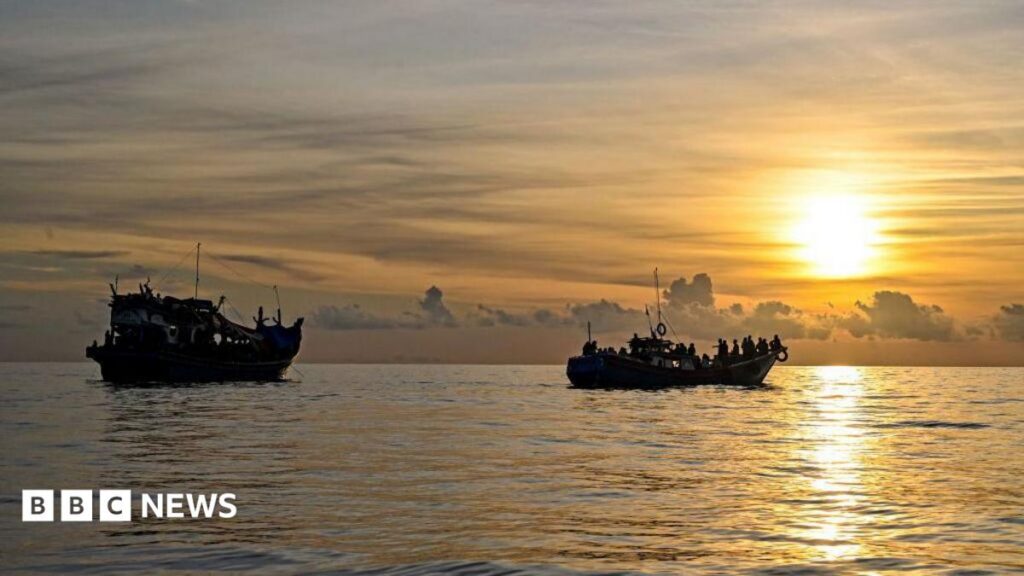
On 29 June 2026, two boats carrying an estimated 530 Rohingya asylum seekers set sail from Myanmar’s conflict-ridden Rakhine State. Since then, no confirmed contact has been made with either vessel, sparking fears that both boats capsized amid the region’s treacherous monsoon seas. This disappearance represents a staggering loss, equivalent to a jumbo jet full of people vanishing without a trace. Understanding what likely happened to these individuals requires examining the dangerous conditions they face, the complex geopolitical landscape, and the illicit networks that facilitate their desperate attempts to find safety.
The Disappearance of Over 500 Rohingya at Sea: Understanding a Humanitarian Tragedy
The Context of Conflict and Displacement in Rakhine State
Rakhine State has been engulfed in conflict for several years, with the Arakan Army insurgency challenging the Myanmar military’s control. The fighting has displaced many communities, including the Rohingya, a Muslim minority group long subjected to persecution. Approximately 600,000 Rohingya remain in Rakhine, with a quarter confined to overcrowded internally displaced persons (IDP) camps. Others live in precarious conditions, caught between armed groups and facing forced conscription by the military junta.
Communication has become nearly impossible in many parts of Rakhine due to telecommunications shutdowns, especially in areas like Sittwe, the state capital, which is accessible only by air and sea. This isolation complicates efforts to track movements and gather information about those attempting to flee the region.
The Disappearance of Two Boats Carrying Rohingya Asylum Seekers
On 29 June, two boats departed from Sin Tet Maw, a village controlled by the Arakan Army, carrying roughly 530 Rohingya men, women, and children. These vessels, often old fishing trawlers retrofitted to maximize passenger capacity, are notoriously unsafe and ill-equipped for the rough seas typical of the monsoon season.
It is highly probable that both boats capsized—one shortly after departure, the other after several days at sea. The monsoon’s onset brought turbulent waters, and the boats’ unreliable engines and overcrowded conditions made survival unlikely. Confirmed recoveries of bodies washed ashore in Bangladesh and from fishermen at sea support this grim conclusion.
Families of those aboard expected contact within a week to ten days, but nearly three weeks later, no communication has been received, underscoring the tragedy’s scale and the lack of survivors.
The Rohingya’s Perilous Journey and Smuggling Networks
For many Rohingya, escape from Rakhine is their only hope amid worsening conditions. With over a million Rohingya living in overcrowded camps in Bangladesh, where aid is dwindling and opportunities are scarce, the pressure to flee is immense.
Malaysia, home to approximately 200,000 Rohingya, is a preferred destination due to established communities and relative safety. However, reaching Malaysia directly by sea is challenging. The Malaysian navy actively intercepts boats, and local fishing communities generally do not assist.
Consequently, smugglers have adapted their routes, often using Thailand as a transit hub. Larger “mother ships” pick up Rohingya passengers off the coasts of Rakhine or Bangladesh, then coordinate with smaller boats and local fishermen to move people discreetly to southern Thailand or eastern Sumatra. From these points, migrants are transported overland to Malaysia.
This smuggling business is lucrative, charging families between $2,000 and $4,000 per person. Those unable to pay face detention, abuse, and sometimes the use of coercive videos to extort money from relatives. Despite efforts by regional governments to crack down on trafficking, these networks persist, exploiting the Rohingya’s desperation.
Regional Responses and the Ongoing Humanitarian Crisis
The Southeast Asian region has struggled to manage the Rohingya crisis effectively. Thailand, embarrassed by past human trafficking scandals, has closed many transit camps and blocked road routes used by smugglers. Indonesia, once welcoming to Rohingya arrivals, has seen growing hostility fueled by social media campaigns.
Malaysia’s naval forces actively prevent direct sea arrivals, pushing boats back into open waters. No country in the region has agreed to establish safer, legal routes for Rohingya migration, leaving many to risk dangerous sea journeys.
The United Nations estimates that in 2026 alone, nearly 4,700 Rohingya have attempted sea departures in 74 boats, with some estimates suggesting the total number since late 2025 may be as high as 10,000. This increase reflects the worsening conditions in both Rakhine and Bangladesh, where overcrowding, lack of resources, and insecurity persist.
Challenges in Monitoring and Providing Aid
Efforts to monitor Rohingya movements and provide assistance are hindered by the volatile security situation and communication blackouts in Rakhine. Humanitarian organizations face restricted access, and local contacts have been lost, complicating efforts to trace missing persons or deliver aid.
The disappearance of the two boats highlights the vulnerability of Rohingya asylum seekers and the urgent need for coordinated international action. Without safe migration pathways and improved conditions in their homelands and camps, these tragedies are likely to continue.
What this means
The disappearance of more than 500 Rohingya asylum seekers at sea is a stark reminder of the ongoing humanitarian crisis facing this persecuted community. Trapped by conflict, repression, and poverty, many Rohingya see no option but to risk life-threatening journeys facilitated by ruthless smuggling networks. The lack of safe migration pathways and regional cooperation perpetuates this cycle of suffering and loss. Addressing this crisis requires urgent, coordinated efforts to improve conditions in Rakhine and Bangladesh, establish legal routes for migration, and dismantle trafficking operations. Without such measures, tragedies like the June 2026 disappearances will continue to haunt the region.
Originally reported by bbc.co.uk. Adapted for our readers with AI assistance.
Thousands of young protesters in Delhi continue to demand education reforms and the resignation of Education Minister Dharmendra Pradhan after a police crackdown. The…
Facing a looming financial collapse, Thames Water’s main lenders have offered the UK government a ‘golden share’ and increased local authority involvement to avoid…
Facing record-breaking temperatures and severe drought, Thames Water has introduced a hosepipe ban impacting over 10 million customers across parts of southern England to…