
News
RUSSIA versus NATO and BRICS vs. NATO Military SWOT
Recall that Poland’s Minister Sikorski’s core claim is partially supported by the numbers, but the framing “quite quickly” and “without the U.S.” does not…
TAMFIS NIG LTDRC 8067447CAC ACTIVEFinima, Bonny Island, Rivers State

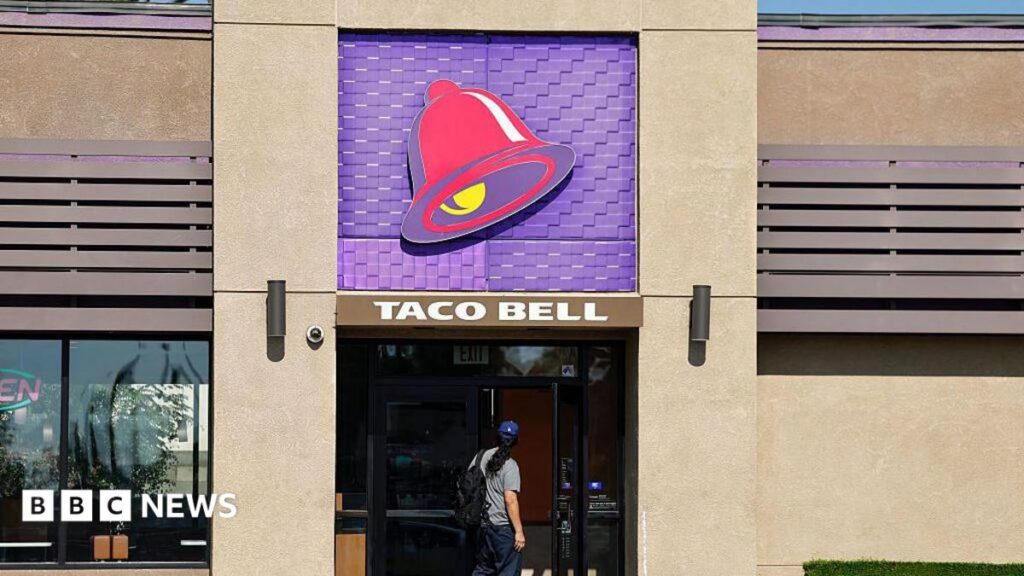
In response to a significant outbreak of cyclosporiasis, a parasitic infection causing severe diarrhoea, Taco Bell has announced the removal of lettuce from its menu in certain US states. This action follows investigations suggesting a link between the parasite and contaminated lettuce supplied to the fast-food chain. With thousands affected across multiple states, this development raises important questions about food safety, supply chain accountability, and public health monitoring in the United States.
Cyclosporiasis is an intestinal infection caused by the parasite Cyclospora cayetanensis, which spreads primarily through contaminated food or water. The Centers for Disease Control and Prevention (CDC) has reported approximately 7,000 cases across 34 states, with Michigan alone accounting for over 3,300 infections. The parasite’s incubation period can be up to two weeks, making early detection and containment challenging.
Symptoms typically include watery diarrhoea lasting several days, sudden weight loss, and a loss of appetite. These symptoms can be debilitating and may require medical treatment, especially for vulnerable populations.
The parasite’s microscopic size and the complexity of food supply chains make tracing sources of contamination difficult. Experts describe the challenge as akin to finding a microscopic fragment of a needle in a haystack, emphasizing the intricate nature of outbreak investigations.
In light of the outbreak, Taco Bell has opted to remove lettuce from its menus in select states, a decision made "out of an abundance of caution" following consultations with health authorities. The company has stated that the lettuce implicated in the outbreak came from one of its suppliers and will be replaced indefinitely.
While Taco Bell has not specified which states are affected by this removal, media reports have identified Taylor Farms as the supplier linked to the contaminated lettuce. The BBC has reached out to Taylor Farms for comment, but no official statement has been released.
Taco Bell emphasized the shared responsibility among restaurants, suppliers, and public health officials in ensuring food safety. The company’s proactive approach reflects a commitment to protecting customers despite the absence of an official public advisory.
Tracing the source of cyclosporiasis outbreaks is notoriously difficult due to the parasite’s minute size and the complexity of modern food distribution networks. Unlike bacterial outbreaks, which can sometimes be quickly linked to a single source, parasitic infections like cyclosporiasis require detailed epidemiological investigations.
Experts point to budget cuts and resource constraints within federal health agencies as factors complicating timely outbreak detection and response. These limitations can delay identifying contaminated food items and issuing public warnings, potentially prolonging exposure risks.
Steven Manderach, executive director of the Association of Food and Drug Officials, highlighted the difficulty of detecting the parasite, comparing it to locating a microscopic portion of a needle in a haystack. This analogy underscores the technical and logistical hurdles faced by investigators.
The outbreak and Taco Bell’s response illustrate broader issues in food safety management and public health oversight. While the company’s decision to remove lettuce is a precautionary step, it also raises questions about supply chain transparency and the responsibility of food producers and distributors.
The absence of an official advisory from health authorities suggests that investigations are ongoing, but it also places greater onus on private companies to act swiftly to protect consumers. This situation highlights the need for robust collaboration between public health agencies and the food industry.
Consumers are reminded to remain vigilant about food safety, especially when outbreaks of foodborne illnesses are reported. Proper hygiene, awareness of symptoms, and seeking timely medical care are critical components of managing health risks associated with parasitic infections.
Editor’s note: The following is AI-generated commentary and context on this topic, not original reporting.
Public health investigators typically use a combination of case interviews, supply-chain tracing and laboratory testing to identify a common source when multiple illnesses linked to the same pathogen are reported across different locations. Cyclospora, the parasite responsible for cyclosporiasis, is frequently associated with imported fresh produce, since the organism can survive standard washing procedures and requires specific conditions to be reliably eliminated.
Restaurant chains typically respond to suspected contamination by proactively removing implicated ingredients from their supply chain while an investigation is ongoing, even before a definitive source is confirmed, as a precautionary measure to limit further exposure. Regulatory agencies generally publish updated guidance as an investigation develops, and affected chains often work directly with suppliers to implement additional testing before reintroducing a suspect ingredient.
Consumer advocacy groups typically use outbreaks of this kind to renew calls for stronger traceability requirements across fresh produce supply chains, arguing that faster identification of a contamination source can meaningfully reduce the overall number of illnesses. Restaurant chains affected by recalls of this nature often face short-term reputational costs even after the underlying issue is resolved, prompting many to publicise their remediation steps prominently once testing confirms a supply chain is clear.
The recent cyclosporiasis outbreak linked to contaminated lettuce at Taco Bell underscores the ongoing challenges in managing foodborne parasitic infections. While the fast-food chain’s removal of lettuce from certain menus demonstrates a proactive approach to consumer safety, it also highlights the complexities of tracing contamination sources and the critical need for coordinated public health efforts. As investigations continue, this incident serves as a reminder of the importance of vigilance, transparency, and collaboration among all stakeholders in the food supply chain to protect public health.
Originally reported by bbc.co.uk. Adapted for our readers with AI assistance.
Keep reading
News
Recall that Poland’s Minister Sikorski’s core claim is partially supported by the numbers, but the framing “quite quickly” and “without the U.S.” does not…
News
Thousands of young protesters in Delhi continue to demand education reforms and the resignation of Education Minister Dharmendra Pradhan after a police crackdown. The…
News
Facing a looming financial collapse, Thames Water’s main lenders have offered the UK government a ‘golden share’ and increased local authority involvement to avoid…
TAMFIS NIG LTD
Electrical and instrumentation engineering, bid preparation and consulting, IT and software.