
Business
Nigeria’s Economic Performance: Domestic Debt Rise and Agriculture Trade Shift in Q2 2026
Nigeria's economic landscape in the second quarter of 2026 presents a mixed picture of fiscal press...
TAMFIS NIG LTDRC 8067447CAC ACTIVEFinima, Bonny Island, Rivers State

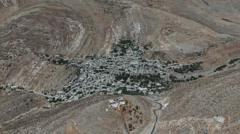
Syria has condemned an Israeli attack on the village of Beit Jinn, southwest of Damascus, which officials said hit a civilian vehicle and left several people injured. The 22 August 2026 strike was the second known Israeli operation inside Syria within a week, with Damascus branding it a "violation" of its sovereignty and international law. Israel said it targeted a "terrorist" in the "final stages" of preparing attacks posing an immediate threat to its soldiers. The escalation follows an earlier Israeli strike on the Abu al-Duhur airbase near the Turkish border, which prompted Washington to call it an "unnecessary escalation" and led US Ambassador Tom Barrack to suggest Israel might be "baiting the Turks" for electoral gain — a claim Israel's Defence Minister Israel Katz dismissed as "full of inaccuracies."
Syria has condemned an Israeli attack on the village of Beit Jinn, located southwest of Damascus, which officials say struck a civilian vehicle and left several people injured. The strike, carried out on 22 August 2026, marks the second known Israeli operation inside Syria within a week. Damascus branded the attack a "violation" of its sovereignty and international law, adding to mounting tensions in a region already on edge following the collapse of the Assad government in late 2024.
In a statement posted on X, the Israeli military said it had targeted a "terrorist" who was in the "final stages" of preparing attacks posing an immediate threat to Israeli soldiers. The military did not identify the individual or provide evidence to support the claim. Israel has conducted hundreds of strikes in Syria since the fall of Bashar al-Assad, saying it acts to prevent hostile actors from establishing footholds near its borders.
Days before the Beit Jinn attack, Israel struck the Abu al-Duhur military airbase, situated roughly 70 kilometres from the Turkish border. The base has been out of service as a dedicated military airfield since 2013 and was seized by rebel forces during the offensive that toppled Assad in December 2024. Syria said the strike threatened to escalate regional tensions. Washington issued a rare public rebuke, calling it an "unnecessary escalation that does not advance regional stability."
In a Friday interview, US Ambassador to Turkey Tom Barrack suggested the Abu al-Duhur strike could be "the Israelis baiting the Turks" in an attempt to draw Turkey into a conflict ahead of upcoming Israeli elections. Barrack's remarks introduced a domestic political dimension to the escalation, implying Israeli leadership might be calculating that a broader confrontation could serve electoral interests.
Israel's far-right Defence Minister Israel Katz dismissed Barrack's comments as "full of inaccuracies." Writing on X, Katz said Israeli forces were acting "in light of clear intelligence information about Turkey's intentions." The public disagreement between a US ambassador and an Israeli cabinet minister underscores the strain in the US-Israel-Turkey triangle.
Following the Abu al-Duhur strike, Prime Minister Benjamin Netanyahu's office published a statement asserting that Israel and Syria had agreed to a security status quo, which Syria was "on the verge of breaching by permitting Turkish troops to deploy at an airbase near Aleppo." The statement framed the Israeli action as preventive, aimed at preserving an understood arrangement rather than initiating a new confrontation.
Ankara did not confirm whether any Turkish troops had moved to Abu al-Duhur but flatly rejected Israel's suggestion that it posed a threat. Turkey has provided military assistance to Syria since Assad's overthrow, viewing a stable, cooperative neighbour as essential to its own security. The Turkish government has consistently opposed Israeli strikes in Syria, calling them destabilising.
Since Assad's fall in December 2024, Syria has been attempting to rebuild military facilities damaged during the rebel offensive. Israel occupies territory in southwest Syria seized after the collapse, maintaining a buffer zone it says is necessary for its security. Meanwhile, Syria's new leadership under Ahmed al-Sharaa has forged closer ties with the West; in November 2025, al-Sharaa became the first Syrian leader to visit the White House since the 1970s, signalling a potential diplomatic reorientation.
The current escalation reflects three overlapping security doctrines. Israel seeks to prevent any hostile presence — whether Iranian-backed militias, Hezbollah, or now potentially Turkish-aligned forces — from consolidating near the Golan Heights. Turkey aims to secure its southern border and influence post-Assad Syria through military cooperation. Syria's interim government, desperate for reconstruction aid and legitimacy, is balancing relationships with multiple external patrons. Each side views the others' legitimate security measures as existential threats.
Analysts warn that the density of military actors in a confined geography — Israeli forces in the southwest, Turkish-backed elements in the north, Syrian government forces rebuilding nationwide, and various non-state groups — creates a classic security dilemma. A strike intended as a signal can be received as a prelude to invasion. Public rhetoric from Washington, Ankara, and Jerusalem has hardened, reducing diplomatic off-ramps. The absence of a direct Israeli-Turkish deconfliction mechanism, unlike the one that existed with Russia, adds to the danger.
The Beit Jinn strike is not an isolated incident but the latest flare-up in a rapidly militarising corner of the Levant. With Israel entrenching in the southwest, Turkey deepening its military role in the north, and Syria's new government courting Western support while struggling to assert sovereignty, the risk of a broader confrontation — whether by design or miscalculation — is rising. Washington's unusual public criticism of Israel and the extraordinary suggestion by its own ambassador that Israeli actions may be politically motivated add a volatile domestic dimension. Unless a transparent deconfliction framework emerges among the three principal actors, further strikes — and the spiral they feed — appear all but inevitable.
Originally reported by bbc.co.uk. Adapted for our readers with AI assistance.
Keep reading
Business
Nigeria's economic landscape in the second quarter of 2026 presents a mixed picture of fiscal press...
Business
Liverpool manager Andoni Iraola is confronting a significant selection headache as two key forwards, Cod...
News
Health News tamfitronics [Editor’snote:[Editor’snote: This transcript was generated using both transcription ...
TAMFIS NIG LTD
Electrical and instrumentation engineering, bid preparation and consulting, IT and software.