
Business
Nigeria’s Economic Performance: Domestic Debt Rise and Agriculture Trade Shift in Q2 2026
Nigeria's economic landscape in the second quarter of 2026 presents a mixed picture of fiscal press...
TAMFIS NIG LTDRC 8067447CAC ACTIVEFinima, Bonny Island, Rivers State

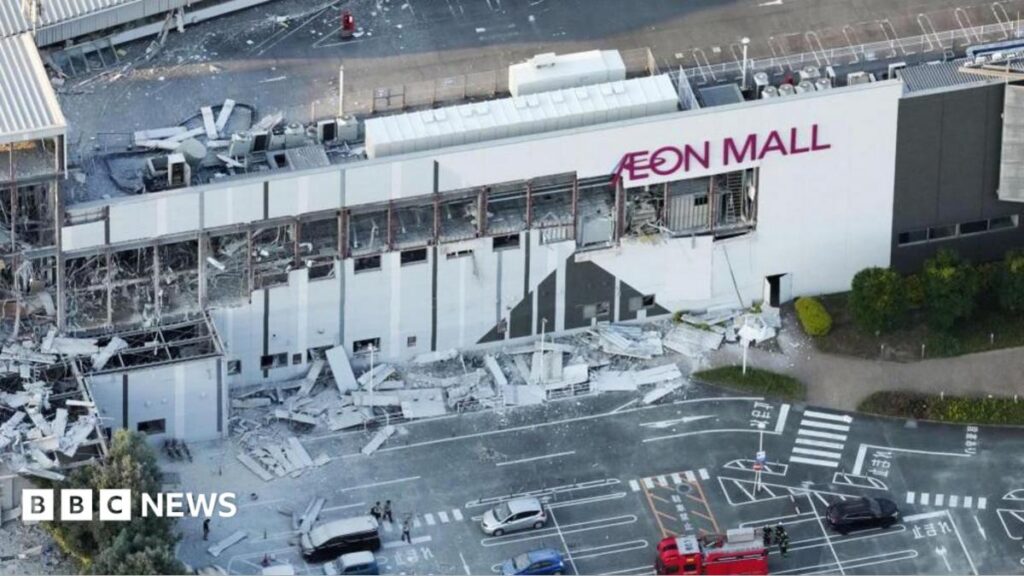
On July 28, 2026, a magnitude 7.1 earthquake struck Kyushu island at 16:27 local time, causing widespread damage including cracked roads, suspended rail lines and fires. The most severe impact occurred at Kumamoto's Aeon Mall, where the second floor collapsed, trapping shoppers and staff. A similar collapse at a Kashima shopping complex intensified the crisis. With over 150,000 residents evacuated and at least 50 hospitalized — including ten elderly care-home residents — the disaster tests Japan's earthquake preparedness, especially regarding large commercial structures.
The earthquake's epicentre was approximately 10 kilometres deep, a shallow depth that amplified ground shaking and surface damage. The Japan Meteorological Agency issued a brief tsunami warning, lifted within an hour after no significant wave activity was detected. NHK broadcast footage of fractured roads, damaged bridges and multiple fires, while train services halted and electricity was cut to thousands of households. Prime Minister Sanae Takaichi addressed the nation, confirming injuries and structural damage while pledging full mobilisation of emergency teams.
The partial collapse of the Aeon Mall in Kumamoto Prefecture has emerged as the disaster's most critical rescue site. According to the local fire department, the second floor gave way during the main shock, trapping numerous people inside the retail complex. Local media reported an explosion within the mall shortly after the quake, though details remain scarce and investigators have not determined whether it resulted from a gas leak, electrical fault or structural failure. A near-simultaneous collapse at a shopping complex in Kashima town, where the second floor also failed, suggests a pattern of vulnerability in large, open-plan commercial buildings. Emergency responders have deployed heavy lifting equipment, search dogs and acoustic listening devices to locate survivors beneath the debris. Operations proceed under difficult conditions: unstable rubble, the constant threat of aftershocks, and limited access routes due to damaged roads and suspended rail services.
NHK reports at least 50 people are receiving hospital treatment for injuries ranging from fractures and lacerations to crush syndrome. Among them are approximately ten elderly residents from a care home, underscoring the disproportionate impact on vulnerable populations. Over 150,000 residents across affected regions have been advised to evacuate to designated shelters — a precaution against aftershocks, potential fires and further structural collapses. The evacuation order reflects a calibrated risk assessment: while Japan's building codes have prevented widespread catastrophic failure, the partial collapses at Aeon Mall and Kashima demonstrate that even compliant structures can suffer dangerous localised failures. Shelters have been established in schools, community centres and public halls, with authorities distributing emergency supplies including water, food, blankets and medical kits. The suspension of train services has complicated supply logistics, but emergency corridors are being maintained for relief vehicles.
Japan experiences roughly 1,500 earthquakes annually and has invested decades of research and billions of yen into earthquake-resistant infrastructure, early-warning systems and public education. The nation's building codes are among the world's most stringent, requiring base isolation, damping systems and ductile detailing for new construction. Regular disaster drills, a ubiquitous early-warning alert network and a culture of preparedness have saved countless lives in previous events, including the 2011 Tohoku earthquake and tsunami. Yet the Aeon Mall collapse exposes a persistent blind spot: large commercial buildings with expansive floor plates, long-span roofs and complex occupancy patterns. While residential and office towers generally perform well, retail complexes, warehouses and older structures retrofitted to earlier standards remain vulnerable to progressive collapse. The Kashima incident, involving a similar building typology, reinforces concerns that current codes may not adequately address the unique dynamic response of wide-open retail spaces during severe shaking. Experts note that Japan's building stock turns over slowly; many commercial structures predate the most recent code revisions. Retrofitting programmes exist but are voluntary for private owners and often deferred due to cost and operational disruption. The government's post-disaster review will likely focus on mandatory retrofit timelines for high-occupancy commercial buildings, enhanced inspection regimes for long-span structures, and improved real-time structural health monitoring during seismic events.
Beyond the immediate humanitarian crisis, the quake threatens economic disruption. Kyushu hosts significant semiconductor manufacturing, automotive plants and agricultural production. While major factories typically incorporate advanced seismic protection, the suspension of rail freight and highway damage will delay shipments. The Aeon Mall itself — part of a nationwide retail chain — represents a substantial commercial asset; its prolonged closure will affect tenants, employees and local commerce. Insurance claims are expected to be substantial, with early estimates suggesting insured losses could reach hundreds of billions of yen. The Bank of Japan has signalled readiness to provide liquidity support to affected financial institutions. For global supply chains, the event serves as a reminder of geographic concentration risk: Kyushu's role in semiconductor materials and automotive components means even brief production interruptions can cascade internationally.
The Japan Meteorological Agency maintains its warning for strong aftershocks, potentially reaching lower-6 on the Japanese seismic intensity scale (equivalent to violent shaking on the Modified Mercalli scale). Residents are urged to avoid damaged structures, prepare emergency grab-bags and monitor official channels for evacuation updates. Rescue operations at the Aeon Mall and Kashima sites continue around the clock, with crews rotating to manage fatigue and risk. Recovery planning has already begun in parallel with rescue efforts. The Ministry of Land, Infrastructure, Transport and Tourism has deployed structural assessment teams to evaluate building safety across the region. Temporary housing contracts are being activated for displaced residents. Lessons from the 2016 Kumamoto earthquakes — which struck the same region with magnitude 7.0 and 7.3 events just 28 hours apart — are informing current coordination, particularly regarding the management of prolonged evacuation and the psychological toll on affected communities.
The Kyushu earthquake of 28 July 2026 has demonstrated both the strengths and limits of Japan's disaster resilience. World-class building codes, early-warning systems and a prepared populace prevented a far greater tragedy. Yet the collapse of the Aeon Mall and the Kashima shopping complex reveals a stubborn vulnerability in large commercial structures that current regulations and voluntary retrofit programmes have not fully addressed. As rescue efforts continue and aftershocks persist, the immediate priority remains saving lives and protecting the 150,000 evacuees. In the longer term, this event will likely catalyse regulatory reform — mandatory retrofits for high-occupancy commercial buildings, stricter standards for long-span structures, and investment in real-time structural monitoring. For businesses, insurers and policymakers worldwide, the lesson is clear: seismic resilience is a continuous process of learning, investing and adapting. The next major quake will test whether those lessons have been truly absorbed.
Originally reported by bbc.co.uk. Adapted for our readers with AI assistance.
Keep reading
Business
Nigeria's economic landscape in the second quarter of 2026 presents a mixed picture of fiscal press...
Business
Liverpool manager Andoni Iraola is confronting a significant selection headache as two key forwards, Cod...
News
Health News tamfitronics [Editor’snote:[Editor’snote: This transcript was generated using both transcription ...
TAMFIS NIG LTD
Electrical and instrumentation engineering, bid preparation and consulting, IT and software.