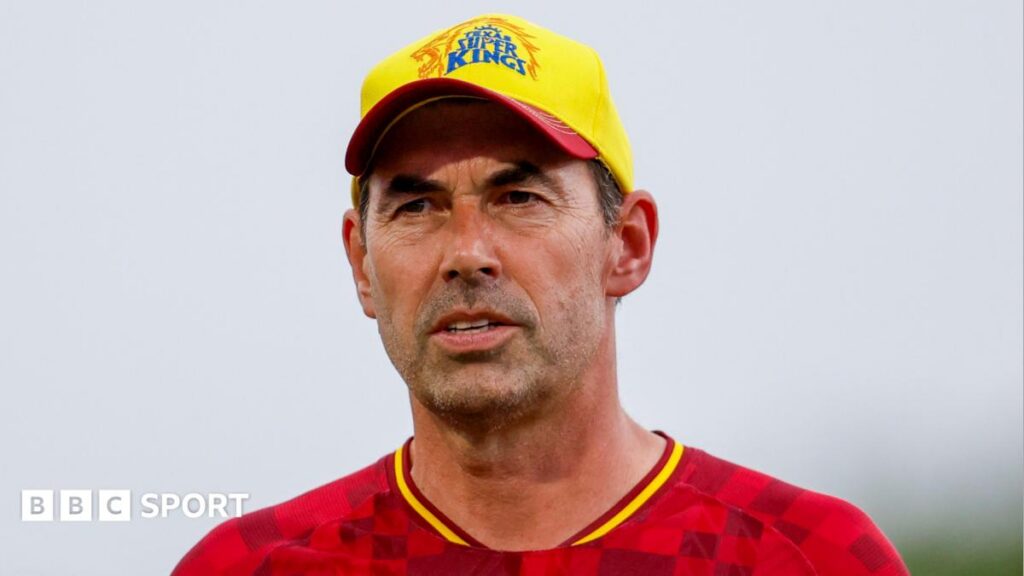
Stephen Fleming Set to Take Helm as England Test Cricket Coach
England's Test cricket team is on the brink of a significant leadership change. After a challenging period marked by disappointing results and off-field controversies, the England and Wales Cricket Board (ECB) is expected to appoint Stephen Fleming, the former New Zealand captain, as the new Test coach. This move aims to stabilize and rejuvenate England's Test side as they prepare for future international competitions.
Stephen Fleming Set to Take Helm as England Test Cricket Coach
Background: The End of the McCullum Era
Brendon McCullum's tenure as England's Test coach came to an abrupt end earlier this month. Despite his continued role overseeing England's white-ball teams, McCullum was relieved of his duties in the Test arena following a series of underwhelming performances by the team. Additionally, several off-field incidents contributed to the decision to part ways with him in this capacity.
McCullum's departure has left a leadership vacuum in the Test setup, prompting the ECB to conduct a thorough search for a successor who can steer the team back to competitiveness and consistency.
Stephen Fleming: A Proven Leader and Coach
Stephen Fleming, aged 53, is widely regarded as one of New Zealand's most successful cricket captains. Since retiring from professional play in 2009, Fleming has built a respected coaching career, particularly in the Twenty20 franchise circuit. His experience includes multiple coaching roles that have honed his tactical acumen and leadership skills.
Fleming's cricketing philosophy emphasizes strategic thinking, player development, and fostering a positive team culture. His ability to manage diverse squads in high-pressure environments positions him as a strong candidate to lead England's Test team through its current challenges.
The Selection Process and Key Stakeholders
The appointment of the new Test coach involves collaboration among several key figures within the ECB. Rob Key, the director of men's cricket, and Marcus North, the national selector, will work closely with Fleming to shape the future direction of England's Test team.
A critical aspect of this transition is the selection of a new Test captain, a decision that Fleming will influence significantly. This follows the unexpected retirement of Ben Stokes from international cricket, which has left the captaincy position open and added urgency to the leadership restructuring.
Challenges Ahead for Fleming and England
Taking over the England Test team at this juncture presents several challenges. The team has struggled with form and consistency, and rebuilding confidence will be essential. Furthermore, the off-field issues that contributed to McCullum's dismissal highlight the need for strong leadership and a cohesive team environment.
Fleming's task will include integrating new talent, managing existing players, and implementing strategies that can compete effectively against top international sides. Balancing these demands while navigating the expectations of fans and the cricketing establishment will be a critical test of his coaching capabilities.
Implications for England Cricket's Future
The appointment of Stephen Fleming signals a commitment by the ECB to revitalize England's Test cricket program. His international experience and coaching pedigree suggest a potential shift towards a more strategic and disciplined approach.
The collaboration between Fleming, Key, and North could foster a unified vision for the men's Test team, aligning selection, coaching, and leadership decisions. This coherence is vital for building a sustainable and competitive squad capable of achieving long-term success.
Moreover, Fleming's influence may extend beyond tactics to shaping team culture, emphasizing professionalism and resilience—qualities essential for navigating the rigors of Test cricket.
What this means
The anticipated appointment of Stephen Fleming as England's Test coach marks a pivotal moment for the national team. With a proven track record and strategic mindset, Fleming is well-positioned to address the challenges facing England's Test cricket. His leadership, combined with the support of key ECB figures, offers hope for a revitalized team capable of regaining its standing on the international stage. As the cricketing world watches closely, Fleming's tenure will be defined by his ability to foster unity, resilience, and success in England's Test side.
Editor’s note: The following is AI-generated commentary and context on this topic, not original reporting.
Broader Context and Outlook
For younger athletes and up-and-coming talent, high-profile moments comparable to this can serve as both inspiration and a benchmark for what is achievable with the right support structures in place.
Fans and pundits alike tend to view outcomes of this kind through the lens of what they signal for the rest of the season, weighing short-term form against longer-term structural questions facing the team or athlete involved.
Grassroots participation numbers often see a temporary boost following high-profile moments of this kind, as young fans are inspired to take up the sport themselves.
Broadcast and sponsorship revenue tied to major competitions increasingly shapes decisions once made purely on sporting grounds, a tension that regularly surfaces in discussions like this one.
Injury prevention and squad rotation have become central talking points across professional sport, as data on player workload increasingly informs decisions that once relied mostly on instinct.
Sports scientists and analysts increasingly point to marginal gains — in recovery, nutrition, and data-driven tactical preparation — as a growing factor behind performances and decisions of the sort covered here.
Results and moments like the one described in “Stephen Fleming Set to Take Helm as England Test Cricket Coach” are often the product of years of behind-the-scenes work — coaching changes, training regimens, and squad-depth decisions that only become visible to the public in moments of high drama.
The broader competitive landscape — including transfer activity, coaching appointments, and shifting team form — will likely continue to shape how a story like this one is remembered in the context of the wider season.
Governing bodies in sport are frequently balancing commercial pressures against the traditions and expectations of supporters, a tension that plays out publicly whenever a decision or result like this one draws scrutiny.
Understanding the full context behind a story like this usually requires looking beyond the immediate headline to the broader institutional, historical, or social factors that shaped how events unfolded.
The economic, legal, or social ripple effects of a story like this are not always apparent immediately, and often only become clear once analysts have had time to examine the fuller set of circumstances involved.
Social media discussion around stories like “Stephen Fleming Set to Take Helm as England Test Cricket Coach” often amplifies certain details disproportionately, and readers are generally well advised to treat viral framing with some caution until it is corroborated by established reporting.
Originally reported by bbc.co.uk. Adapted for our readers with AI assistance.
Thousands of young protesters in Delhi continue to demand education reforms and the resignation of Education Minister Dharmendra Pradhan after a police crackdown. The…
Facing a looming financial collapse, Thames Water’s main lenders have offered the UK government a ‘golden share’ and increased local authority involvement to avoid…
Facing record-breaking temperatures and severe drought, Thames Water has introduced a hosepipe ban impacting over 10 million customers across parts of southern England to…