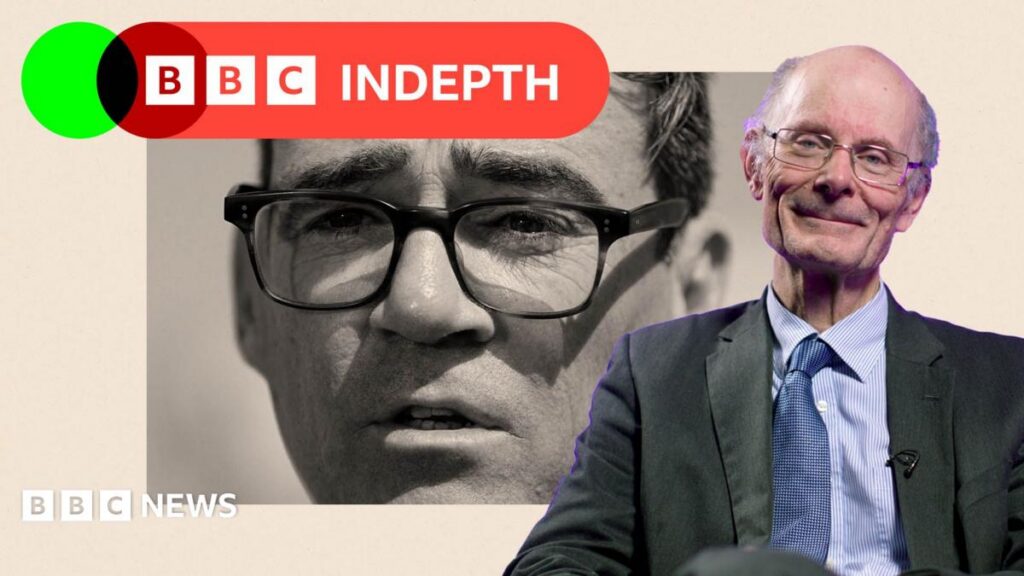
BySir John CurticeProfessor of politics at the University of StrathclydeThe consistent message of the opinion polls since the new prime minister walked into Downing Street almost a fortnight ago is that Labour is enjoying a "Burnham bounce". And this has now been confirmed by the party's convincing victory in Thursday's Greater Manchester Mayoral by-election.Polls conducted in the last week put Labour on average in the mid 20s. It is the party's highest standing since the beginning of last year and compares to their rating of 19% in late June when…
Broader Context and Outlook
Policy debates of the kind referenced in “Sir John Curtice: The "Burnham bounce" is real but it's not massive” tend to move slowly through multiple stages of scrutiny, from initial proposals to committee review, public consultation, and eventual implementation — a process that can span months or years.
Committee hearings and select-committee scrutiny remain one of the primary mechanisms through which proposals like this are tested before reaching a wider public vote or implementation stage.
Political commentators often frame decisions like this one in terms of both their immediate practical impact and their signalling value to different constituencies within the electorate.
The interplay between central government and regional or local authorities frequently shapes how effectively any given policy discussed here is ultimately delivered on the ground.
Public opinion polling on issues like this tends to shift as details become clearer, meaning early reactions are not always a reliable guide to how a policy will be judged once implemented.
Local government finance, already stretched in many areas, is frequently cited as a constraint on how ambitiously any new policy of this kind can realistically be delivered.
Think tanks across the political spectrum often publish competing analyses of proposals like this, giving journalists and the public a range of expert opinion to weigh alongside official statements.
Observers note that the success of any reform effort of this kind usually depends less on the initial announcement and more on sustained follow-through, funding, and cross-party cooperation over the following years.
Social media discussion around stories like “Sir John Curtice: The "Burnham bounce" is real but it's not massive” often amplifies certain details disproportionately, and readers are generally well advised to treat viral framing with some caution until it is corroborated by established reporting.
Institutional responses to situations like this — statements, reviews, or policy adjustments — are frequently shaped as much by public pressure and reputational concerns as by the underlying facts themselves.
News organisations covering developments connected to “Sir John Curtice: The "Burnham bounce" is real but it's not massive” typically rely on a combination of official sources, eyewitness accounts, and expert commentary, each of which carries a different level of certainty and should be weighed accordingly.
As is often the case with breaking developments, some of the details surrounding “Sir John Curtice: The "Burnham bounce" is real but it's not massive” may be revised or clarified as more information becomes available in the coming days.
Readers who want to stay informed on a topic like this are generally well served by following multiple credible outlets, since initial reports can sometimes vary in emphasis or detail.
For readers trying to make sense of a fast-moving story like “Sir John Curtice: The "Burnham bounce" is real but it's not massive”, it is often worth distinguishing between confirmed facts, official statements, and early speculation, since these three categories tend to get blended together in the first wave of coverage.
Archival context — how similar situations were handled in the past, and what came of them — frequently offers a more reliable guide to likely outcomes than speculation in the immediate aftermath of a story like this.
The economic, legal, or social ripple effects of a story like this are not always apparent immediately, and often only become clear once analysts have had time to examine the fuller set of circumstances involved.
Understanding the full context behind a story like this usually requires looking beyond the immediate headline to the broader institutional, historical, or social factors that shaped how events unfolded.
Public interest in stories of this kind tends to spike sharply in the first 48 hours before gradually settling into a steadier stream of analysis and follow-up coverage over the following weeks.
Trust in the reporting and institutions surrounding a story like this tends to be reinforced or eroded not by any single article, but by the cumulative pattern of accuracy and transparency over time.
Longstanding institutional practices and precedent frequently play a larger role in how situations like this are ultimately resolved than any single statement made in the heat of the initial news cycle.
Official inquiries or reviews, where they follow a story of this kind, typically take considerably longer to conclude than the news cycle that first brought the story to public attention, which can create a gap between public perception and the eventual documented record.
The way a story like “Sir John Curtice: The "Burnham bounce" is real but it's not massive” is remembered a year from now often depends less on the initial headlines and more on what follow-up reporting and official inquiries eventually establish.
Comparisons to similar past events are a common feature of coverage like this, offering readers useful context even though no two situations unfold in exactly the same way.
The framing chosen by different outlets covering “Sir John Curtice: The "Burnham bounce" is real but it's not massive” can vary considerably depending on editorial priorities, which is one reason it is often useful to read more than a single account of a developing story.